
A latte is espresso with plenty of steamed milk and a thin layer of foam. A flat white has less milk, a very fine microfoam, and almost always a double espresso.
A reference flat white recipe uses a 50 ml double espresso with about 130 ml of milk and 5 mm of microfoam (roughly 1.7 oz and 4.4 oz). A latte is usually served in a larger vessel, around 225 ml (about 7.6 oz) (Wikipedia, Flat white).
On the coffee shop menu, they sit side by side: latte and flat white. Both have espresso and milk, both can come with a heart poured on top, and they cost about the same. So what’s the difference? More than you’d think, especially in how the coffee comes through.
In this guide, we explain what a latte is, what a flat white is, and how they differ. You’ll also learn how to make both at home, with or without an espresso machine, and which coffee to choose for each. By the end, you’ll know which one to order, and which one to make, based on your taste.
What is a latte?
A latte, or caffè latte, is espresso with a generous amount of steamed milk and a thin layer of foam on top. It’s the mildest, milkiest espresso drink. You can taste the coffee, but it doesn’t take over: the milk wraps around it and sweetens it.

The name says it all. Caffè latte means “coffee with milk” in Italian. As Healthline points out, there’s no single standard recipe: every coffee shop adjusts the amount of milk. What doesn’t change is the idea: lots of milk and a little foam.
The TODAY show’s guide to coffee drinks describes it this way: one shot of espresso, two parts steamed milk, and a layer of foam. That ratio makes it longer and creamier than a cappuccino.
Because of all that milk, the latte is also the highest-calorie espresso drink. For a large 475 ml (16 oz) serving, Healthline estimates about 206 calories. A cappuccino of the same size comes in around 130. Almost all of the difference comes from the milk.
The latte is also the favorite canvas for latte art: hearts, tulips, and rosettas drawn with milk. The fine, silky layer of foam lets the design hold on top of the coffee. If you want to see where it fits among other drinks, check out our guide to types of coffee.
What is a flat white?
A flat white is espresso, usually a double, with steamed milk and a very thin layer of microfoam. It has less milk than a latte, so the coffee comes through more. And it doesn’t have the tall foam of a cappuccino: that’s why it’s called “flat.”

Coffee expert Anette Moldvaer describes a reference version: a 50 ml double espresso, about 130 ml of milk, and a 5 mm layer of microfoam. In Australia, flat white cups are usually around 200 ml (about 6.8 oz); in New Zealand, the figure given is 175 ml (about 5.9 oz).
Where does it come from? Its origin has been debated for years between Australia and New Zealand:
- Australia: a review of a Sydney café mentions it in 1983. In 1985, Alan Preston put it on the menu at his shop, Moors Espresso Bar, in Sydney.
- New Zealand: in Wellington, the story goes that it was born in 1989 from a “failed cappuccino” at Bar Bodega. In Auckland, the café DKD also claims it.
- Before that: historian Ian Bersten believes the drink may have started in England in the 1950s.
What’s certain is that it traveled the world. Starbucks launched it in the United States on January 6, 2015. In 2024, The Economist reported that one in three consumers in the United Kingdom chose the flat white.
What’s the difference between a latte and a flat white?
A flat white has more coffee relative to milk, a finer foam, and is served in a smaller cup. A latte has more milk, a slightly thicker, creamier layer of foam, and is usually served in a larger glass or cup. The result: a flat white tastes more like coffee.
These are the key differences:
- Coffee: a flat white almost always has a double espresso, sometimes pulled shorter as a ristretto. A latte can have one or two shots.
- Milk: a latte has quite a bit more. That’s why it’s milder and sweeter.
- Foam: a flat white has a thin microfoam blended into the milk. A latte has a slightly taller layer.
- Size: a flat white is served in a 175 to 200 ml cup; a latte, in vessels of about 225 ml or more.
- Texture: a flat white feels silky and dense; a latte, lighter and milkier.
What about the cappuccino? It sits on the other side of the scale: more foam and less liquid milk. We explain it in our cappuccino guide. If you want even less milk, a macchiato is just an espresso “stained” with milk.
A practical way to choose: if you drink coffee to wake up and you like to taste it, order a flat white. If you want something mellow to keep you company on a long afternoon, order a latte.
How do you make a latte at home?
Pull an espresso into a large cup, steam the milk with little foam to about 60 °C (140 °F), and pour it slowly over the coffee. The key is adding very little air to the milk: you’re after a silky, pourable texture, not tall foam.
- Make the espresso. Use finely ground coffee and aim for a 1:2 ratio in 20 to 30 seconds, as the National Coffee Association recommends. Pull it into a large preheated cup.
- Steam the milk. Fill the pitcher a third of the way with cold milk. Add air for just two or three seconds, then sink the tip slightly so the milk spins.
- Stop in time. Turn off the steam when the pitcher is hot but you can still hold it for a second.
- Blend. Tap the pitcher gently on the counter and swirl it until the milk looks glossy.
- Pour. Start from high up with a thin stream so it mixes with the coffee. At the end, lower the pitcher close to the cup so the foam comes out.
No machine? Make a concentrated coffee in a moka pot or in an AeroPress with little water. A moka pot doesn’t make espresso, but it gives you a strong coffee that holds up well to milk. We show you how in how to use a moka pot, and we compare the AeroPress in V60 vs. Chemex vs. AeroPress.
To froth milk without a steam wand, heat it without boiling and pump it for a few seconds in a French press. For a latte, froth less than you would for a cappuccino: you want little foam.
How do you make a flat white at home?
Pull a double espresso into a small cup of about 175 to 200 ml (6 to 7 oz), steam the milk with very little air, and pour it from close up until the cup is full. You should end up with a very thin layer of microfoam, smooth and glossy, with no tall foam.
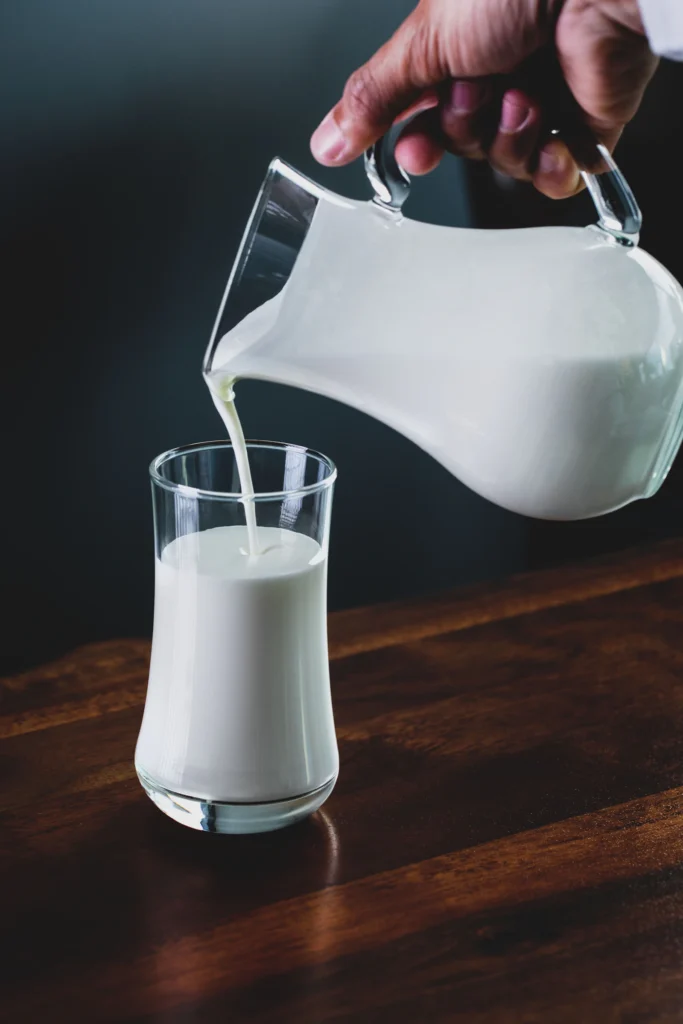
- Pull a double espresso. About 50 ml in total, as in the reference recipe. If your machine allows it, a double ristretto adds sweetness.
- Use less milk. About 130 ml is enough. Fill the pitcher with only what you’ll use.
- Add very little air. One or two seconds with the tip at the surface, then sink it. You want microfoam, not foam.
- Pour from close up. Bring the pitcher close to the cup from the start so the milk goes in smoothly and the surface stays flat.
If you don’t have a machine, a homemade flat white works best with an AeroPress. Make a concentrate with little water and plenty of coffee, and froth the milk just barely. Pump it for only a few seconds in the French press and let it rest so the big bubbles rise.
The most common mistake is adding too much air. If you end up with tall foam, it’s no longer a flat white: it’s a cappuccino. Adjust and try again; within two or three cups, you’ll get the hang of it.
What coffee should you use for a latte or flat white?
For milk drinks, choose a coffee with body and sweet notes, like chocolate, caramel, or panela (unrefined cane sugar). In a latte, with so much milk, a very delicate coffee gets lost. In a flat white, which has more coffee, any good specialty coffee shines, even the fruitiest ones.
You don’t need a special “espresso” coffee. Espresso is a brewing method, not a type of bean. What matters is that the coffee is fresh and ground correctly for your brewer.
- For a classic latte: a balanced washed coffee, like our Sonsón washed coffee, 340 g.
- For a flat white with more character: a natural coffee, like our Caicedo natural coffee, which brings sweetness and fruit.
- If you don’t drink much coffee: a 250 g bag, like our Andes washed coffee, stays fresh to the last cup.
Buy whole bean if you have a grinder, and grind right before brewing. Prefer an iced latte? A cold brew concentrate with cold milk and ice is the fastest way to make one without a machine.
Coffees from this guide




Broo Café Team
The coffee team at Broo Café, specialty coffee roasters in Medellín.
Content reviewed by the Broo Café Team.
Frequently asked questions
Is a flat white stronger than a latte?
In flavor, yes. A flat white usually has a double espresso and less milk, so you taste the coffee more. If the latte also has a double espresso, the caffeine can be similar: what changes is how much milk dilutes it.
What is latte art?
It’s the designs that form when you pour steamed milk over espresso: hearts, tulips, or rosettas. You get them with well-steamed milk that’s glossy and free of big bubbles, and by moving the pitcher as you pour. It takes practice, but it doesn’t change the flavor.
Can you make a latte with plant-based milk?
Yes. Barista-style oat and soy drinks are the ones that froth best and hold latte art. Heat them without boiling, because some curdle or change flavor under high heat. Try a few until you find your favorite.
How many calories are in a latte?
Healthline estimates about 206 calories in a 475 ml (16 oz) latte made with whole milk. Most of them come from the milk. Skim or unsweetened plant-based milk lowers the calories, and syrups or whipped cream raise them quite a bit.
Can you make an iced latte?
Yes. Pour the espresso or a coffee concentrate over ice and top it off with cold milk. You don’t need to froth the milk. With cold brew concentrate it’s even easier: half coffee, half milk, ice, and it’s ready in seconds.
Summary
- A latte is espresso with plenty of steamed milk and little foam: mild, creamy, and milky.
- A flat white has a double espresso, less milk, and a very fine microfoam, so it tastes more like coffee.
- At home, you can make both with a machine, or with a moka pot or AeroPress concentrate and hand-frothed milk.
What if you add chocolate? That’s how you get a mocha: learn to make one in our mocha guide. And tell us in the comments: are you team latte or team flat white?