A cappuccino is an espresso topped with hot milk and a generous layer of foam: a short, creamy drink where the coffee still comes through clearly.
The Istituto Nazionale Espresso Italiano defines the traditional cappuccino as 25 ml of espresso and 125 ml of steamed milk at about 55 °C (131 °F), in a 150 to 160 ml cup (Il Sole 24 Ore).
You order a cappuccino at one coffee shop and get a huge cup that’s almost all foam. At another, you get a small, silky cup where you can taste the coffee in every sip. Which one is the real thing? They share a name, but they’re not the same drink.
In this guide, we explain what a cappuccino is, how much coffee and milk goes into the Italian recipe, and how to make a cappuccino at home, with or without a machine. You’ll also see how it differs from a latte and which coffee to choose so it doesn’t get lost in the milk. By the end, you’ll be able to make your own without depending on a coffee shop.
What is a cappuccino?
A cappuccino is an Italian drink made with one espresso, hot milk, and milk foam. It’s served in a porcelain cup, not a glass, and it’s shorter than a latte. The magic is in the balance: the milk softens the coffee without covering it up.

It all starts with the espresso. The National Coffee Association (NCA) describes it as near-boiling water forced at high pressure through finely ground coffee for 20 to 30 seconds. The reference ratio is 1:2: one gram of coffee for every two grams of drink. The milk goes on top of that base.
The milk isn’t heated just any way. It’s steamed to work air into it and create a foam of very fine bubbles. Done right, it looks glossy, like white paint, and feels silky in your mouth. Done wrong, you get a dry foam with big bubbles that separates from the coffee.
And the name? There are several stories, and none of them is proven. The best known comes from Vienna in 1683: a Capuchin friar supposedly asked for something to soften his coffee, and when someone saw the mix of coffee and milk, they exclaimed “Kapuziner.” Another version says it comes from a Viennese drink made with coffee, whipped cream, and spices, later adapted in Trieste. As the Italian press admits, we’ll never know for sure what the first cappuccino was.
If you want to see where the cappuccino fits among other drinks, our guide to types of coffee explains how it relates to espresso, the Americano, and the latte.
How much coffee and milk goes into a cappuccino?
The traditional Italian recipe calls for 25 ml of espresso and 125 ml of steamed milk, served in a 150 to 160 ml cup. That’s roughly one part coffee to five parts milk. The milk starts cold, between 3 and 5 °C (37 and 41 °F), and is heated to about 55 °C (131 °F).
That’s the standard the Istituto Nazionale Espresso Italiano sets for its certified cappuccino. It also calls for fresh whole milk with at least 3.2% protein and 3.5% fat. Why so much detail? Because protein helps build the foam and fat gives it creaminess.
In practice, here’s an easy guide to remember:
- Coffee: a single espresso, about 25 to 30 ml (roughly 1 oz).
- Milk: about 125 ml (roughly 4 oz), steamed with fine foam.
- Temperature: hot but not boiling; at about 55 °C (131 °F), you can drink it right away.
- Cup: 150 to 160 ml (5 to 5.5 oz), ideally thick porcelain so it holds the heat.
Many coffee shops serve much bigger cappuccinos, with two espressos and a lot more milk. They’re not bad, but they’re a different drink. The more milk it has, the closer it gets to a latte and the less you taste the coffee.
Temperature matters more than you might think, too. If the milk boils, it loses its natural sweetness and the foam breaks down. If it’s only lukewarm, the drink goes cold in a couple of minutes. The 55 °C of the Italian recipe is a good middle ground: hot, sweet, and ready to drink.
How do you make a cappuccino at home with a machine?
With an espresso machine that has a steam wand, a cappuccino takes five steps: pull the espresso, purge the steam wand, steam the cold milk, tap the pitcher to knock out bubbles, and pour over the coffee. The whole process takes less than three minutes.
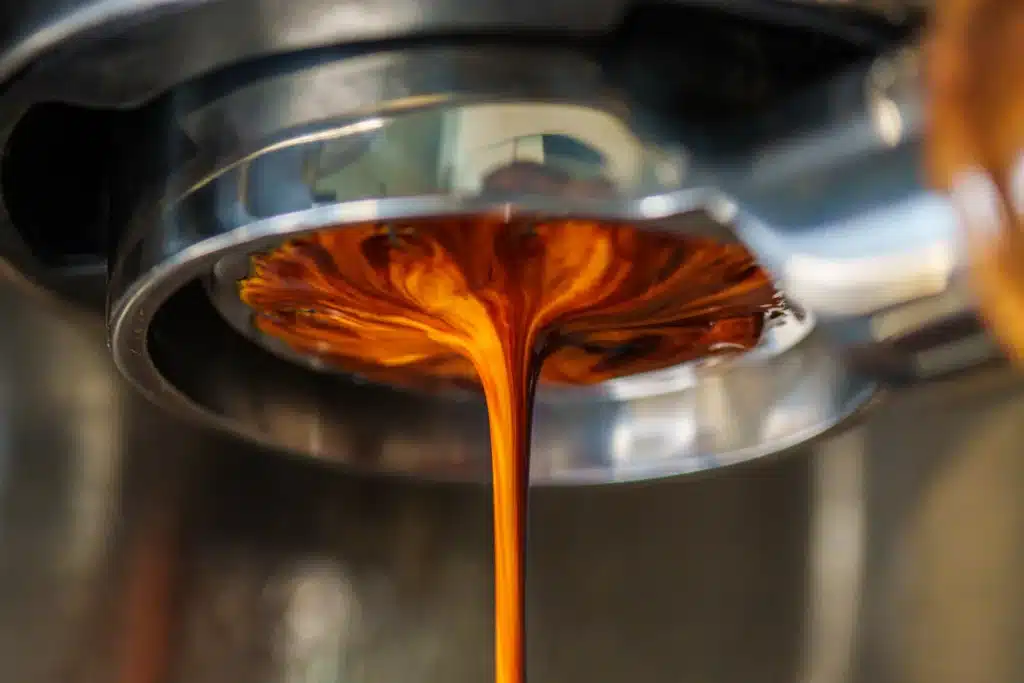
- Pull the espresso. Use finely ground coffee and aim for a 1:2 ratio in about 25 to 30 seconds. Brew it straight into your cappuccino cup.
- Purge the steam wand. Open the steam for a second over a towel to clear out any built-up water.
- Steam the milk. Use very cold milk in a metal pitcher filled about a third of the way. Place the wand tip just below the surface and let air in for a few seconds: you’ll hear a gentle hiss. Then lower it a bit so the milk spins and heats up.
- Stop in time. Turn off the steam when the pitcher feels hot to the touch but you can still hold it for a second. That feeling roughly matches 55 to 65 °C (131 to 149 °F).
- Tap and pour. Give the pitcher a gentle tap on the counter and swirl it to blend the foam. Pour from close up, into the center of the cup, in a steady stream.
The most common mistake happens in step three. If you add too much air, the foam turns dry and stiff. If you add none, you end up with hot milk and no foam, closer to a latte. Practice with water and a drop of dish soap to see the whirlpool without wasting milk.
One more detail: clean the steam wand as soon as you’re done. Milk sticks fast and is hard to remove later. A damp towel and a quick purge of steam are all it takes.
How do you make a cappuccino without an espresso machine?
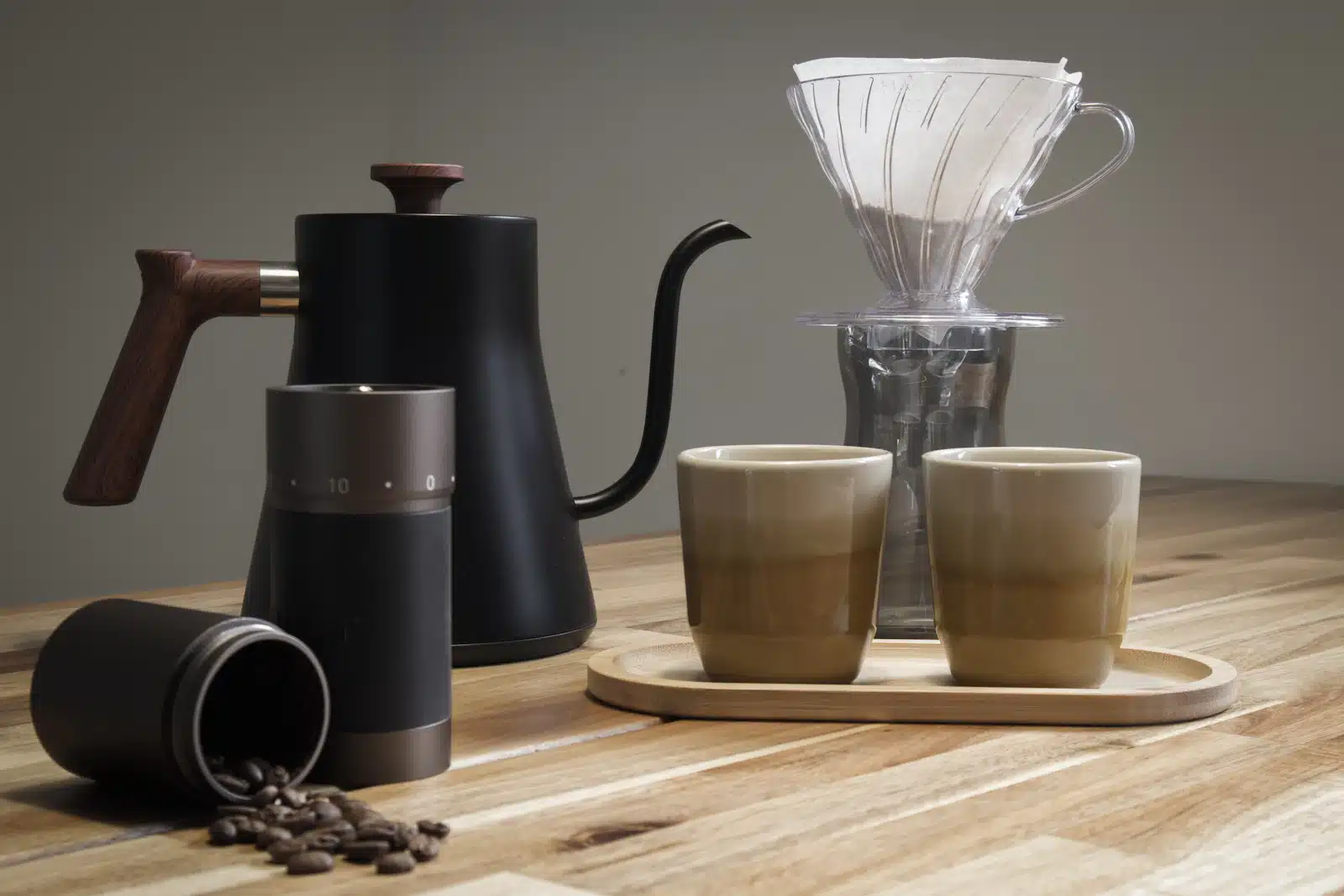
Without a machine, you won’t get true espresso, but you can make a really tasty homemade version. Brew a concentrated coffee in a moka pot or an AeroPress with less water, and froth hot milk with a French press, a handheld frother, or a tightly sealed jar.
For the coffee base, you have two good options:
- Moka pot: it doesn’t make espresso, because it works at much lower pressure, but it brews a strong, full-bodied coffee that stands up to milk. We walk you through it step by step in how to use a moka pot.
- AeroPress with less water: its maker describes the cup as rich like espresso. With less water, you get a concentrate that works really well with milk. We compare it in V60 vs. Chemex vs. AeroPress.

Now for the foam. Heat the milk without letting it boil, on the stove or in the microwave. Then pick your method:
- French press: pour the hot milk into the press up to a third of the way and pump the plunger up and down quickly about 20 times. This method comes closest to machine-made foam.
- Handheld frother: place it just below the surface and move it up and down until the milk doubles in volume.
- Jar with a lid: fill it halfway with warm milk, seal it tight, and shake hard for about 30 seconds. Heads up: use a towel, because the jar gets hot.
Let the milk rest for a few seconds so the big bubbles rise. Then pour the milk first and spoon the foam on top at the end. You won’t get latte art, but you will get a creamy, hot cup with all the flavor of the coffee.
What’s the difference between a cappuccino and a latte?
The difference comes down to the amount of milk and the foam. A cappuccino is shorter and has a thicker layer of foam, so you taste the coffee more. A latte has more milk and a thin layer of foam, and it’s served in a bigger cup or glass. The result is smoother and milkier.
A simple way to picture it, according to the TODAY show’s coffee drink guide: a cappuccino is espresso, one part steamed milk, and one part foam. A latte is espresso, two parts steamed milk, and just a thin layer of foam.
Here’s how they differ in the cup:
- Size: a traditional cappuccino fits in 150 to 160 ml; a latte is usually bigger.
- Texture: a cappuccino feels airier; a latte feels more liquid and silky.
- Intensity: in a cappuccino, the coffee takes the lead a bit more.
- Calories: for a 475 ml (16 oz) drink, Healthline estimates about 130 calories for a cappuccino and 206 for a latte, because the latte has more milk.
If you like milk but want to taste the coffee more, a flat white is also worth a try. We cover it all in latte vs. flat white: the differences. And if you want something even shorter, a macchiato is an espresso with just a splash of milk.
What’s the best coffee for a cappuccino?
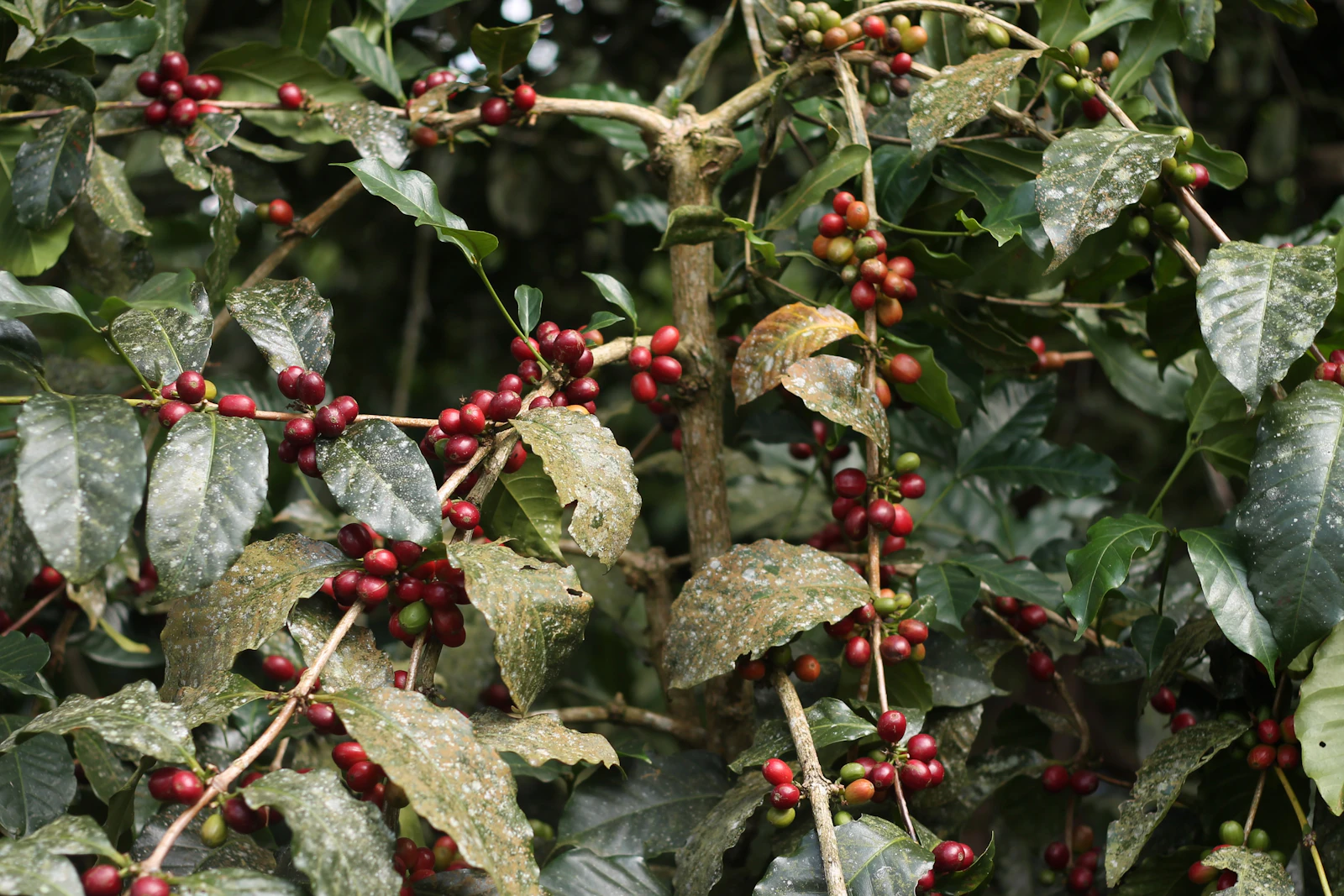
For a cappuccino, you want a coffee with body and sweet notes that won’t disappear in the milk. Colombian specialty coffees work really well, especially at a medium roast. Milk brings out flavors like chocolate, caramel, or panela (unrefined cane sugar).
You don’t need a special “espresso coffee.” Espresso is a brewing method, not a type of bean or roast. What does matter is that the coffee is fresh and ground right for your method.
A few ideas to help you choose:
- For a classic, balanced cappuccino: a washed coffee that’s clean and easy to brew, like our Sonsón washed coffee, 340 g.
- For a sweeter, fruitier cappuccino: a natural process coffee, like our Caicedo natural coffee, which is dried inside the whole fruit.
- If you have a moka pot: ask for the coffee ground for moka, a little coarser than for espresso.
You can see all the options in our specialty coffee category. Buy whole bean if you have a grinder: ground coffee loses its aroma much faster.
One last tip: try it without sugar first. Good coffee with well-steamed milk is already sweet on its own. If you still want to sweeten it, add just a little, in the cup, not in the pitcher.

Broo Café Team
The coffee team at Broo Café, specialty coffee roasters in Medellín.
Content reviewed by the Broo Café Team.
Frequently asked questions
Does a cappuccino have cinnamon or chocolate?
Not in the Italian recipe: it’s just espresso, milk, and foam. Many coffee shops dust cocoa or cinnamon on top, and that’s fine if you like it. Try it plain first to taste the coffee; then decide if you want the extra touch.
Can you make a cappuccino with plant-based milk?
Yes. Oat and soy drinks usually froth better than others because they have more protein or come in barista versions. The foam is less firm than with cow’s milk, so heat them without boiling and froth them patiently.
How much caffeine is in a cappuccino?
It depends on how many espressos it has. An Italian cappuccino has a single espresso. Healthline estimates about 173 mg of caffeine in a large 475 ml (16 oz) cappuccino, which usually has two shots. Milk doesn’t change the caffeine; it only softens the flavor.
Why is it called a cappuccino?
There are several legends. The best known says that in Vienna, in 1683, someone saw a Capuchin friar drinking coffee with milk and exclaimed “Kapuziner.” Another version points to a Viennese drink with cream and spices. Neither has been fully proven.
Can you drink a cappuccino cold?
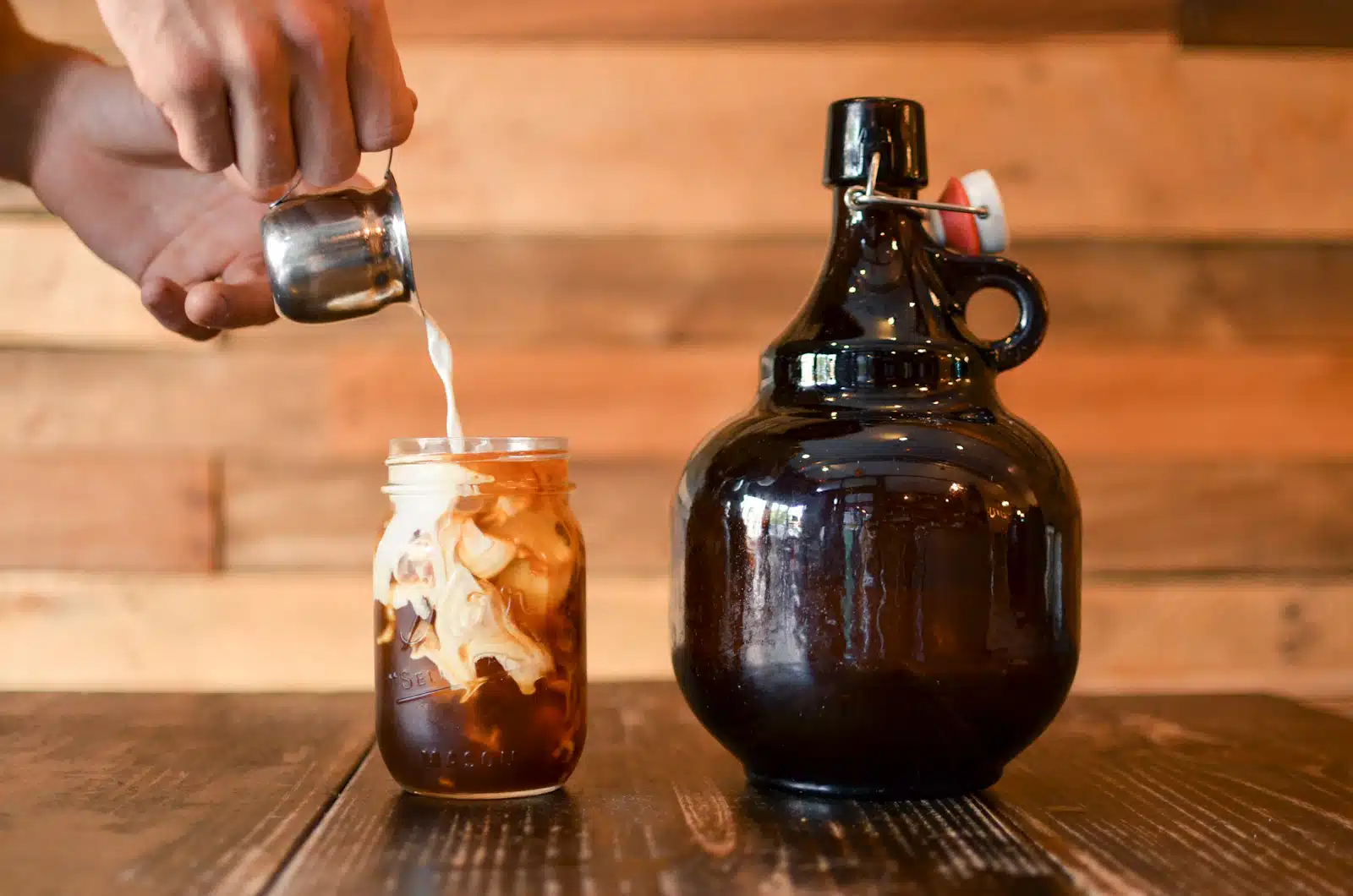
Yes, although cold foam behaves differently. Brew the espresso or concentrate, let it cool, and serve it over ice with cold frothed milk. If you’d rather have something cold and simpler, cold brew with milk gives you a smooth cup that’s ready in seconds.
Summary
- A cappuccino is an espresso with hot milk and foam: the Italian recipe uses 25 ml of coffee and 125 ml of milk at about 55 °C (131 °F).
- Without a machine, you can make a homemade version with a moka pot or AeroPress and froth the milk with a French press or a jar.
- Compared with a latte, a cappuccino is shorter, foamier, and lets the coffee shine more.
Mastered the cappuccino? The next step is the latte, smoother and perfect for practicing latte art: learn how to make it in our guide to latte vs. flat white. And tell us in the comments how you like yours: with or without cocoa on top?
References
- Milano, F. (2018). È #cappuccinoday, bevanda italiana che piace anche all’estero. Il Sole 24 Ore (specifications from the Istituto Nazionale Espresso Italiano)
- National Coffee Association. Espresso
- Skladany, J. (2025). A guide to coffee drinks: cappuccino, latte, macchiato, flat white and beyond. TODAY
- Ajmera, R. (2020). Cappuccino vs. latte vs. macchiato: what’s the difference? Healthline