A macchiato is an espresso “stained” with a little milk, usually foamed: a short, intense drink where the coffee takes center stage.
In Italian, macchiato means “stained” or “marked.” Of all the drinks that combine espresso and milk, it has the most coffee and the least milk. One recipe uses just 5 to 10 g of milk heated to 60–66 °C (140–150 °F) (Wikipedia, Caffè macchiato).
You order a macchiato and get a tiny cup with an espresso and a touch of foam. Next to you, someone gets a tall glass layered with milk and coffee, and it’s also called a macchiato. Which one is right? Both exist, but they’re almost opposite drinks.
In this guide, we explain what a macchiato is, how an espresso macchiato differs from a latte macchiato, and how to make each one at home. You’ll also see how it compares with a cortado and a cappuccino, and which coffee to choose. That way you’ll know what to order, and what to make, depending on what you’re craving.
In this article
What is a macchiato?
A macchiato, or caffè macchiato, is an espresso with a small amount of milk added, usually foamed. The milk doesn’t turn it into a different drink: it just “stains” it. That’s why it softens the bitterness and adds a touch of sweetness without taking away any intensity.
The name says it all. In Italian, macchiato means “stained” or “marked.” It’s coffee marked with milk. A traditional recipe uses just 5 to 10 grams of milk, one or two teaspoons, heated to between 60 and 66 °C (140 and 150 °F).
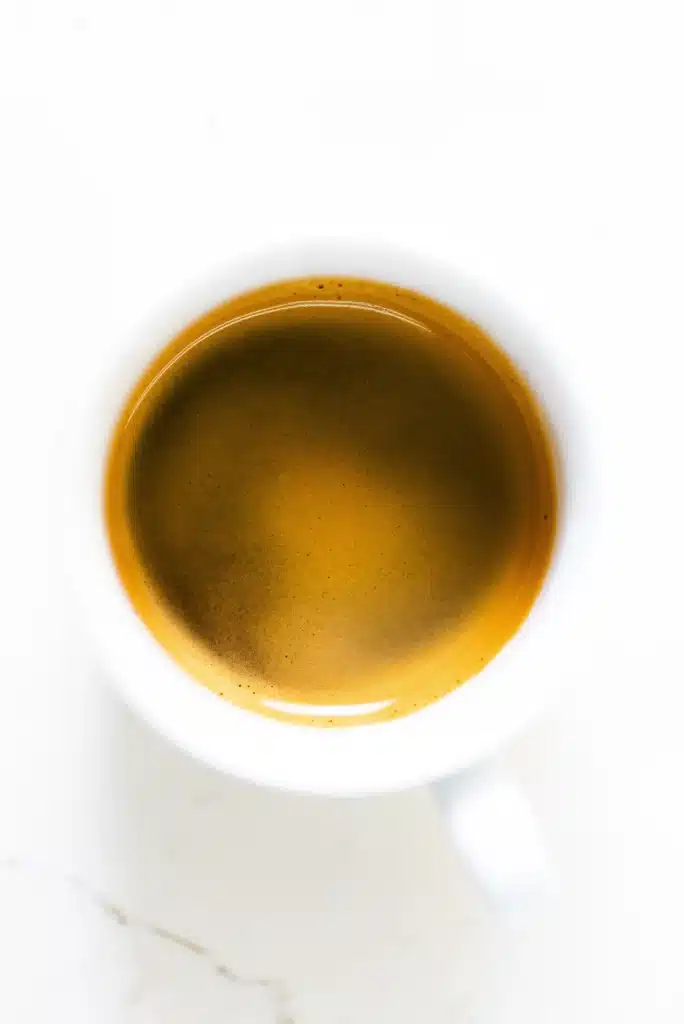
The base is an espresso. The National Coffee Association (NCA) describes it as near-boiling water forced at high pressure through finely ground coffee for 20 to 30 seconds, at a 1:2 ratio. That espresso is served in a small cup and topped with the spot of foam.
Because of its size, the macchiato is one of the lightest milk-based coffee drinks. For a 60 ml (2 oz) serving, Healthline estimates about 13 calories and just over 85 mg of caffeine. The caffeine comes from the espresso: the milk adds almost none.
Who is it for? For anyone who finds a straight espresso too intense but doesn’t want a big, milky drink. It’s a happy medium: short, strong, and approachable. To see where it fits among all coffee drinks, check out our guide to types of coffee.
What’s the difference between an espresso macchiato and a latte macchiato?
They’re nearly opposites. An espresso macchiato is an espresso stained with a little milk. A latte macchiato is a glass of hot milk stained with an espresso. In the first, coffee dominates; in the second, milk does.
The order changes too. In an espresso macchiato, the coffee goes in first and the milk second. In a latte macchiato, the milk goes in first and then, slowly, the espresso. That’s why a latte macchiato forms layers in the glass.
- Espresso macchiato: small cup, one espresso, one or two spoonfuls of foam. Intense and short.
- Latte macchiato: tall glass, lots of hot milk, foam on top, and an espresso poured in at the end. Smooth and milky.
The latte macchiato is very popular in Italy. According to an Astra Ricerche survey cited by Il Sole 24 Ore, 37.4% of Italians drink at least one latte macchiato a month. That’s almost as many as for the cappuccino, at 41.2%.
Watch out at coffee chains. Many sell “macchiatos” with vanilla syrup and caramel in large cups. They’re tasty, but they’re closer to a sweetened latte macchiato than to an Italian macchiato. If you order “a macchiato” at a coffee shop, ask what you’re going to get.
How do you make an espresso macchiato at home?
Pull an espresso into a small cup, froth a little milk until it’s foamy, and spoon one or two spoonfuls of foam on top. It’s the quickest milk drink to make, because you need so little milk.
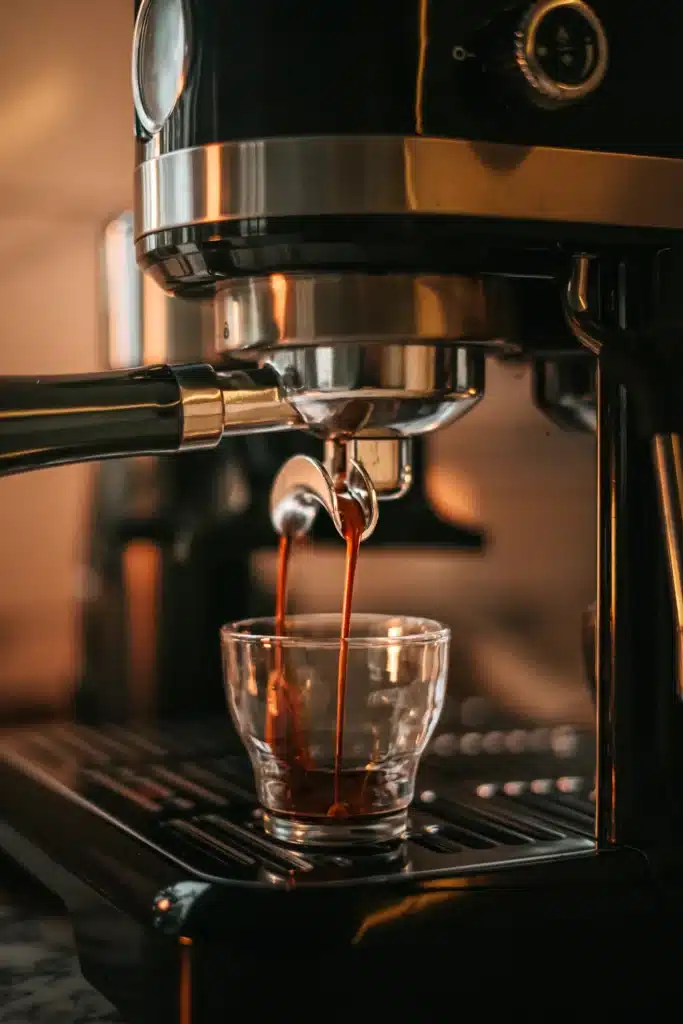
- Make the espresso. Use finely ground coffee and aim for a 1:2 ratio in 20 to 30 seconds. Serve it in a preheated espresso cup.
- Froth a small amount of milk. With the steam wand, introduce air until the milk gains volume and turns foamy. Since you’ll only use a little, froth the smallest amount your pitcher allows.
- Heat it without overdoing it. Aim for 60 to 66 °C (140 to 150 °F): the pitcher should feel hot, but you should be able to touch it for a second.
- Stain the coffee. With a spoon, place one or two spoonfuls of foam in the center of the espresso. You can also pour a short stream from the pitcher.
No espresso machine? Brew a strong coffee in a moka pot. It isn’t espresso, because the moka pot works at much lower pressure, but its strong coffee works really well in this drink. We explain how in how to use a moka pot. Another option is an AeroPress with a small amount of water, which we compare in V60 vs. Chemex vs. AeroPress.
For foam without a steam wand, heat a little milk and froth it in a French press or a tightly sealed jar. You need so little that it isn’t worth heating much.
How do you make a layered latte macchiato?
Fill a tall glass with hot frothed milk, wait a few seconds for the foam to rise, and pour the espresso in slowly, in a thin stream. The coffee settles in the middle, between the milk and the foam, forming three layers.
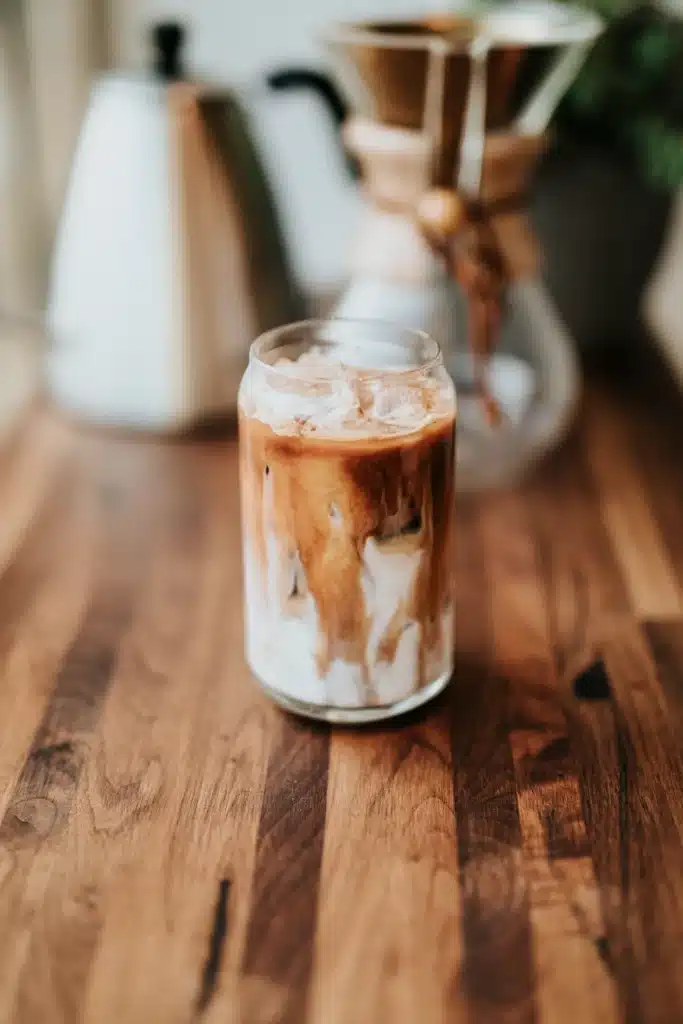
- Choose a tall glass. That way you can see the layers, which are the whole charm of this drink.
- Froth the milk. Heat and froth enough whole milk to fill about three-quarters of the glass. Aim for more foam than you would for a latte.
- Pour the milk and wait. Pour the milk and its foam into the glass and let it rest for 30 seconds. The foam rises and the liquid milk stays at the bottom.
- Pour the espresso slowly. Do it in the center, in a thin stream. The coffee passes through the foam and settles in the middle.
- Serve with a long spoon. Many people drink it layer by layer, and others stir it. Both are fine.
If you don’t have a machine, use a strong moka pot or AeroPress coffee, just like for the espresso macchiato. The layers will be less defined, but it will taste just as good.
A tip: the hotter and foamier the milk, the better the layers separate. If the milk is lukewarm or has little foam, the coffee mixes in right away.
How is a macchiato different from a cortado and a cappuccino?
The difference is how much milk each one has. A macchiato has just a spot. A cortado has equal parts espresso and milk, with no foam. A cappuccino has quite a bit more milk and a thick layer of foam.
The TODAY show’s coffee drink guide sums it up like this: a macchiato is an espresso with a little milk or foam. A cortado is one part espresso and one part steamed milk, with no foam. A cappuccino is an espresso with one part steamed milk and one part foam.
- Macchiato: the shortest and the most intense. The coffee barely changes.
- Cortado: half and half. Smoother than a macchiato, without the airy texture of foam.
- Cappuccino: bigger and creamier. We share the Italian recipe in our guide to the cappuccino.
- Latte: the milkiest of all, with a thin layer of foam. We explain it in latte vs. flat white.
A practical way to choose: if you like to really taste the coffee, go for a macchiato or a cortado. If you want something smooth to go with breakfast, a cappuccino or a latte. And if you’re in the mood for something sweet, try a mocha, which adds chocolate.
What coffee should you use for a macchiato?
Since a macchiato has so little milk, the coffee tastes almost the same as it does on its own. Choose a fresh specialty coffee you also enjoy as an espresso or as tinto (Colombia’s everyday black coffee). A coffee with sweet notes and gentle acidity tastes well rounded with a spot of milk.
With a latte macchiato, it’s the other way around: the milk takes the lead. There, you want a coffee with more body, one that doesn’t disappear in the glass.
- For a clean, balanced espresso macchiato: a washed coffee like the Sonsón washed coffee.
- For a sweeter, fruitier macchiato: a natural process coffee like the 250 g Caicedo natural coffee, which is dried with the whole fruit.
- For the moka pot: ask for coffee ground for a moka pot, a little coarser than for espresso.
Remember that espresso is a brewing method, not a type of bean. Any good whole bean coffee works if you grind it right for your coffee maker. Buy whole bean if you have a grinder, and use the coffee within the weeks after its roast date. You can see all the options in our specialty coffee category.
One last tip: try your macchiato without sugar. The foamed milk already adds a touch of sweetness. If you want it sweeter, add just a little sugar and stir before adding the foam.
Coffees from this guide


Broo Café Team
The coffee team at Broo Café, specialty coffee roasters in Medellín.
Content reviewed by the Broo Café Team.
Frequently asked questions
Is a macchiato stronger than a cappuccino?
In flavor, yes: a macchiato is almost all espresso, so you taste the coffee much more. In caffeine, they can be similar if both have a single shot of espresso. The difference is the milk, which softens the cup more in a cappuccino.
What is a caramel macchiato?
It’s a version popular at coffee chains: steamed milk with vanilla syrup, an espresso poured on top, and caramel sauce. It’s closer to a sweetened latte macchiato than to the Italian macchiato, which is short and has no syrups.
Can you make a macchiato with plant-based milk?
Yes. Since you use so little milk, almost any plant-based milk works. Barista-style oat or soy milks foam better and hold up longer on top of the espresso. Heat them without boiling so they don’t curdle or change flavor.
How much caffeine is in a macchiato?
Healthline estimates just over 85 mg of caffeine in a 60 ml (2 oz) macchiato. The amount depends on the espresso: with a double shot, it will have more. The milk barely changes the caffeine; it only softens the flavor of the cup.
Can you drink a macchiato iced?
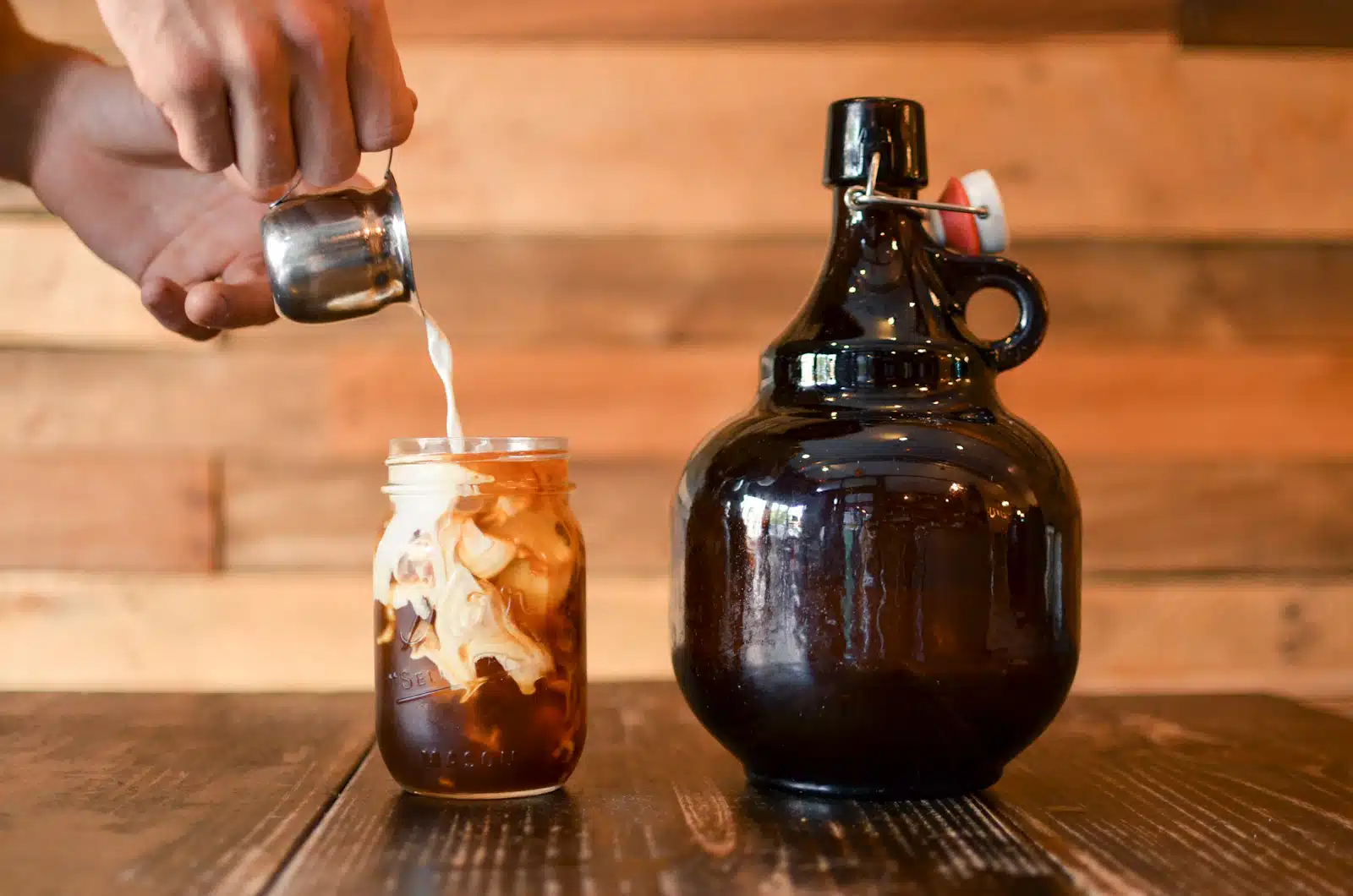
Yes. There are iced versions of the latte macchiato: cold milk over ice in a tall glass with an espresso poured slowly on top. It forms layers too. If you don’t have a machine, cold brew concentrate over cold milk gives a similar, very smooth result.
Summary
- A macchiato is an espresso “stained” with a little foamed milk: short, intense, and with the coffee as the star.
- A latte macchiato is the opposite: a glass of hot milk with an espresso poured in slowly, forming layers.
- Compared with a cortado and a cappuccino, the macchiato has the least milk.
Enjoyed the macchiato and want something with a bit more milk? Try the morning classic in our guide to the cappuccino. And tell us in the comments: are you team espresso macchiato or team latte macchiato?
References
- Wikipedia. Caffè macchiato
- National Coffee Association. Espresso
- Ajmera, R. (2020). Cappuccino vs. latte vs. macchiato: what’s the difference? Healthline
- Skladany, J. (2025). A guide to coffee drinks: cappuccino, latte, macchiato, flat white and beyond. TODAY
- Milano, F. (2018). È #cappuccinoday, bevanda italiana che piace anche all’estero. Il Sole 24 Ore