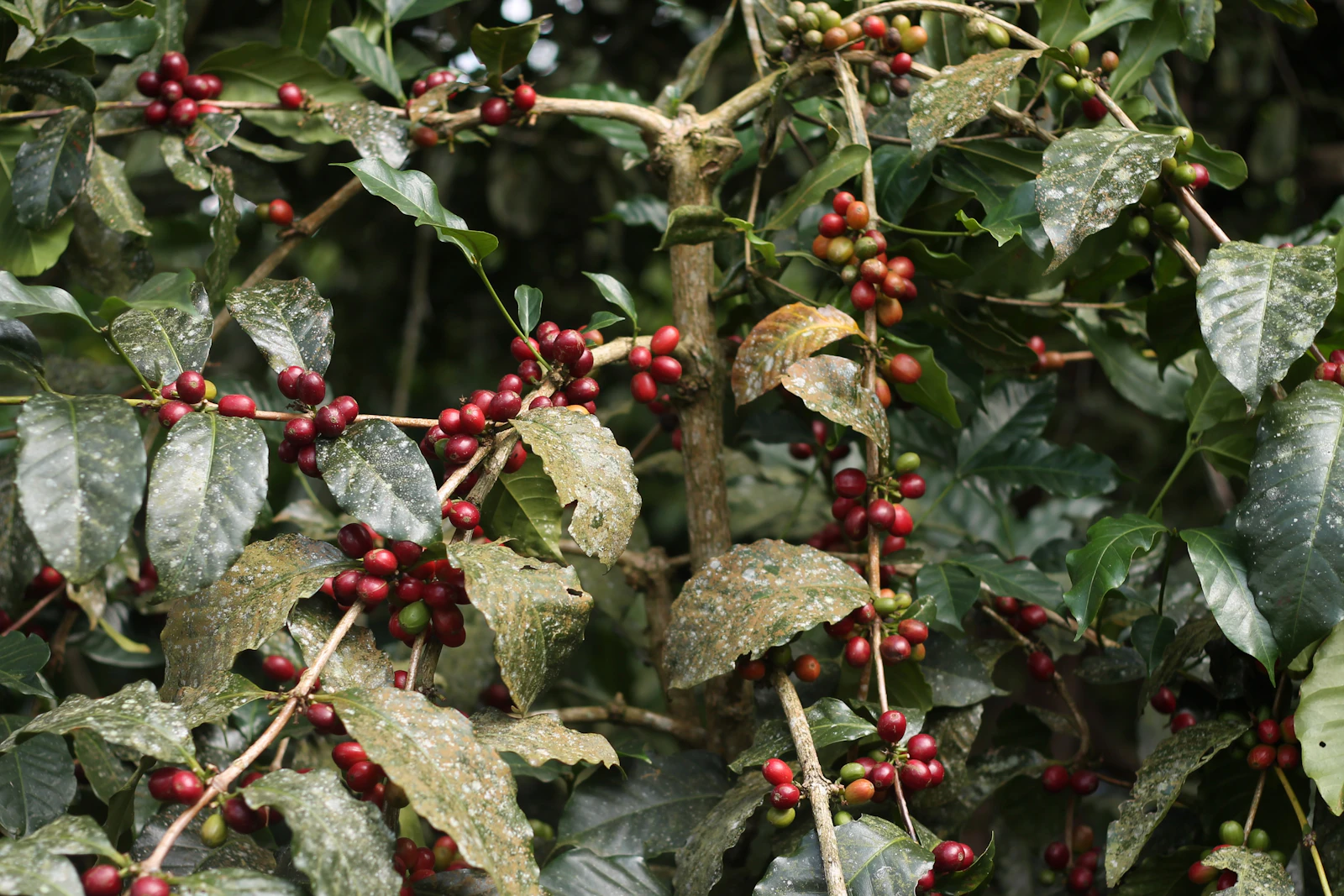
A moka pot (also called a stovetop espresso maker) brews coffee on the stove: steam from the water boiling in the base pushes the water up through the ground coffee, and the brewed coffee rises into the top chamber.
The Bialetti manual says to fill the base with cold water up to the bottom edge of the safety valve, add the coffee without tamping it, and take the pot off the heat once the upper chamber is full (Bialetti, Moka Express manual).
The moka pot is one of those heirlooms that moves from grandma’s kitchen to yours. It shines on the stove, makes an unmistakable sound when it’s ready, and fills the house with the smell of coffee. But it also has a reputation for making coffee that tastes burnt, bitter, or metallic.
The good news is that it almost always comes down to technique. In this guide, you’ll learn how to use a moka pot step by step: how much water and coffee to add, which grind to use, why it comes out burnt, and how to clean it so it lasts for years. It’s all based on the manual from the company that invented it. At the end, you’ll see how it compares with machine espresso.
How do you use a moka pot?
To use a moka pot, fill the base with cold water up to the valve, add the filter basket filled with untamped coffee, screw it shut tightly, and set it over low heat. When the top fills with coffee, take it off the stove. It’s six simple steps, and each one matters if you don’t want a burnt cup.
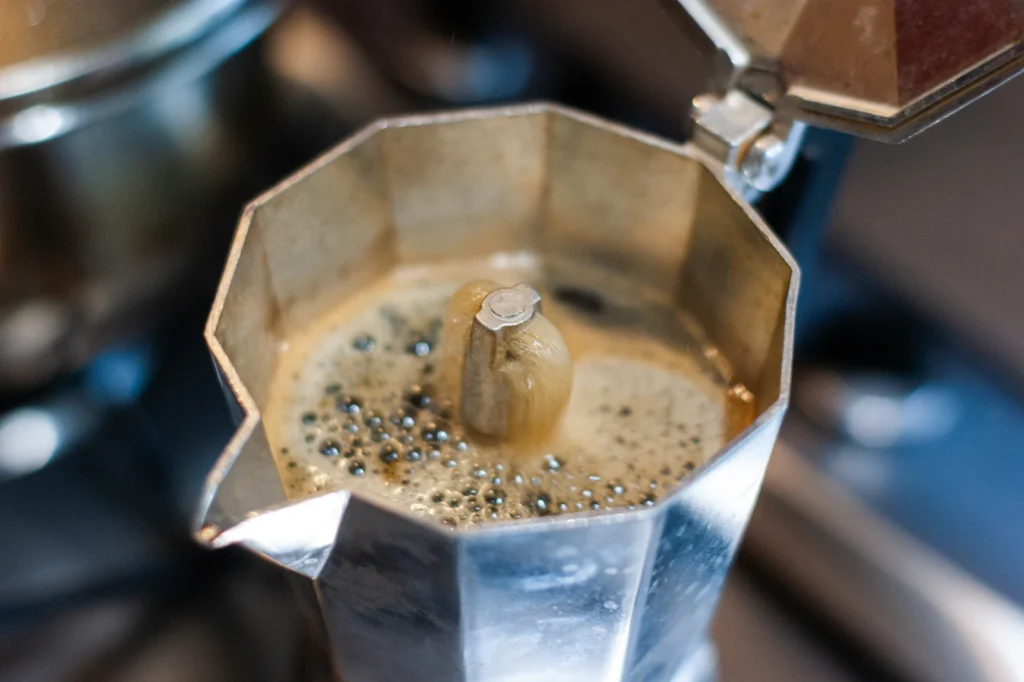
These are the steps from the Bialetti manual, plus a couple of tips from the brand’s own website:
- Cold water in the base. Fill it up to the bottom edge of the safety valve, and no higher.
- Insert the funnel-shaped filter. Fit it into the base.
- Fill the filter with moka-grind coffee. Don’t tamp it, and wipe off any grounds left on the rim.
- Screw on the top. Close it firmly, but don’t overdo it, and don’t use the handle for leverage.
- Put it on the stove. On a gas burner, the flame shouldn’t reach past the edge of the pot. Bialetti recommends low heat and patience.
- Take it off when the upper chamber is full. Bialetti says it’s ready when it starts making that classic gurgling sound.
One last detail from the manual: stir the freshly brewed coffee before pouring it into cups. That way every cup tastes the same.
If you’re still deciding whether the moka pot is the method for you, compare it with the others in our guide to coffee brewing methods. Now, the amounts.
How much coffee and water goes in a moka pot?
A moka pot takes water up to the bottom edge of the safety valve and a filter full of coffee, leveled and untamped. You don’t need a scale: the pot has the measurements built in. Bialetti explains that the valve works like a measuring cup, and the filter sets the coffee dose for that size of moka pot.
Here’s how that works in practice:
- Water up to the valve, no more. Bialetti warns that going above that level can make the coffee watery. And if the water reaches the filter and mixes with the coffee, it disrupts the gradual rise of the water.
- Start with cold water. That’s what the manual says. There’s no need to heat it first.
- A full, generous filter. Fill it to the rim and level it off with your finger or a spoon. No pressing.
- A clean rim. Coffee grounds on the threads keep the pot from sealing properly.
- A little water left at the end is normal. Bialetti notes that it’s normal for some water to stay in the base after the coffee has come up.
You don’t adjust the amount of coffee the way you would with a French press: you change the size of the pot. If you want more intensity, choose a coffee with more body; don’t pack the filter.
A clean, balanced washed coffee is a great match for the moka pot: its even profile shines with the body this method brings. That’s why our Andes washed coffee, 250 g works so well here, and you can order it ground. Which brings us to grind size.
What grind should you use for a moka pot?
A moka pot needs coffee ground specifically for moka, and it should never be fine. The Bialetti manual repeats this several times and even says not to use coffee ground for espresso machines. The reason is simple: fine powder clogs the filter, the water can’t flow through properly, pressure builds, and the coffee turns bitter.
Here are the signs of the wrong grind:
| What happens | Possible cause | What to do |
|---|---|---|
| The valve releases steam | Coffee too fine or tamped, or too much water | Use a moka grind, don’t tamp, and fill water only up to the valve |
| The coffee rises very slowly or not at all | Grind so fine it clogs the filter | Grind coarser |
| It tastes bitter and harsh | Fine grind that over-extracts | Grind coarser |
| It tastes watery | Grind too coarse or water above the valve | Grind a little finer and stick to the water level |
The first row comes straight from the Bialetti manual. The others follow the NCA’s general rule: if the coffee tastes bitter, the grind may be too fine; if it tastes flat or watery, too coarse.
If you have a grinder, grind right before brewing and adjust one step at a time. If not, ask for coffee ground for moka: in our specialty coffee shop, you can order it whole bean or ground. And if you can’t decide between the two, our guide to whole bean vs. ground coffee will help.
With the right grind, the only enemy left is the heat.
Why does moka pot coffee taste burnt or bitter?
Moka pot coffee tastes burnt mostly because the heat is too high or the pot stays on the stove after the coffee has finished rising. Other causes are tamped or overly fine coffee and a dirty pot. Bialetti recommends low heat: good coffee is worth the wait.
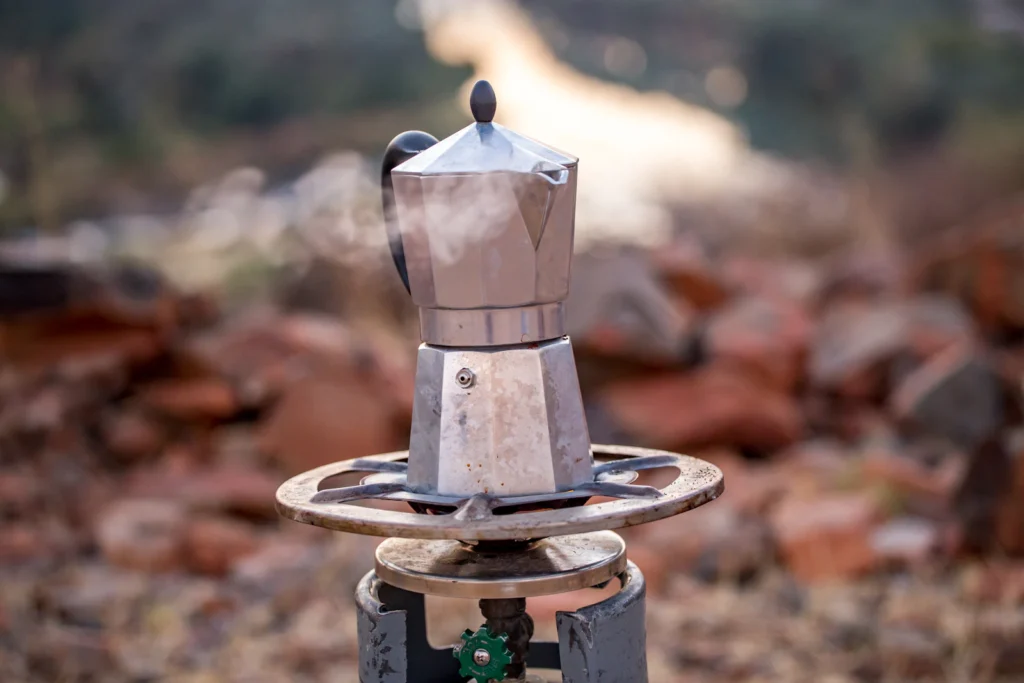
Check these five points:
- The flame reaches past the edge. The manual says it shouldn’t stick out beyond the pot. On an electric or ceramic cooktop, never use the highest setting.
- You left it on the heat too long. When you hear the gurgle, take it off. If it stays there, the coffee that has already come up keeps heating.
- You tamped the coffee. Bialetti explains that if the water can’t get through the filter, pressure in the base rises quickly. That happens with tamped coffee or heat that’s too high.
- The grind is too fine. It clogs the filter and makes the cup bitter, as you saw above.
- There’s old residue. The NCA warns that leftover coffee and its oils can make the next cup bitter.
One simple tip: stay close to the stove. The manual says not to leave the pot unattended while it’s brewing, and keeping an eye on it is the best way to take it off in time.
And before you add sugar to cover up the bitterness, try fixing the heat: well-made coffee doesn’t need it. The last point on the list brings us to maintenance.
How do you clean and maintain a moka pot?
A moka pot should be washed by hand only, with warm water and no detergent or abrasive sponges, and stored dry and open. That’s what the Bialetti manual says, and it also rules out the dishwasher. Replace the gasket (the rubber seal) if it’s worn and, either way, at least once a year.
The full routine, according to the manufacturer:
- When it’s new. Wash it with water only and run a first brew without coffee. Then brew at least 3 pots of coffee and throw them out: according to the manual, this brings out the most aroma.
- After each use. Let it cool, dump the grounds, and rinse every part with warm water. No soap.
- When you store it. All parts completely dry, with the pot taken apart or left unscrewed.
- The valve. While you wash it, move the little piston that sticks out of the valve. This keeps mineral buildup from clogging it.
- Descale every so often. Fill the base with water up to the line, add two teaspoons of citric acid or vinegar, and run a brew without coffee. Throw out the liquid and rinse.
- The filter plate. Make sure its tiny holes are clear. If they clog, use a soft brush or the tip of a needle.
- The funnel-shaped filter. Don’t bang it to knock out the grounds: it can bend, and then the pot won’t seal properly.
With this care, your moka pot can stay with you for many years. And now, the question everyone asks: is this espresso?
Moka pot vs. espresso: what’s the difference?
A moka pot doesn’t make espresso: it makes a strong, full-bodied coffee, but with steam instead of a machine, a coarser grind, and more time. According to the NCA, espresso is made by forcing near-boiling water at high pressure through finely ground coffee for about 20 to 30 seconds. The moka pot uses only the steam from its base.

This table sums up the differences, using data from the NCA and Bialetti:
| Aspect | Moka pot | Machine espresso |
|---|---|---|
| How the water is pushed | Steam from the water boiling in the base | High pressure generated by the machine |
| Grind | Moka grind, never fine | Fine, like table salt |
| Time | Until the top chamber fills | About 20 to 30 seconds |
| Ratio | Set by the pot: water up to the valve and a full filter | 1:2 (1 g of coffee to 2 g of drink) |
| Result | Strong, full-bodied coffee | Concentrated shot with golden crema |
| Where it’s made | On the stove | In an espresso machine |
In practice, the moka pot is the closest you can get to an intense coffee without a machine. You can drink it black, cut it with a splash of milk, or make café con leche at home.
If you’re curious about espresso-based drinks like the latte, the cappuccino, or the Americano, read our guide to types of coffee. There you’ll see what sets each one apart.
Coffees from this guide


Broo Café Team
The coffee team at Broo Café, specialty coffee roasters in Medellín.
Content reviewed by the Broo Café Team.
Frequently asked questions
Does a moka pot work on an induction stove?
It depends on the material. The classic Moka Express is made of aluminum, and Bialetti says it works on electric and gas stoves, but on induction only with the brand’s induction adapter plate. If you cook on induction, check that your moka pot is explicitly labeled as compatible.
What size moka pot should I buy?
Choose based on how much coffee you make at once, not on the biggest one available. A moka pot works best with a full load: water up to the valve and a full filter. If you live alone, get a small one; if you brew for the whole family, a bigger one.
Can you brew a half batch in a moka pot?
It’s not recommended. Bialetti says to fill the water up to the valve and fill the filter completely, and that’s the amount each pot is designed for. If you sometimes make just a little coffee, it’s best to also have a smaller moka pot.
Why does water leak from the moka pot’s threads?
According to the Bialetti manual, there are three common causes: the pot wasn’t screwed shut properly, the gasket is worn, or coffee grounds were left on the rim of the base. Close it firmly, wipe the rim, and replace the gasket if needed.
Can you make coffee with milk in a moka pot?
Don’t put milk in the pot. The Bialetti manual is clear: the moka pot works only with water and ground coffee, no other liquids. For café con leche, brew the coffee as usual and add hot milk once it’s in your cup.
Summary
- Cold water up to the bottom edge of the valve, a full filter without tamping, low heat, and off the stove once the upper chamber is full: that’s how to use a moka pot, according to Bialetti.
- Use a moka grind, never fine. High heat, tamped coffee, and leaving the pot on the stove are what cause burnt coffee.
- Wash it by hand only, without detergent, store it dry and open, and replace the gasket at least once a year.
Want to know which drink to order next time you’re at a coffee shop, or which one to make with your moka pot? Discover the differences in our guide to types of coffee. And tell us in the comments how many years your moka pot has been with you.
References
- Bialetti. Moka Express manual (instructions for use, cleaning, and maintenance)
- Bialetti. Moka Express experience
- Bialetti. Moka Express: technical features and instructions
- Bialetti. The Moka valve: a tiny component of remarkable importance
- National Coffee Association. Espresso
- National Coffee Association. French press coffee (grind and flavor)
- National Coffee Association. Pour-over coffee (grind guide by brewing method)