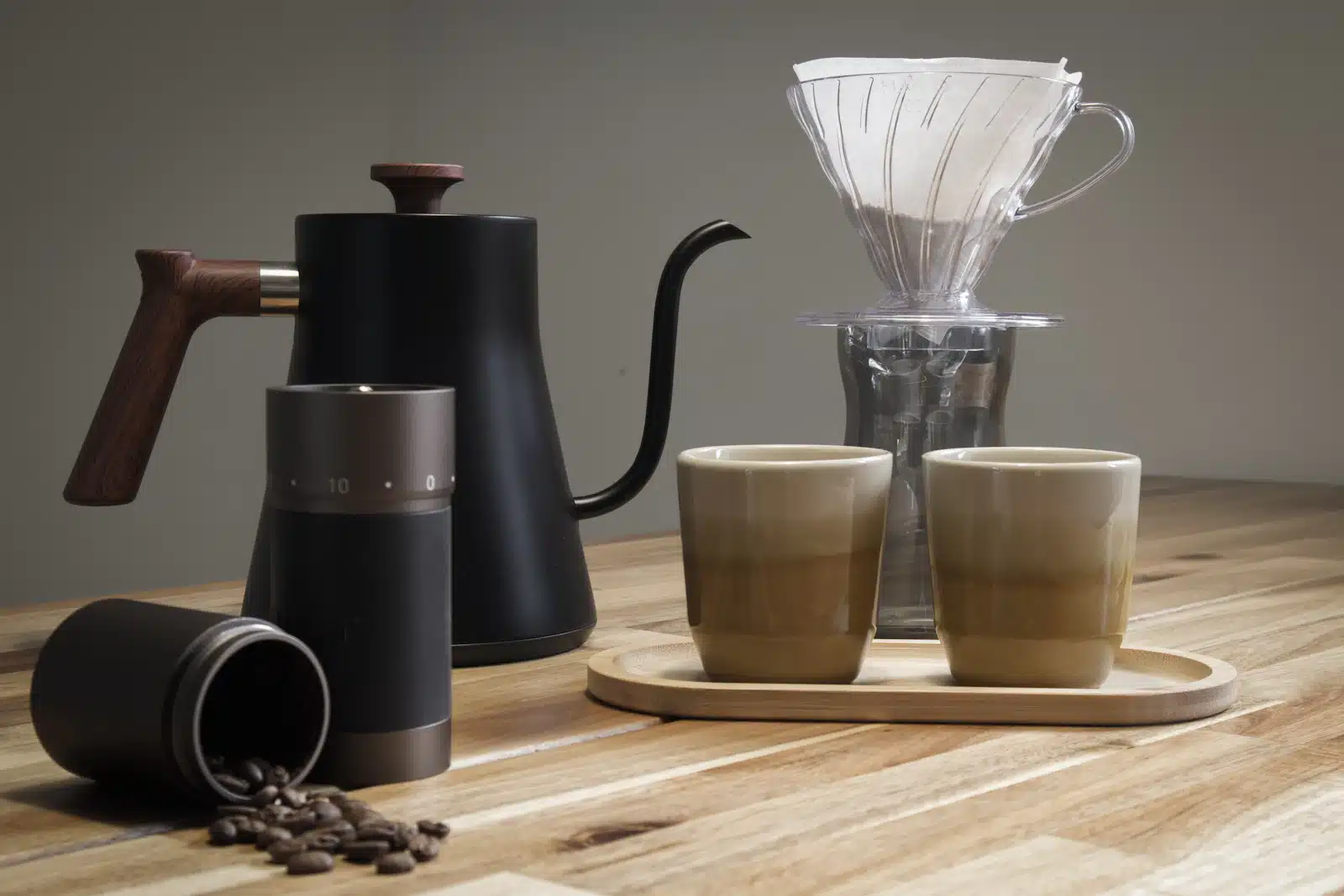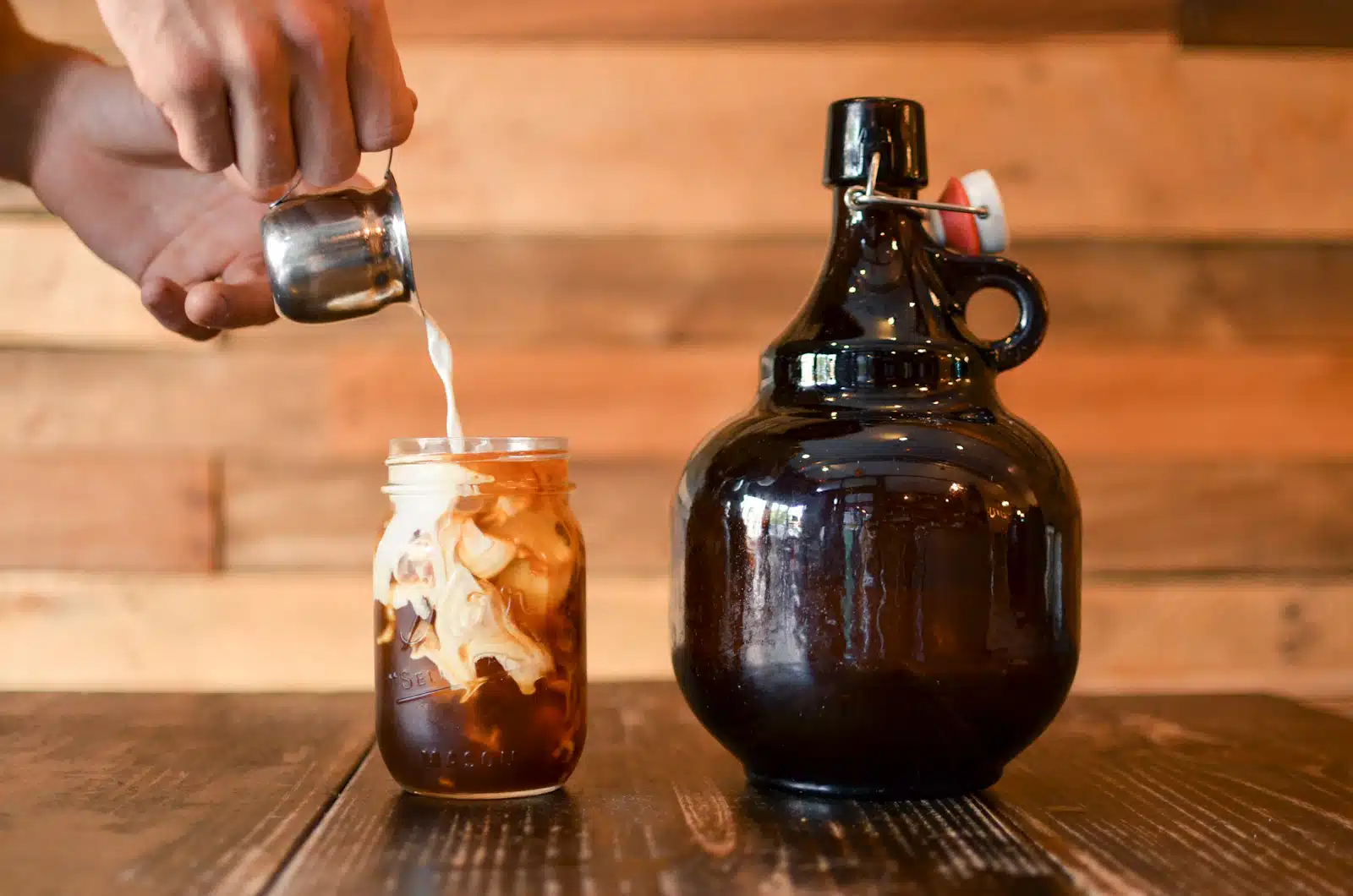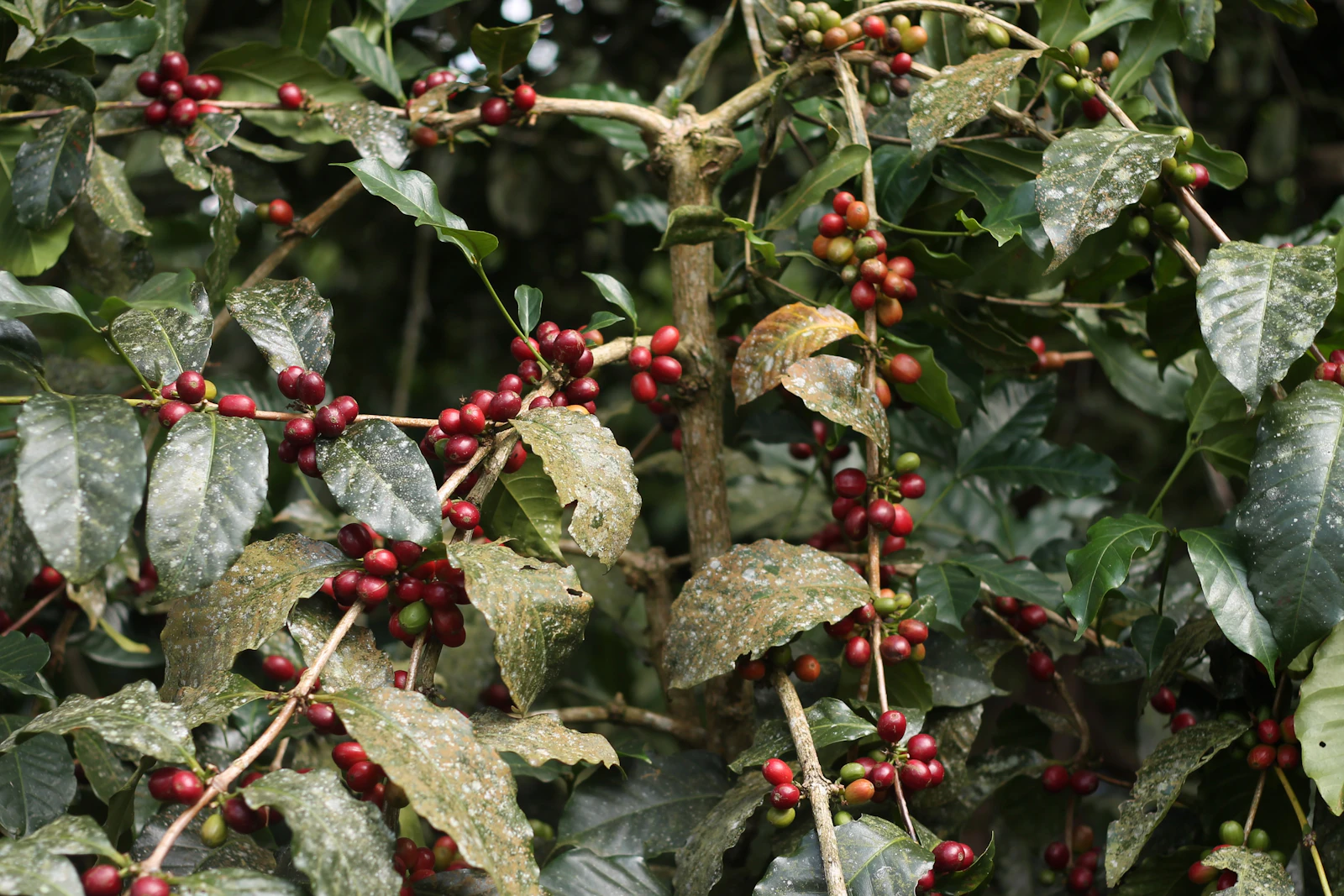
Types of coffee are classified in four ways: by species (arabica or robusta), by plant variety, by the drink you make, and by roast level.
In Colombia, for example, 87% of the coffee-growing area is planted with rust-resistant varieties, up from 35% reported in 2010 (World Coffee Research).
You order a coffee at a coffee shop and the questions start pouring in. Arabica? Castillo or Caturra? Latte or cappuccino? Medium or dark roast? Everyone seems to be talking about “types of coffee,” but each one means something different, and it’s easy to end up ordering the same thing as always just to avoid the confusion.
In this guide, we sort the types of coffee into four groups: plant species, variety, drink, and roast. You’ll understand the difference between arabica and robusta, which varieties are grown in Colombia, what goes into each drink on the menu, and how roasting changes the flavor. At the end, we give you a quick guide to choosing your coffee based on your taste, no barista training required.
In this article
- What are the types of coffee?
- What’s the difference between arabica and robusta?
- Which coffee varieties are grown in Colombia?
- What types of coffee drinks are there (espresso, americano, latte, cappuccino, café con leche)?
- What is roasting, and how does it change the flavor?
- Which type of coffee should you choose for your taste?
What are the types of coffee?
Types of coffee are grouped by four criteria: the plant species, the variety within that species, the drink being made, and the roast level of the bean. When someone talks about “types of coffee,” they almost always mean one of these four, even if they don’t say so. Separating them helps you understand what you’re buying and what you’re ordering.
Here’s how the four groups look, from plant to cup:
| Criterion | Examples | What changes in your cup |
|---|---|---|
| Species | Arabica, robusta | The overall flavor profile and the amount of caffeine |
| Variety | Caturra, Castillo, Colombia, Cenicafé 1, Typica, Bourbon | Flavor nuances and, above all, how the plant performs in the field |
| Drink | Espresso, americano, latte, cappuccino, café con leche, tinto (Colombian black coffee) | Intensity, texture, and how much milk it has |
| Roast | Light, medium, dark | Acidity, bitterness, and how much the origin comes through |
There’s a fifth way to classify coffee that also shows up on labels: the process after harvest. Washed, natural, and honey change the flavor dramatically, and we explain them in depth in our guide to coffee processing methods: washed, natural, and honey.
And if what you want to know is what makes a coffee “specialty,” beyond its type, check out our guide to what specialty coffee is.
Let’s start at the root, literally: the plant species.
What’s the difference between arabica and robusta?
Arabica makes smoother, more aromatic coffees with less caffeine; robusta makes stronger, more bitter coffees with considerably more caffeine, and it’s widely used in blends and instant coffee. They’re two different species from the same family. Most of the coffee you drink comes from one of the two, and each has its own history and place.
Here’s how they compare, according to World Coffee Research (WCR) and the National Coffee Association (NCA):
| Aspect | Arabica | Robusta |
|---|---|---|
| Scientific name | Coffea arabica | Coffea canephora |
| Origin | Ethiopia, where its greatest genetic diversity is found | Humid forests of central and western sub-Saharan Africa |
| Flavor | Smooth, aromatic | Strong, with bitter notes and a pronounced aftertaste |
| Caffeine | Lower | 50% to 60% more than arabica, according to the NCA |
| Bean | Flatter and more elongated | Less elongated than arabica |
| Plant | More prone to disease; needs more care | More resistant to pests and disease |
| Typical use | Single origin and specialty coffees | Blends, instant coffee, and Italian espresso blends |
WCR explains that arabica seeds were carried from the forests of southwestern Ethiopia to Yemen, where it was first cultivated. Over the years, those plants gave rise to dozens of varieties that are now grown all over the world.
Robusta, on the other hand, grows wild in the understory of humid rainforests, between 50 and 1,500 meters (about 160 to 4,900 feet) above sea level. That hardiness makes it easier and cheaper to grow.
Is one better than the other? It depends on what you’re looking for. If you want a cup with nuance that you can drink black, arabica is your species. Colombia produces arabica, and all Broo coffee is 100% Colombian arabica.
Within arabica, however, there are many “families.” That’s where varieties come in.
Which coffee varieties are grown in Colombia?
Colombia mainly grows rust-resistant arabica varieties developed by Cenicafé, such as Castillo, Colombia, and Cenicafé 1, along with traditional varieties like Caturra, Typica, and Bourbon. Coffee leaf rust is a leaf disease that can wipe out a harvest. That’s why the country bet on varieties that resist it.
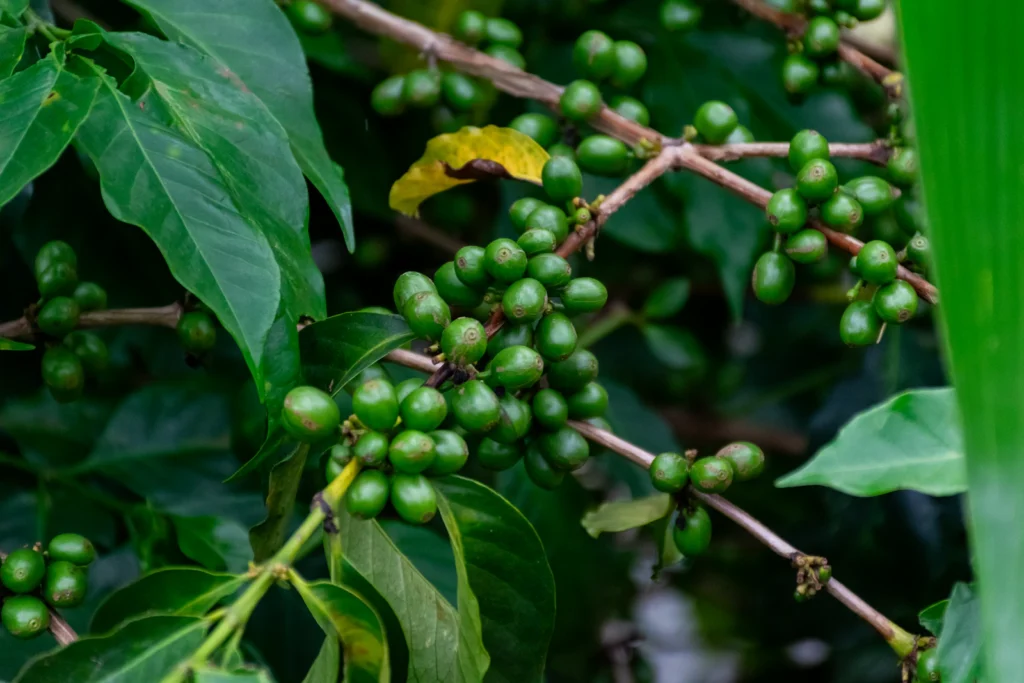
According to Cenicafé, the research center of the National Federation of Coffee Growers of Colombia, these are the key varieties:
| Variety | When it arrived | What sets it apart |
|---|---|---|
| Caturra | Traditional | Natural mutation of Bourbon. Highly susceptible to rust |
| Colombia | 1982 | The first rust-resistant variety released by Cenicafé |
| Tabi | 2002 | Tall plant, for farms with traditional production systems |
| Castillo® | 2005 | Broad adaptation to Colombian coffee growing, with regional versions |
| Cenicafé 1 | 2016 | Caturra-like size, high productivity, and rust resistance |
The story of Caturra explains why the shift was so big. WCR notes that it came to account for nearly half of Colombia’s production. Then a government program that began in 2008 drove the renovation of coffee farms with Castillo, a rust-resistant variety that counts Caturra among its ancestors.
The result shows in WCR’s figures: today, 87% of Colombia’s coffee-growing area is planted with rust-resistant varieties, up from 35% in 2010.
What about flavor? A common question is whether resistant varieties taste worse. Cenicafé reports that its cup quality tests find no differences compared with varieties like Typica and Bourbon, which are known for their excellent cup. In practice, origin, process, and roast matter as much as variety.
From the field, we move to the coffee bar: the types of coffee you order from a menu.
What types of coffee drinks are there (espresso, americano, latte, cappuccino, café con leche)?
Almost every coffee drink starts from one of two bases: espresso, a concentrated coffee made under pressure, or good old filter coffee. What changes is how much water, milk, or foam you add. Once that’s clear, any coffee shop menu stops being a mystery.

These are the most common drinks:
- Espresso: the NCA describes it as near-boiling water forced at high pressure through finely ground coffee for 20 to 30 seconds. The reference ratio is 1:2: one gram of coffee for every two grams of beverage. It has a golden layer on top, the crema, and it’s the base of many milk drinks.
- Americano: an espresso lengthened with hot water. It’s smoother and lighter, similar to filter coffee, but with the character of espresso.
- Latte: an espresso with plenty of steamed milk and a thin layer of foam. It’s creamy and smooth; you can taste the coffee, but it doesn’t dominate.
- Cappuccino: an espresso with steamed milk and more foam than a latte. It feels airier, and the coffee comes through more.
- Café con leche: the classic at home. Filter coffee, stovetop percolator (greca) coffee, or pot-brewed coffee, with hot milk. No espresso machine needed.
- Tinto: in Colombia, this is what we call black coffee, without milk. It can come from a filter, a greca, or a pot, and people drink it at any time of day.
This table sums up the differences without exact measurements, because every coffee shop has its own recipe:
| Drink | Base | Milk | How it feels |
|---|---|---|---|
| Espresso | Espresso | No | Intense and concentrated |
| Americano | Espresso + hot water | No | Light, with character |
| Latte | Espresso | Lots, with little foam | Creamy and smooth |
| Cappuccino | Espresso | Milk with plenty of foam | Airy and balanced |
| Café con leche | Filter or pot-brewed coffee | Yes, hot | Homey and comforting |
| Tinto | Filter or pot-brewed coffee | No | Straightforward, the everyday cup |
No espresso machine? No problem. With a moka pot or an AeroPress, you can make a concentrated base for your homemade latte. In our guide to coffee brewing methods, we explain which one suits your time and taste.
But the drink is only half the story. The other half depends on how the bean was roasted.
What is roasting, and how does it change the flavor?
Roasting is the process that uses heat to turn the hard, grassy-smelling green bean into the brown, aromatic bean you know; the darker the roast, the lower the acidity and the higher the bitterness. Roasting releases the aroma and flavor the green bean holds inside. That’s why the same seed can taste very different depending on the roast level.
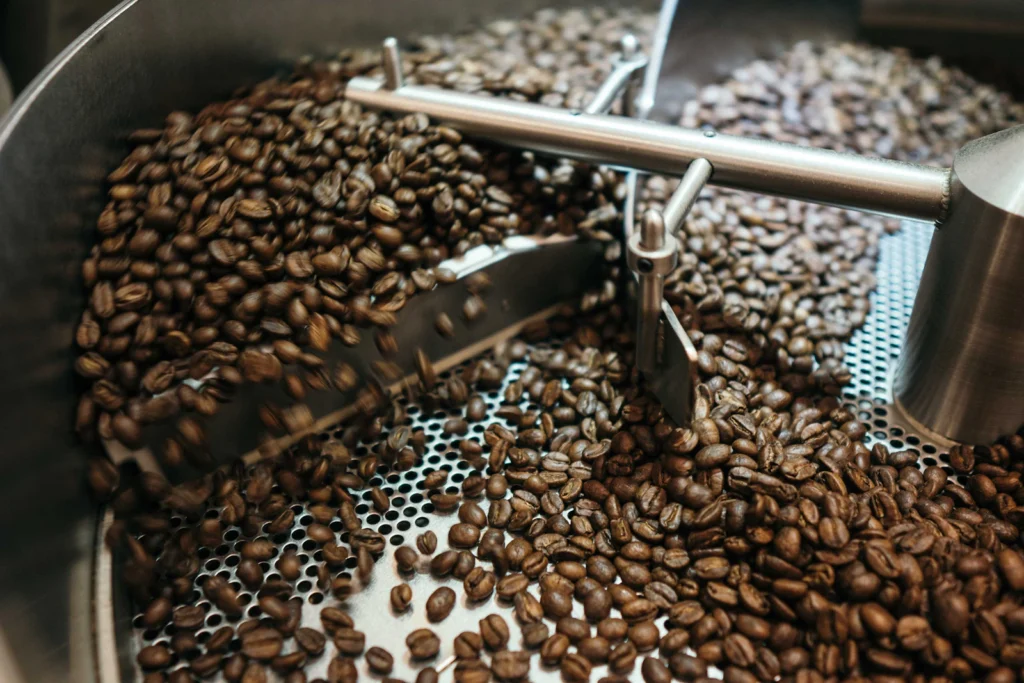
The NCA groups roasts into three color levels:
- Light roast: light brown bean with a matte surface. The “roasted” flavor is subtle, and it preserves the most of each coffee’s unique qualities. It’s also the most acidic.
- Medium roast: medium brown bean, with a stronger flavor and no oil on the surface. It strikes a balance between acidity, sweetness, and body.
- Dark roast: black, shiny, oily bean, with pronounced bitterness and even less acidity. The names “French roast” and “Italian roast” refer to this level.
One detail that confuses a lot of people: “espresso roast” isn’t a specific level. The NCA explains that each roaster defines it based on what they think works best for that method. Plus, one roaster’s dark roast can be different from another’s.
Which one should you choose? If you like tasting the origin, the fruit, or the flowers, look for light or medium roasts. If you like bitter, intense coffee, dark roast is for you, although it masks much of the bean’s nuance.
Broo coffees are medium roast: a point that balances the character of each origin with a pleasant body, and that works both black and with milk.
With species, variety, drink, and roast sorted out, you’re ready to build your ideal coffee.
Which type of coffee should you choose for your taste?
Choose by flavor first and drink second: if you like clean cups, look for a medium roast washed arabica; if you like fruit, a natural; and if you drink coffee with milk, something with body and sweetness. You don’t need to memorize every variety. It’s enough to know your palate and read the label carefully.
Use this quick guide:
- You like black coffee that’s smooth and easy to drink: washed arabica, medium roast. It works in a filter, in a greca, or as your morning tinto.
- You like tasting fruit and aroma: a light or medium roast natural, brewed in a V60, AeroPress, or French press.
- You like it intense and bitter: a darker roast or a short espresso. If you’re after more caffeine, blends with robusta have it.
- You almost always drink lattes or cappuccinos: a coffee with body and sweet notes, like chocolate or panela (unrefined cane sugar), that won’t disappear into the milk.
- You’re still exploring: buy small bags and compare. A 250 g (8.8 oz) bag is enough for several days of tasting without committing.
If you want to start with a safe bet, our Andes washed coffee in a 250 g bag is clean and balanced, and you can order it whole bean or ground for your method. And if you’d rather compare origins and processes, every bag in our specialty coffee shop lists its process and origin.
One last tip: try each new coffee without sugar the first time. Well-made coffee doesn’t need it, and that way you’ll really know which type of coffee you like. After that, it’s your call.
Coffees from this guide


Broo Café Team
The coffee team at Broo Café, specialty coffee roasters in Medellín.
Content reviewed by the Broo Café Team.
Frequently asked questions
What is decaf coffee?
It’s coffee that has most of its caffeine removed while the bean is still green, before roasting. According to the National Coffee Association, the process removes about 97% of the caffeine. It keeps the coffee’s flavor and is a good option for the evening.
What is a cortado?
It’s an espresso “cut” (cortado, in Spanish) with a little steamed milk. It has much less milk than a latte or a cappuccino, so the coffee flavor still leads. It’s ideal if straight espresso feels too strong but you don’t want a milky drink.
What is a fruity coffee?
It’s a coffee whose notes are reminiscent of fruit, such as red berries, citrus, or ripe fruit. It has no added flavors: those notes come from the origin, the variety, and the process. Natural coffees tend to be the fruitiest. Try it without sugar to notice it better.
Does dark roast coffee have more caffeine?
No. The National Coffee Association explains that the strong flavor of a dark roast has nothing to do with caffeine. In fact, light roasts have slightly more. If you’re after energy, pay more attention to the species and how much coffee you use per cup.
What is a coffee blend?
It’s a mix of coffees from different origins, varieties, or even species, designed to achieve a specific, consistent flavor. It’s the opposite of a single origin coffee, which comes from one place. Italian espresso blends, for example, often include robusta.
Summary
- Types of coffee are classified by species, variety, drink, and roast; arabica is smooth and aromatic, while robusta is stronger and has more caffeine.
- Colombia is dominated by rust-resistant arabica varieties developed by Cenicafé, such as Castillo, Colombia, and Cenicafé 1, with no loss of cup quality.
- Almost every drink starts from espresso or filter coffee, and roast defines acidity and bitterness: light to taste the origin, dark for an intense flavor.
Ready for the next step? Find out why a washed and a natural coffee taste so different in our guide to coffee processing methods: washed, natural, and honey. And tell us in the comments what your favorite coffee drink is.
References
- World Coffee Research. Colombia
- World Coffee Research. Arabica
- World Coffee Research. Robusta
- World Coffee Research. Caturra
- Flórez, C. P., Quiroga-Cardona, J., and Arias, J. C. (2021). Coffee varieties [in Spanish]. Cenicafé
- National Coffee Association. Varieties
- National Coffee Association. Espresso
- National Coffee Association. Roasts
- National Coffee Association. Decaf coffee