Cold brew is coffee made with cold or room-temperature water, left to steep for several hours and then filtered: the result is a smooth, less bitter drink.
The National Coffee Association (NCA) recommends a ratio of 1:4 to 1:5 (coffee:water) and about 12 hours of steeping (NCA, Cold brew coffee).
It’s hot out, you want coffee, and a fresh cup of tinto (Colombia’s everyday black coffee) just doesn’t sound good. You pour it over ice and end up with a watery, bitter glass. Or you order a cold brew at a coffee shop, love it, and assume there’s some barista secret behind it. There isn’t: there’s time.
In this guide, we explain what cold brew is, how to make it at home step by step, how it differs from iced coffee, and how strong it is compared with espresso. You’ll also see which coffee to use, how to store it, and what science says about its acidity. By the end, you’ll know whether it makes more sense to brew it yourself or keep a ready-made concentrate in the fridge.
What is cold brew?
Cold brew is a cold brewing method: coarsely ground coffee steeps in cold or room-temperature water for many hours and is then filtered. The name comes from how it’s brewed, not how it’s served. That’s why you can drink it over ice, black, with milk, or even hot.

It’s an immersion method, like the French press, but without heat. Hot water pulls flavor out of coffee in minutes. Cold water does it slowly, which is why it needs hours. That change of pace also changes what ends up in your cup.
Here’s what a good cold brew tastes like:
- Smooth and rounded: the NCA describes it as a drink with a smoother, less bitter flavor than hot coffee that has been cooled down.
- Sweet-tasting even without sugar: with less bitterness, notes of chocolate, panela (unrefined cane sugar), or fruit come through, depending on the beans.
- Concentrated: it’s almost always brewed strong, as a concentrate, to be diluted later with water, milk, or ice.
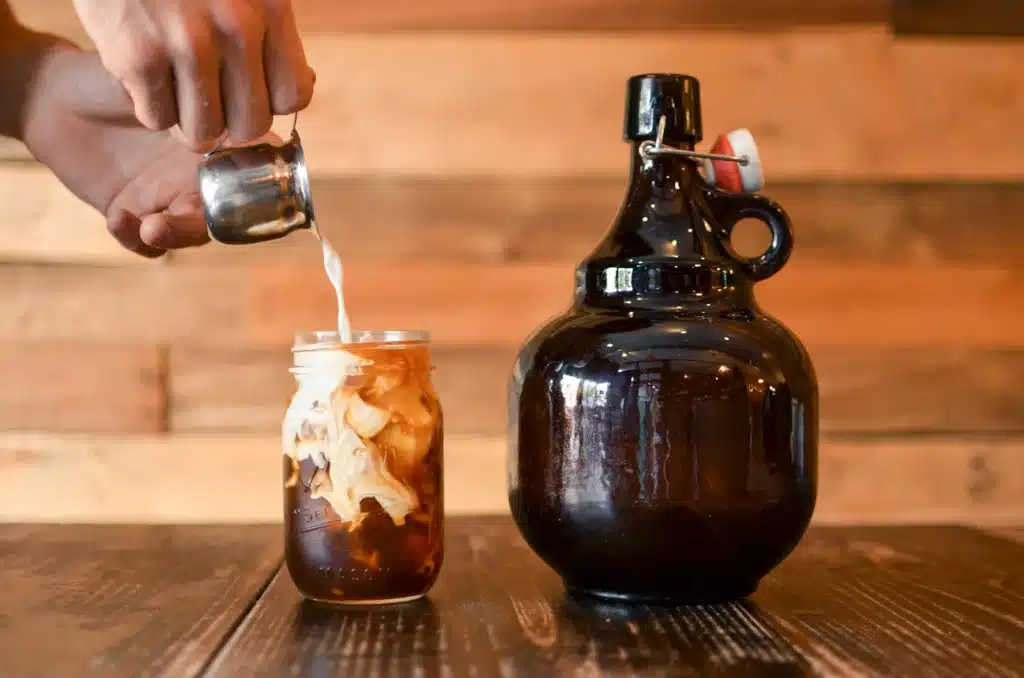
That last point is key. According to the NCA, the concentrate is meant to be cut with water or served over ice, even as the ice melts. In other words, ice doesn’t ruin it: it finishes the job.
If you want to see how it fits in with other methods, our guide to coffee brewing methods compares it with the V60, the moka pot, and the French press. Now for the practical part: how to make it in your kitchen.
How do you make cold brew at home?
To make cold brew at home, all you need is coarsely ground coffee, filtered water, a jar with a lid, a fine strainer, and patience. Mix one part coffee with four or five parts water, let it steep for about 12 hours in the fridge, and strain. There’s no tricky technique: time does the work for you.
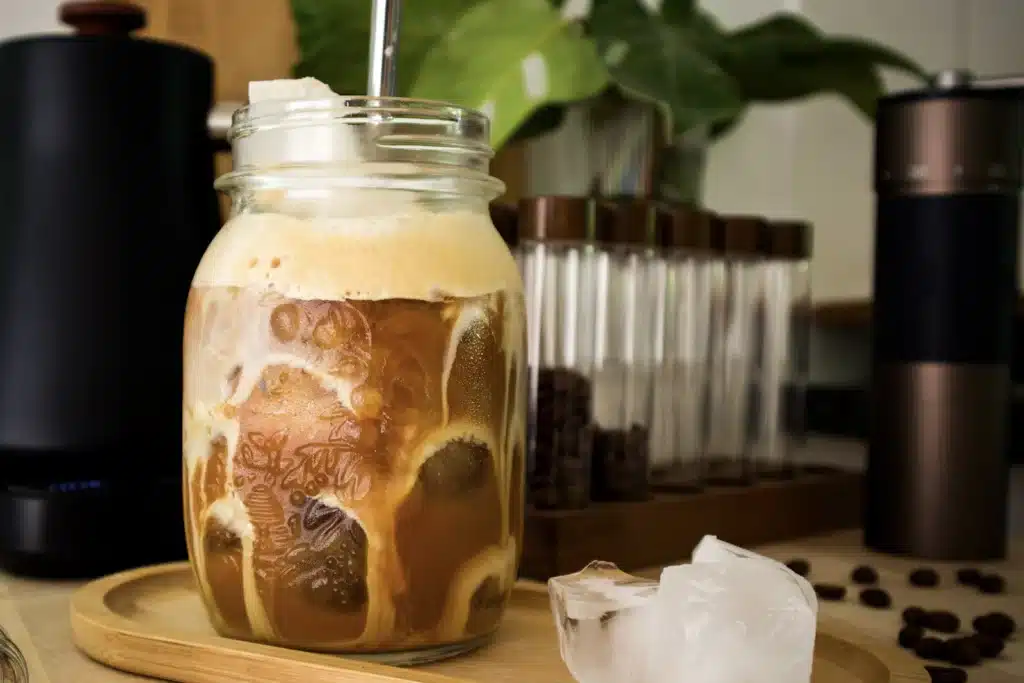
This is our base recipe for a one-liter (about 34 oz) jar:
- Grind coarse. Use 200 g (about 7 oz) of coffee with a coarse grind, like the one for French press. The NCA recommends starting with a coarse grind and adjusting from there. If you grind fine, the cold brew comes out cloudy and is hard to strain.
- Measure the water. Add 800 to 1,000 ml of cold filtered water. That puts you within the 1:4 to 1:5 ratio the NCA recommends. The NCA also advises against using distilled or softened water.
- Stir gently. Mix with a spoon until all the coffee is wet. Any dry clumps won’t extract.
- Cover and let it steep. Put the jar in the fridge for 12 to 24 hours. The NCA mentions about 12 hours of steeping, and scientific studies report steeping times of 8 to 24 hours.
- Strain. Pour the liquid through a fine strainer lined with a clean cloth or a paper filter. If you still see sediment, strain it a second time, as the NCA suggests.
- Store and serve. Transfer the concentrate to a tightly sealed glass bottle and keep it in the fridge. To serve, mix it with water, milk, or ice until it tastes right to you.
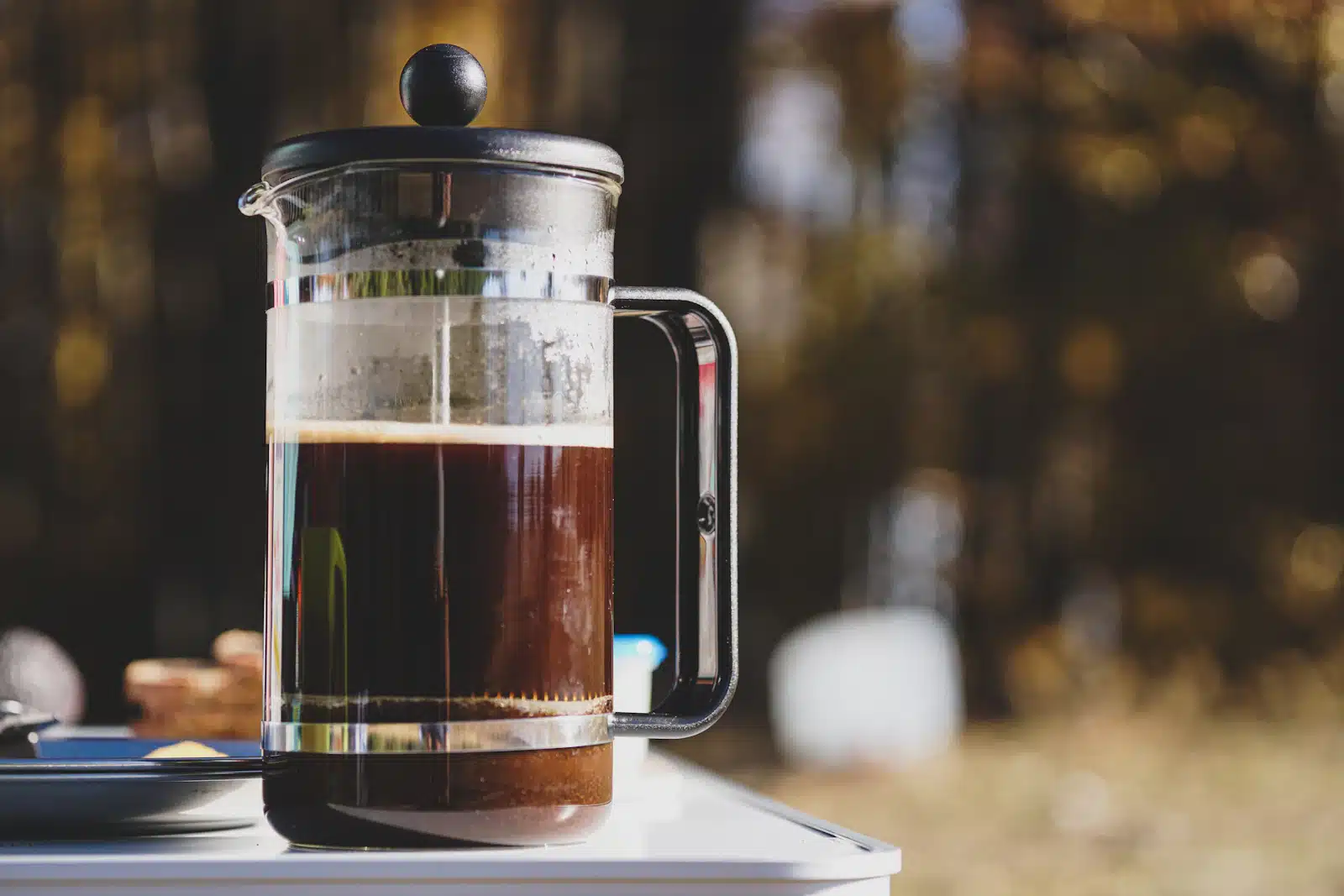
Have a French press? It works perfectly as both jar and filter: add the coffee and water, put the lid on without lowering the plunger, and press the next day. Our guide on how to make French press coffee explains how to use it well.
Make it at home or buy it ready-made? It depends on your routine. Making it at home is cheap and lets you play with beans and steeping times, but it takes a day of planning and careful straining. A ready-made concentrate, like Broo Cold Brew Concentrate (700 ml), comes in handy when you don’t want to wait or wash jars. If you like to experiment, make it yourself; if you want your morning sorted in a minute, having one ready helps.
With the recipe down, it’s worth clearing up the most common mix-up: cold brew and iced coffee aren’t the same thing.
What’s the difference between cold brew and iced coffee?
The difference is the water: iced coffee is brewed hot and then chilled, while cold brew never touches hot water. That’s how the NCA explains it. It’s also why they taste different: iced coffee keeps the profile of hot coffee, and cold brew is smoother and less bitter.
This table sums up what changes between the two:
| Aspect | Cold brew | Iced coffee |
|---|---|---|
| Water | Cold or room temperature | Hot, then chilled |
| Time | About 12 hours, according to the NCA | However long your usual method takes |
| Grind | Coarse | Whatever your method uses (medium for pour-over) |
| Flavor | Smooth, rounded, less bitter | Brighter, with more acidic and bitter notes |
| Planning | Made a day ahead | Made on the spot |
| How it’s served | As a concentrate to dilute, over ice or hot | Over ice |
Neither one is better. Iced coffee is ideal when you want something cold right now. The trick is to brew it a little stronger, because the ice will water it down. Cold brew is for planners who want a smooth drink that lasts several days.
If you love cold coffee, our iced coffee recipes walk you through iced coffee, affogato, and coffee granita step by step. For a get-together, cold brew also makes a great base for coffee cocktails, with or without alcohol. And if you’re already wondering how strong each one is, that’s the next question.
Which is stronger, espresso or cold brew?
It depends on how you measure and how much you dilute. Espresso is a very concentrated drink in a small volume. Cold brew concentrate is strong too, but it’s almost never drunk straight: it’s mixed with water, milk, or ice. What ends up in your glass depends on that mix, not just the method.
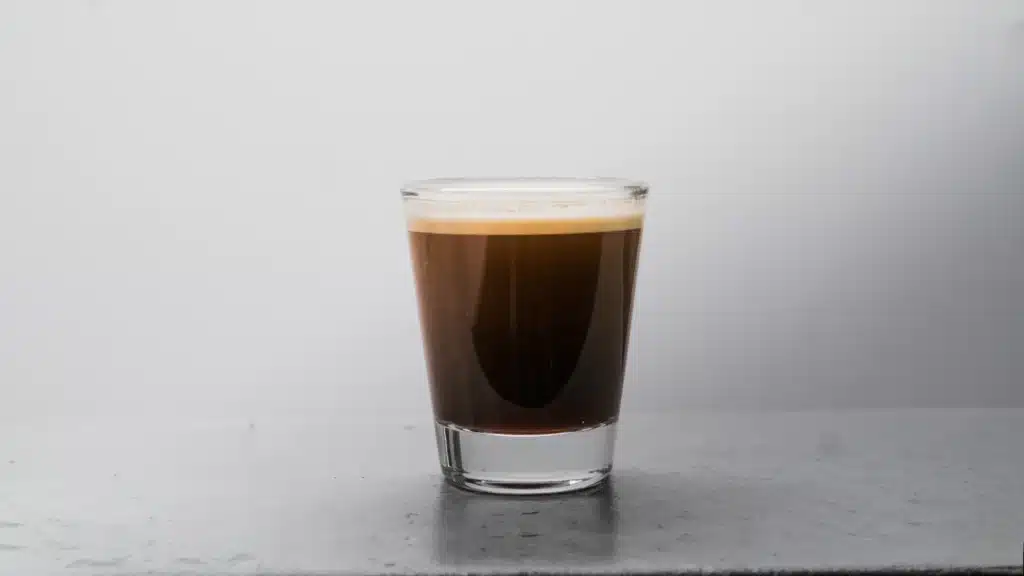
Here’s how each one is made, using the NCA’s ratios:
- Espresso: finely ground coffee, hot water under pressure for about 20 to 30 seconds, and a 1:2 ratio. Each gram of coffee yields about two grams of beverage.
- Cold brew concentrate: coarsely ground coffee, cold water for about 12 hours, and a 1:4 to 1:5 ratio. Then you dilute it to taste.
How strong it feels also depends on flavor. Espresso is bitter, dense, and topped with crema, so it comes across as “stronger.” Cold brew, being smooth, is deceptive: it goes down easy even when it’s potent.
What about caffeine? We couldn’t find a reliable source that directly compares the two drinks, so we’re not going to give you a made-up number. What we do know is that steeping it longer doesn’t keep adding caffeine indefinitely. In a study published in Scientific Reports, caffeine and chlorogenic acid (3-CGA) reached equilibrium between 6 and 7 hours of steeping.
Our advice: if you’re sensitive to caffeine, start with a small amount of concentrate and more water or milk. You adjust the strength in the glass, not in the jar. And that brings us to another variable that rules the flavor: the beans.
What kind of coffee should you use for cold brew?
Use whatever coffee you like best: the NCA says any type of bean works with this method. What matters is that it’s fresh, coarsely ground, and has a profile you enjoy cold. Cold brew tones down bitterness, so it lets the sweetness and origin notes shine.
A few tips for choosing:
- If you like chocolatey and balanced: look for a washed process coffee. It makes a clean cold brew that pairs really well with milk.
- If you like fruity: a natural process coffee brings ripe-fruit notes. It’s delicious black, over ice, or with sparkling water.
- If you like sweet and creamy: honey process coffee tends to give that texture; it’s worth trying when you come across it.
- Roast: a medium roast is a good starting point. It keeps the origin notes without the coffee tasting burnt.
If you’re buying coffee to brew it yourself, get it whole bean and grind it coarse right before brewing, as the NCA recommends. If you don’t have a grinder, ask for a coarse grind. In our cold brew category you’ll find the ready-made concentrate, and in the shop every bag of specialty coffee lists its process and origin. For example, our Caicedo natural coffee has a fruity, intense profile that shines cold.
One detail: supermarket coffee ground fine for a stovetop percolator (greca) also works, but it usually makes a cloudier, more bitter cold brew. If that’s what you have, strain it twice. With your beans chosen, there’s one question a lot of people ask: is it healthier?
Is cold brew healthy?
Cold brew isn’t automatically healthier or less healthy: it’s coffee, and what makes it more or less healthy is what you add to it. What science does show is that its chemistry differs a bit from hot coffee, though not always in the direction the marketing claims.
A study by Rao and Fuller, published in Scientific Reports in 2018, compared cold brew and hot coffee. Here’s what they found:
- The pH is similar. Cold and hot samples had comparable pH levels, between 4.85 and 5.13. In other words, cold brew doesn’t have a lower pH, or a much higher one, than hot coffee.
- It has less titratable acidity. Hot coffee showed more titratable acids. That helps explain why cold brew feels smoother in the mouth.
- It has less antioxidant activity. Hot coffee also showed higher antioxidant activity than cold brew.
Bottom line: cold brew isn’t an “acid-free” drink. It’s a drink that tastes less acidic and less bitter, and that’s already a lot. If you have a digestive condition or have been told to limit coffee or caffeine, talk to your doctor before changing your habits.
Where you really can make a difference is in the glass. A cold brew served black, over ice, or with milk doesn’t need sugar: well-made coffee doesn’t ask for it. Syrups and creamers are what add the calories. Try it plain first; you might be surprised by how sweet it tastes.

Broo Café Team
The coffee team at Broo Café, specialty coffee roasters in Medellín.
Content reviewed by the Broo Café Team.
Frequently asked questions
How long does cold brew last in the fridge?
It depends on how cleanly you make and store it. If it’s homemade, drink it within a few days, always in a tightly sealed glass container in the fridge. If you bought it ready-made, follow the date and instructions on the label. If the smell changes, don’t drink it.
Can you heat up cold brew?
Yes. The NCA explains that cold brew can be served over ice or hot. Heat the concentrate once it’s diluted, without letting it boil, so it doesn’t turn bitter. You get a smooth cup, different from a freshly brewed tinto, perfect for rainy days.
How do you dilute cold brew concentrate?
Start by mixing equal parts concentrate and cold water, milk, or plant-based milk over ice. Taste and adjust: more concentrate if you want it bold, more liquid if you want it light. If you bought it ready-made, check the dilution recommended on the label first.
Does cold brew have sugar?
Homemade cold brew has no added sugar: it’s just coffee and water. Its smooth flavor makes it taste sweet, even though it isn’t. Coffee shop and bottled versions may contain syrups, so check the label or ask before you order.
Can I make cold brew with ground coffee from the supermarket?
Yes, you can. The problem is that it usually comes finely ground for a stovetop percolator or drip machine, which makes a cloudy, more bitter cold brew. Strain it twice through cloth or paper. With coarsely ground specialty coffee, you’ll taste the difference from the first sip.
Summary
- Cold brew is coffee brewed with cold water over several hours: the NCA recommends a 1:4 to 1:5 ratio and about 12 hours of steeping.
- It isn’t the same as iced coffee, which is brewed hot and then chilled. Cold brew is smoother and less bitter.
- Its pH is similar to hot coffee’s, but it has less titratable acidity; that’s why it feels smoother in the mouth.
Already have a jar of cold brew in the fridge? Take it to the next level with our coffee cocktail recipes, with and without alcohol. And tell us in the comments how many hours you like to let it steep.
References
- National Coffee Association. Cold brew coffee
- National Coffee Association. Espresso
- Rao, N. Z., and Fuller, M. (2018). Acidity and antioxidant activity of cold brew coffee. Scientific Reports, 8, 16030
- Fuller, M., and Rao, N. Z. (2017). The effect of time, roasting temperature, and grind size on caffeine and chlorogenic acid concentrations in cold brew coffee. Scientific Reports, 7, 17979