Café con leche is brewed coffee or espresso mixed with hot milk, usually in roughly equal parts, and served in a large cup.
In Colombia it has cousins with names of their own: the perico, a small cup of coffee with milk, and the pintadito, coffee with just a splash of milk (Publimetro, 2026).
It’s the breakfast drink in thousands of Colombian homes. Bread, arepa, eggs, and a big cup of café con leche. It looks like the easiest thing in the world, but we all know the sad result: scorched milk, watery coffee, and a skin floating on top.
In this guide, we explain what café con leche is, how to make it well at home, and how it differs from a perico and a pintado. You’ll also see which coffee to use, which milk works best, how hot to heat it, and how to froth it without a machine. By the end, your everyday café con leche will taste like it came from a coffee shop.
What is café con leche?
Café con leche is a mix of coffee and hot milk in similar proportions, served in a large cup. There’s no single official recipe. Every household, every region, and every country makes it its own way, and that’s part of its charm.

What almost every version has in common is this:
- More milk than a pintado: the milk isn’t a splash; it’s half the cup or more.
- A brewed coffee or espresso base: in Colombia, the usual base is drip or stovetop percolator (greca) coffee; in coffee shops, espresso.
- A large cup: it’s a drink to sip slowly, not a quick shot.
Its starting point is tinto, Colombia’s everyday black coffee. The word comes from the Latin tinctus, meaning “dyed,” as Portafolio explains. Add hot milk to a tinto, and depending on how much milk goes in, it takes on a different name.
Café con leche isn’t the same as a latte or a cappuccino, either. Those drinks use espresso and steam-textured milk. If you’re curious about the difference, we break it down in our guide to latte vs. flat white.
How do you make café con leche at home?
Brew your coffee a little stronger than usual, heat the milk without letting it boil, and mix them in equal parts in a large cup. That alone gets you a better café con leche than most breakfasts serve. The details make the difference.
Here’s the base recipe for a cup of about 250 ml (8.5 oz):
- Brew the coffee. Make about 120 ml (4 oz) of coffee with your favorite method: stovetop percolator, drip, French press, or cloth filter.
- Use a generous dose. The SCA uses 55 to 60 g of coffee per liter of water as its reference for filter coffee. For café con leche you can go to the top of that range, because milk softens the flavor.
- Heat the milk. About 120 ml (4 oz), over medium heat or in the microwave, stirring. Take it off the heat when it starts to steam and small bubbles appear around the edge.
- Combine. Pour the coffee first, then the milk. If you like it milder, add more milk; if you like it stronger, use less.
- Sweeten last. Taste before adding sugar or panela (unrefined cane sugar). Hot milk already adds sweetness.
Not sure which method to use for the coffee? In coffee brewing methods, we compare the most common ones, with grams and grind size for each.
Three common mistakes ruin café con leche: using stale coffee or coffee ground months ago, reheating the coffee on the stove several times, and letting the milk boil. Avoid those three and you’re halfway there. The rest is adjusting the ratio to your taste.
A simple tip: if you use a stovetop brewer, check out our moka pot guide. Well-made stovetop coffee, not burnt, is an excellent base for café con leche.
What’s the difference between café con leche, perico, and pintado?
The difference is how much milk goes in and the size of the cup. A pintado has just a little milk. A perico is a small cup of coffee with milk. Café con leche is the large version, with more milk.
The names change from region to region. This is how Publimetro describes them in its tour of the ways Colombians drink coffee:
| Drink | What it is | Where you hear it most |
|---|---|---|
| Tinto | Black coffee, no milk | Everywhere |
| Pintadito | Coffee with a small amount of milk | Coffee Region (Eje Cafetero) and Antioquia |
| Perico | Small cup of coffee with milk, served with bread | Bogotá and the Cundinamarca-Boyacá highlands |
| Café con leche | Large cup, with more milk | Everywhere |
| Chaqueta | Black coffee mixed with hot aguapanela (panela water) | Coffee Region (Eje Cafetero) and Antioquia |
Don’t be surprised if your family uses them differently. In some cities, “perico” and “pintado” are used almost interchangeably. What matters is the idea: from less milk to more, from pintado to café con leche.
There are versions outside Colombia, too. In Spain, for example, café con leche is made with espresso and a similar amount of hot milk. It’s close to a cappuccino, but without as much foam. If you want to try the Italian version, see how to make a cappuccino at home.
What coffee should you use for café con leche?
Use good-quality, freshly ground, medium roast coffee with enough body and sweetness that it doesn’t get lost in the milk. A very light or watery coffee disappears as soon as you add milk. A very dark, burnt one leaves a bitterness the milk can’t cover.
Three things to keep in mind when choosing:
- Freshness: coffee loses aroma over time, especially once it’s ground. Buy bags you’ll finish in a few weeks.
- Process: washed coffees tend to give a clean, balanced cup that pairs very well with milk. Naturals bring fruity notes that can be a nice surprise in café con leche.
- Grind: match it to your method. Medium for drip, fine for a stovetop percolator, coarse for a French press.
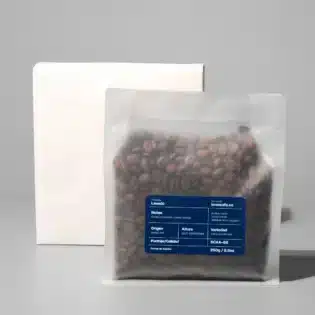
For every day, a washed coffee from Antioquia like our Sonsón washed coffee works very well in a stovetop percolator or drip brewer. If it’s a small household and you want your coffee always fresh, a small bag like the 250 g Andes washed coffee runs out before it loses its aroma.
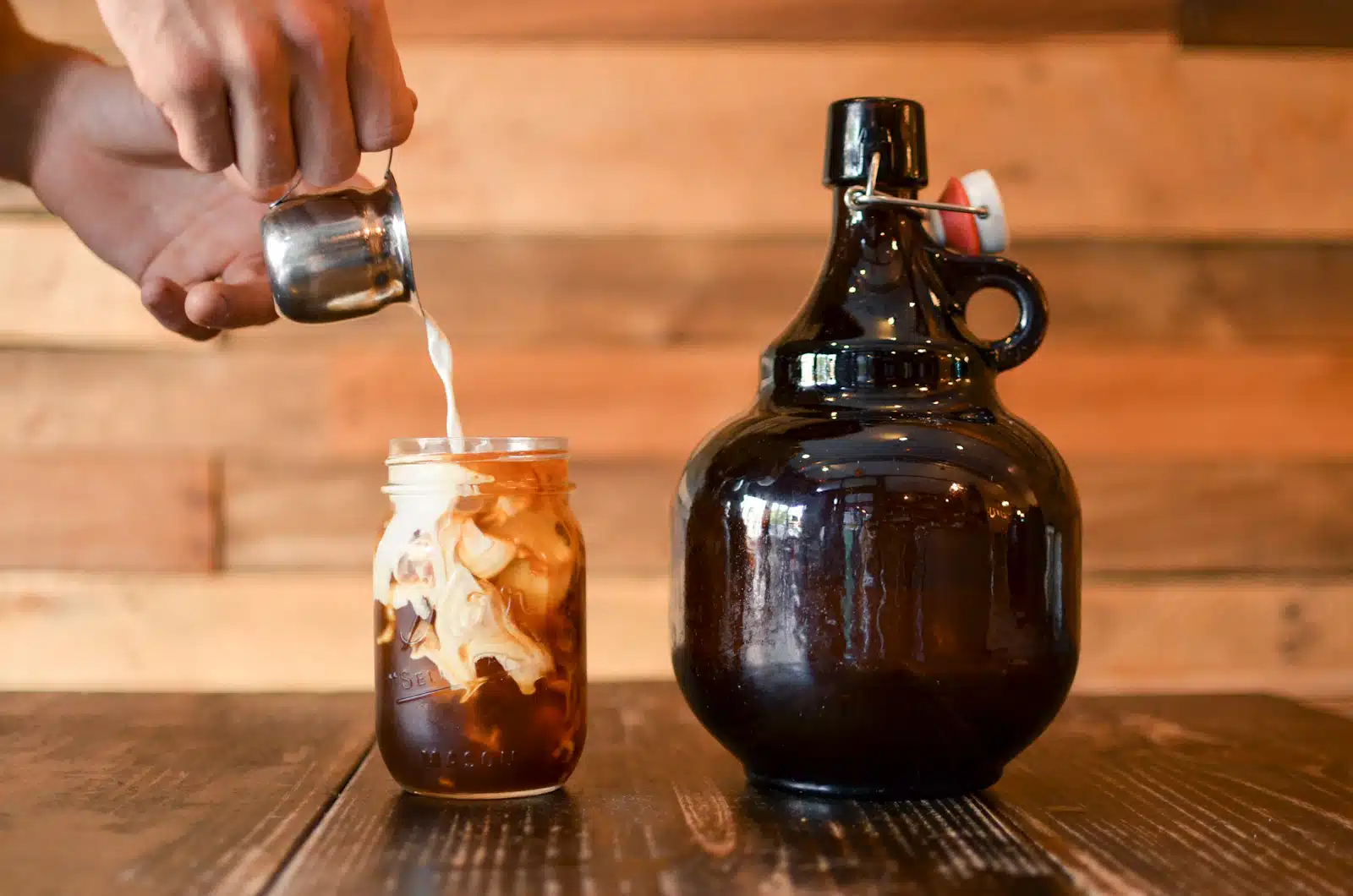
And if you want an iced café con leche for hot afternoons, try a concentrate: our 700 ml cold brew concentrate with cold milk and ice turns out smooth, with no bitterness.
Which milk works best, and at what temperature?
Whole milk makes the creamiest, sweetest café con leche, because it has more fat, and fat adds body. Lactose-free milk and plant-based milks work too, but they change the flavor and texture. With any milk, the most important thing is not to boil it.
Why not boil it? When milk gets too hot, its proteins change. The milk loses texture and picks up that “scorched” taste we all recognize. Perfect Daily Grind puts it this way: excessive heat affects the proteins and leaves the milk thinner.
On sweetness, here’s a curious fact. Lactose, milk’s natural sugar, is much less sweet than table sugar. The same source explains that milk with more lactose always tastes sweeter, regardless of temperature. What happens is that our tongue perceives sweetness more when the drink is warm or hot.
In practice, watch for these signs:
- Ready: it’s steaming, there are small bubbles around the edge, and you can touch the pot without burning yourself right away.
- Overdone: it rises suddenly, makes thick foam, and forms a skin.
- Plant-based: heat it even more gently, because some curdle with heat and the coffee’s acidity.
If you have a kitchen thermometer, use it to find your ideal point and repeat it every morning.
How do you froth milk without a machine?
You can froth milk at home with a French press, a jar with a lid, or a hand whisk. None of them gives you the microfoam of an espresso machine, but they do give you a creamy layer that turns your café con leche into something special.

Three easy methods:
- French press: heat the milk, pour it into a clean press up to one-third full, and pump the plunger up and down quickly for about 20 seconds. This method gives the best results.
- Jar with a lid: fill a jar halfway with warm milk, close it tightly, and shake hard for half a minute. Be careful with very hot milk: use a towel so you don’t burn yourself.
- Hand whisk: right in the pot, whisk the hot milk quickly until foam forms.
Then let the milk rest for a few seconds and tap the container gently on the counter. That pops the big bubbles. Pour the liquid milk first and finish with the foam on top.
A French press is good for much more than coffee: in our French press guide, we show you how to use it step by step.
Coffees from this guide



Broo Café Team
The coffee team at Broo Café, specialty coffee roasters in Medellín.
Content reviewed by the Broo Café Team.
Frequently asked questions
What is the coffee-to-milk ratio in café con leche?
There’s no single rule. Most recipes use equal parts coffee and milk, in a cup of about 250 ml (8.5 oz). If you like it milder, add more milk; if you prefer it strong, brew the coffee more concentrated and use less milk.
Does café con leche have less caffeine than a tinto?
It depends on how much coffee you use. Milk doesn’t remove caffeine from coffee: it only dilutes it. If your café con leche has the same amount of coffee as a tinto, it will have the same caffeine, even if it feels milder when you drink it.
Can you make café con leche with instant coffee?
Yes, you can, and it’s handy when you’re in a hurry. Dissolve the coffee in a little hot water before adding the milk so there are no lumps. Just keep in mind that freshly brewed coffee has much more aroma and natural sweetness.
How do you keep a skin from forming on the milk?
The skin appears when milk gets too hot and its proteins stick together on the surface. To avoid it, heat over medium heat, stir now and then, and take the pot off the heat as soon as it starts to steam, before it boils.
What is an iced café con leche?
It’s the version over ice: strong coffee or cold brew concentrate, cold milk, and ice. It’s refreshing and smooth. Cold brew works especially well because it tastes less bitter and doesn’t get watery as quickly with the ice.
Summary
- Café con leche is brewed coffee or espresso with hot milk, in similar parts and in a large cup.
- A pintadito has a little milk, a perico is a small cup of coffee with milk, and café con leche is the large version.
- Use fresh, medium roast coffee, heat the milk without boiling it, and froth it with a French press if you want texture.
Ready to level up? Go from café con leche to cappuccino with our guide on how to make a cappuccino at home, and tell us in the comments whether your family calls it a perico or a pintado.