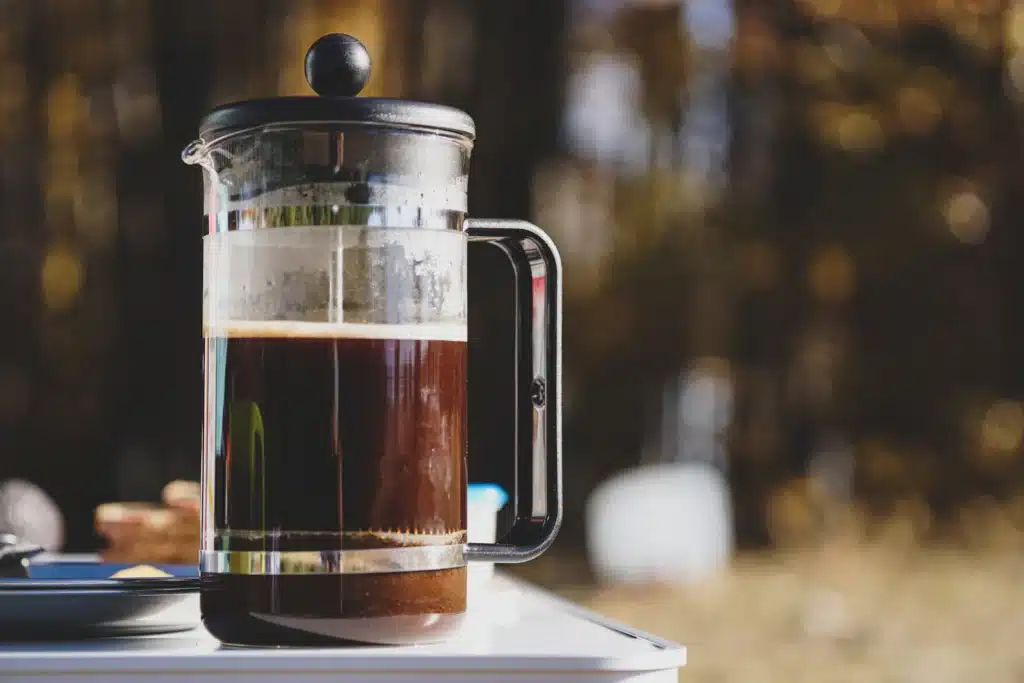
A French press is an immersion coffee maker: coarsely ground coffee steeps in hot water, and then a plunger with a metal filter separates the grounds from the coffee.
The National Coffee Association (NCA) recommends 1 g of coffee for every 10 to 16 g of water, water at 93 ± 3 °C (about 195–205 °F), and about 4 minutes of brew time (NCA, French press coffee).
The French press has a reputation for being easy, and it is. That’s exactly why people often eyeball it: a couple of spoonfuls, water from the pot, and hope for the best. The result is usually a bitter, muddy cup, or one with that grit that sticks to your teeth. And no, it’s not the coffee’s fault.
In this guide, you’ll learn how to make French press coffee step by step: how much coffee to use for the size of your press, what grind it needs, how long to let it steep, and why it sometimes turns out bitter or full of sediment. At the end, we’ll show you how to use it to make cold brew in the fridge. All with numbers from reliable sources, and without complicating your morning.
How do you make French press coffee?
To make French press coffee, put coarsely ground coffee in the carafe, add water that has just boiled and rested for a few seconds, wait about four minutes, and press the plunger down slowly. Then serve right away. It’s an immersion method: the coffee and water stay together the whole time, and that gives the cup its body.
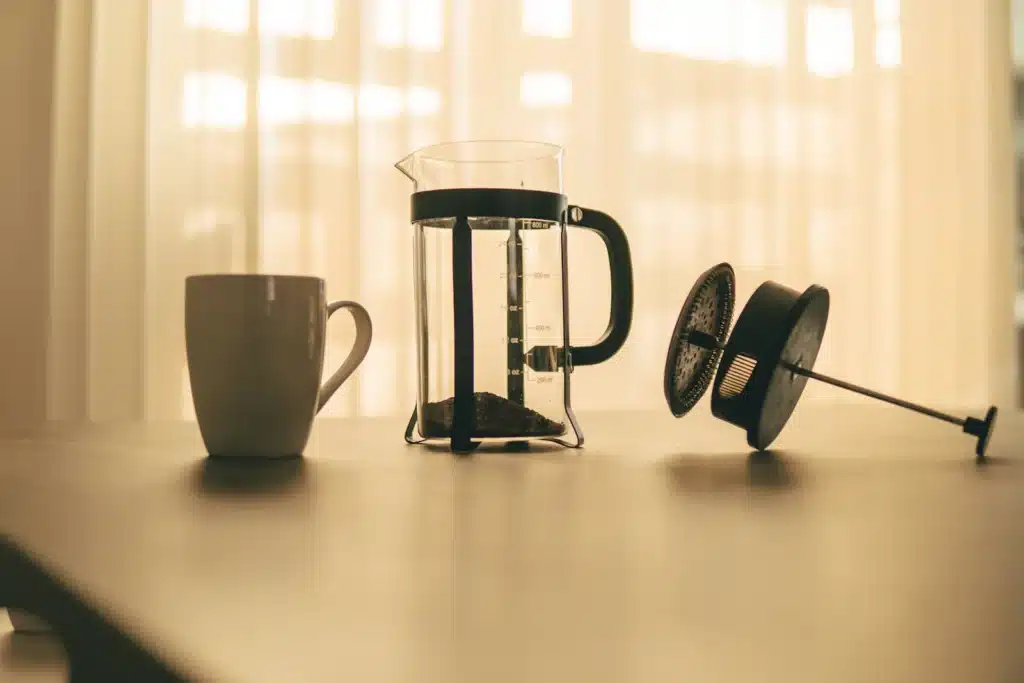
These are the steps the NCA suggests, adapted for a home kitchen:
- Heat the water. Bring it to a boil, take it off the stove, and let it rest for about 30 seconds. If you have a thermometer, aim for about 93 °C (200 °F).
- Weigh and grind the coffee. Use a coarse grind and the amount that matches your press (you’ll find the table below).
- Add the coffee to the carafe, then the water. Pour evenly so all the grounds get wet.
- Wait one minute and break the crust. A layer of coffee forms on top: that’s normal. Stir gently with a wooden spoon.
- Put the lid on with the plunger pulled up. Let it steep for about three more minutes.
- Press slowly all the way down. No force needed: if the plunger resists, the grind is too fine.
- Pour it all at once. If coffee stays in the press, it keeps sitting on the grounds and turns bitter.
If you want to see how the French press compares with the V60, the moka pot, or the AeroPress, check out our guide to coffee brewing methods. Now let’s get to the number that raises the most questions: how much coffee to use.
How much coffee do you put in a French press?
For a French press, use 1 gram of coffee for every 10 to 16 grams of water, following the ratio the NCA recommends. At 1:10, the cup is intense and full-bodied; at 1:16, it’s lighter. Since one milliliter of water weighs roughly one gram, the math is simple.
We calculated this table from the NCA’s ratio for the most common French press sizes. Grams are rounded:
| Water in the press | Mild (1:16) | Middle ground (1:13) | Strong (1:10) |
|---|---|---|---|
| 350 ml (12 oz) | 22 g | 27 g | 35 g |
| 600 ml (20 oz) | 38 g | 46 g | 60 g |
| 1 L (34 oz) | 63 g | 77 g | 100 g |
Three tips for using the table stress-free:
- Start with the middle ground. If your cup tastes watery, increase the dose next time. If it feels too heavy, reduce it.
- Weigh it, don’t eyeball it. A kitchen scale lets you repeat the cup you liked. Spoonfuls vary a lot depending on the grind.
- Count the water, not the carafe. With the coffee inside, the press doesn’t always hold what the box says. Measure the water you actually pour.
With the amount sorted out, the next thing to adjust is the coffee itself: how you grind it and which beans you choose.
What kind of coffee is best for a French press?
Coffee for a French press should be coarsely ground, similar to coarse salt, and ideally ground right before brewing. A coarse grind holds up to four minutes of immersion without turning bitter, and less of it slips through the filter mesh. Fresh, well-roasted beans do the rest.
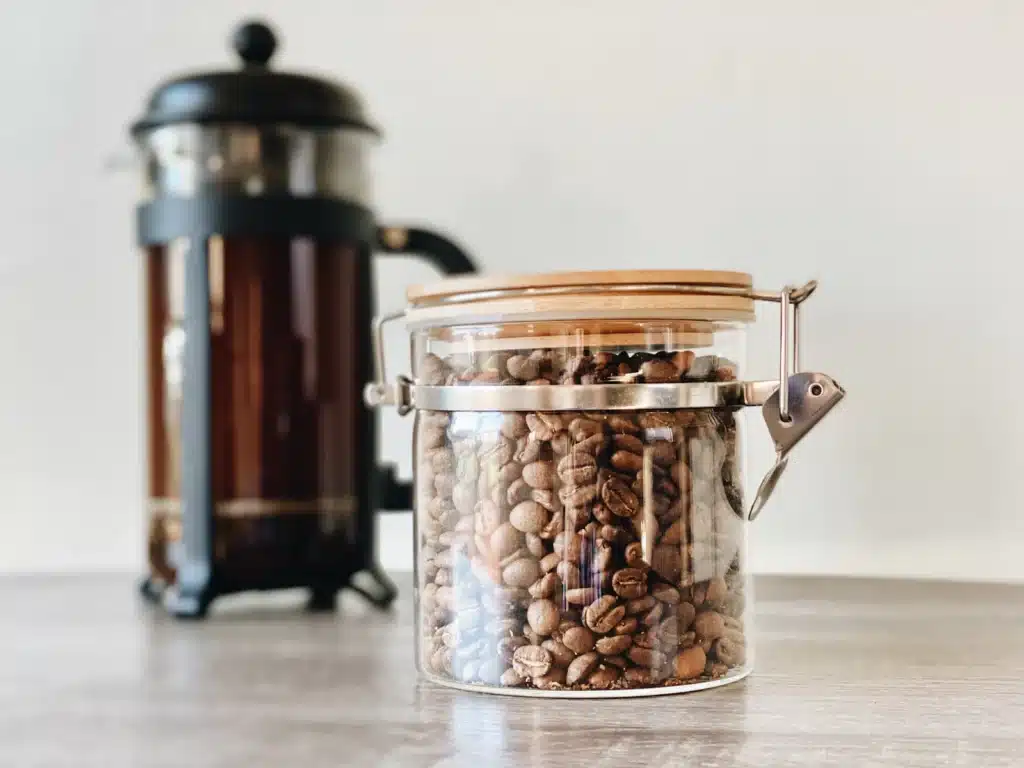
Here’s what to check before you start:
- The grind. The NCA describes it as coarse, “like rock salt.” If you see fine powder, expect grit and bitterness.
- Freshness. The NCA recommends buying whole bean coffee and grinding it right before brewing. That way, it keeps more of its aroma.
- The grinder. The NCA prefers a burr grinder, because it grinds more evenly than a blade grinder.
- The bean’s profile. The French press brings out body. A natural-process coffee, fruity and intense, really shines here.
That’s why our Caicedo natural coffee is a great match for the French press: immersion brings out its fruity side and gives it a rounded texture. If you prefer something cleaner and more balanced, you’ll find our washed coffees from Sonsón and Andes in the specialty coffee shop.
No grinder? You can order your coffee pre-ground for French press. In our guide to whole bean vs. ground coffee, we explain how long each one lasts and how to store it. Now, let’s talk timing.
How long should French press coffee steep?
French press coffee should steep for about four minutes in total: one minute before you break the crust and about three more minutes with the lid on. That’s the NCA’s benchmark. A longer steep makes a stronger cup; a shorter one, a lighter cup. Once the time is up, press and serve without delay.
Time works hand in hand with temperature. The NCA recommends water at 93 °C (about 200 °F), give or take three degrees. At home, here’s how to get there: boil the water, take it off the heat, and wait about 30 seconds before pouring.
Here’s how you can play with the clock depending on what you’re after:
- A milder cup: press a little before the four-minute mark. It works for very intense coffees, or if you only drink it in the afternoon.
- A fuller-bodied cup: let it go a little past four minutes. The NCA explains that the longer the brew time, the bolder the cup.
- A consistent cup: use the timer on your phone. It’s the easiest way to repeat a recipe you liked.
One important detail: the clock doesn’t stop when you press. If you leave coffee in the carafe, it stays in contact with the grounds and keeps extracting. That’s why it’s best to pour it all or transfer it to a thermos. And if your cup still comes out bitter, the problem may lie elsewhere.
Why is my French press coffee bitter or gritty?
French press coffee turns bitter when it over-extracts: the grind is too fine, it steeps too long, or the coffee is left sitting in the carafe. Grit, on the other hand, shows up when very fine particles slip through the filter mesh. Both are almost always fixed with a coarser, more even grind.
These are the most common problems and how to fix them:
| What you notice | Likely cause | What to do |
|---|---|---|
| Bitter or harsh | Grind too fine (over-extraction) | Grind coarser, like coarse salt |
| Bitter by the second cup | The coffee was left in the press | Pour it all or transfer it to a thermos |
| Flat or watery | Grind too coarse or not enough coffee | Grind a little finer or increase the dose |
| Lots of grit in the cup | Fine powder from an uneven grinder | Use a burr grinder or order coffee ground for French press |
| The plunger gets stuck | Grind too fine | Don’t force it: grind coarser next time |
The link between grind and flavor comes from the NCA: if your coffee tastes bitter or sour, the grind may be too fine; if it tastes flat or watery, it may be too coarse.
And here’s a trick for the grit: don’t pour every last drop. Leave the last little bit in the carafe, because that’s where the finest particles collect. Your cup comes out cleaner, and your teeth will thank you.
Hot coffee sorted, the French press has one more trick up its sleeve: you can also use it to make coffee cold.
Can you make cold brew in a French press?
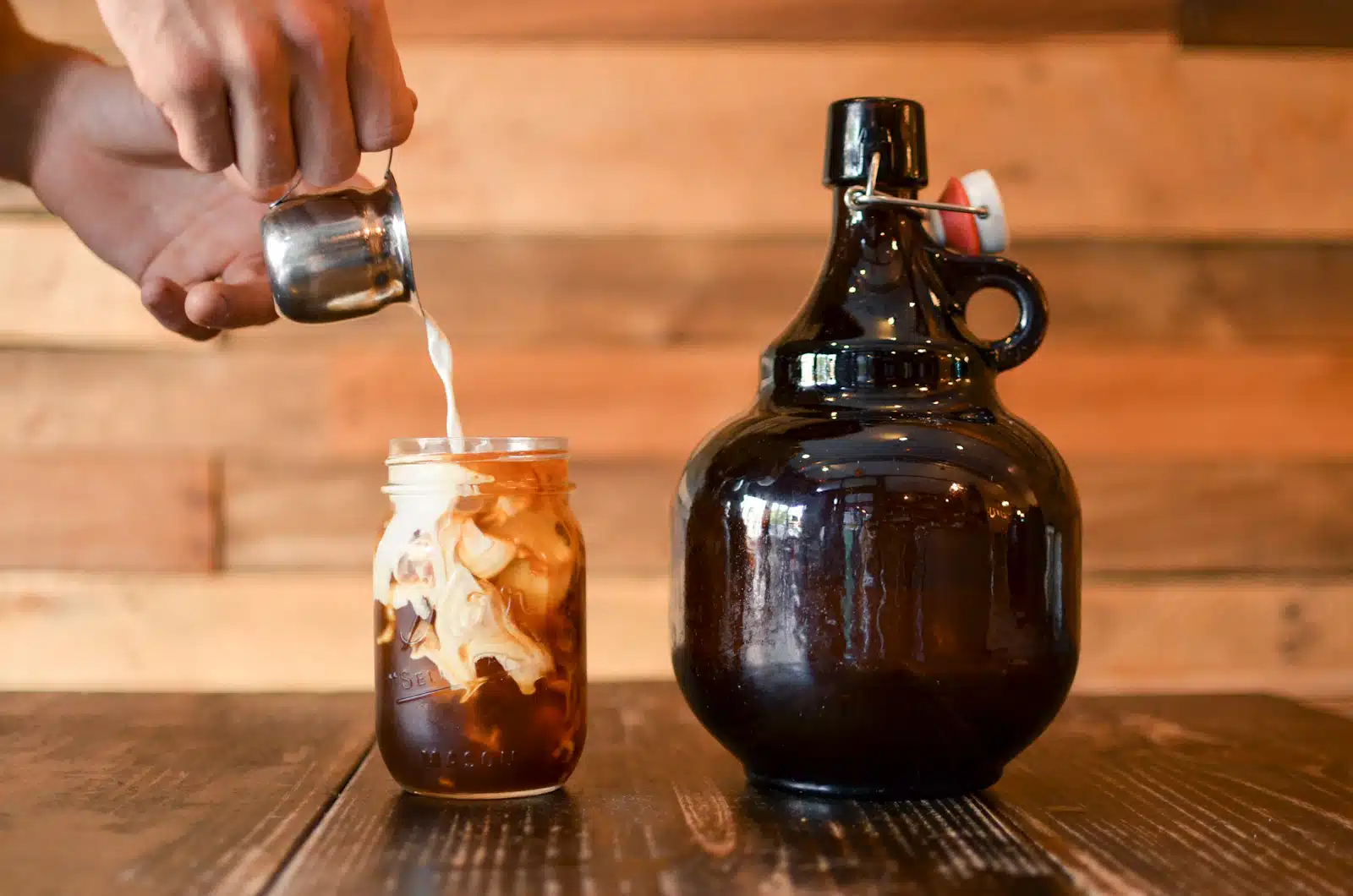
Yes, you can make cold brew in a French press, because cold brew is also an immersion method. The NCA lists the French press among its recommended vessels. The difference is that you use cold or room-temperature water, a lot more coffee, and about 12 hours of steeping instead of four minutes.
The NCA’s recipe for a concentrate is 1 g of coffee for every 4 or 5 g of water. Do the math, and 500 ml (about 17 oz) of water calls for 100 to 125 g of coffee. Leave some room in the carafe, because the coffee takes up space.
- Grind coarse. Same as for a hot French press.
- Add the water little by little and stir. All the coffee should be wet.
- Put the lid on with the plunger pulled up. Don’t press it down yet.
- Let it steep for about 12 hours. It can be in the fridge or at room temperature, for example, overnight.
- Press, and strain again if needed. A fine strainer lined with cloth helps make it cleaner.
The result is a concentrate: you dilute it with water, milk, or ice. The NCA describes it as less bitter and smoother than hot coffee that has been cooled down. If you want the full recipe and how to dilute it, read what cold brew is and how to make it at home. And if you don’t want to wait 12 hours, our 700 ml cold brew concentrate comes ready to go, low in acidity and ultra-concentrated.

Broo Café Team
The coffee team at Broo Café, specialty coffee roasters in Medellín.
Content reviewed by the Broo Café Team.
Frequently asked questions
How do you clean a French press?
After each use, toss the grounds, take the plunger apart, and wash the filter separately. The NCA warns that leftover coffee and its oils make your next cup taste bitter. Rinse well and let all the parts dry before putting it back together.
Can you make tea in the same French press?
Yes, it works the same way: loose leaves, hot water, steep, and press. The catch is that coffee oils cling to the filter and can pass aromas into your tea. Wash it very well between uses or, if you drink both every day, keep one for each.
What size French press should I buy?
Choose based on how many cups you usually make. The NCA recommends matching the size of the press to the amount you brew, because making a small amount of coffee in a large press lowers its quality. If you live alone, go small; if you brew for the family, get a one-liter press.
Can you froth milk with a French press?
Yes. Heat the milk without letting it boil, pour it into the press without filling it too much, because the foam expands, and pump the plunger up and down several times. In a few seconds, you’ll have foam for a homemade latte. Then wash the press right away.
What roast is best for a French press?
According to the NCA, medium to dark roasts tend to work well in a French press, although it’s worth experimenting with different roasts. If you’re just starting out, a medium roast is a very safe starting point for finding your ideal cup.
Summary
- The French press is an immersion method: coarse grind, water at about 93 °C (200 °F), and around four minutes of brew time, according to the NCA.
- The ratio ranges from 1:10 to 1:16. For a 600 ml press, that’s between 38 and 60 g of coffee; start with the middle ground and adjust.
- Bitterness and grit almost always come from a grind that’s too fine or from leaving the coffee in the carafe. And yes: you can also use it to make cold brew.
Does your coffee taste flatter than it did last week? It could be the freshness of the beans. Find out how long coffee lasts and how to store it in our guide to whole bean vs. ground coffee. And tell us in the comments about your favorite French press recipe.