El Niño is already active in Colombia and, according to Cenicafé, has an 82% probability of lasting through the March–May 2027 period. In the coffee-growing region it brings less rain, more sun, and more heat, which affects flowering, bean filling, and coffee quality.
Cenicafé estimates that during an El Niño event, rainfall can drop 25% to 50% below normal (Cenicafé, Agrometeorological Coffee Bulletin, El Niño 2026 edition).
2026 has been a strange year for Colombian coffee. It started with too much water and is ending with too little. In the first half of the year, excessive rain cut production. Now El Niño arrives, its opposite: drier, sunnier, and hotter days.
In this guide, we explain what El Niño is, what happens to a coffee farm when water runs short, how it can change bean quality, and which regions are most exposed. You’ll also see what Cenicafé, Colombia’s national coffee research center, recommends to coffee growers. All of it based on data from the industry’s technical sources, without alarmism.
What is El Niño?
El Niño is the warming of the tropical Pacific Ocean above normal levels, which shifts the weather across much of the world. In Colombia’s coffee region, it reduces rainfall, increases hours of sunshine, and raises air temperatures.
According to Cenicafé, for El Niño conditions to be declared, the temperature of the Pacific Ocean must be at least 0.5 °C above normal for five consecutive overlapping three-month periods. Its opposite phase is La Niña, which cools the Pacific and brings more rain to Colombia. La Niña is what shaped the start of 2026.
In its September 2026 bulletin, Cenicafé confirmed that El Niño conditions are already present. It gave them a 100% probability of continuing through the August–October period and an 82% probability of lasting at least through March–May 2027.
Every event is different, and none affects the whole coffee region equally. Cenicafé explains that, in general, the rainfall pattern holds, but with less water: 25% to 50% less than normal. Months that were already dry get drier.
Its special edition on El Niño 2026, published in mid-year, warned that some forecasts placed it as a strong or very strong event, especially from November on. Its final intensity was still uncertain.
How does El Niño affect coffee crops?
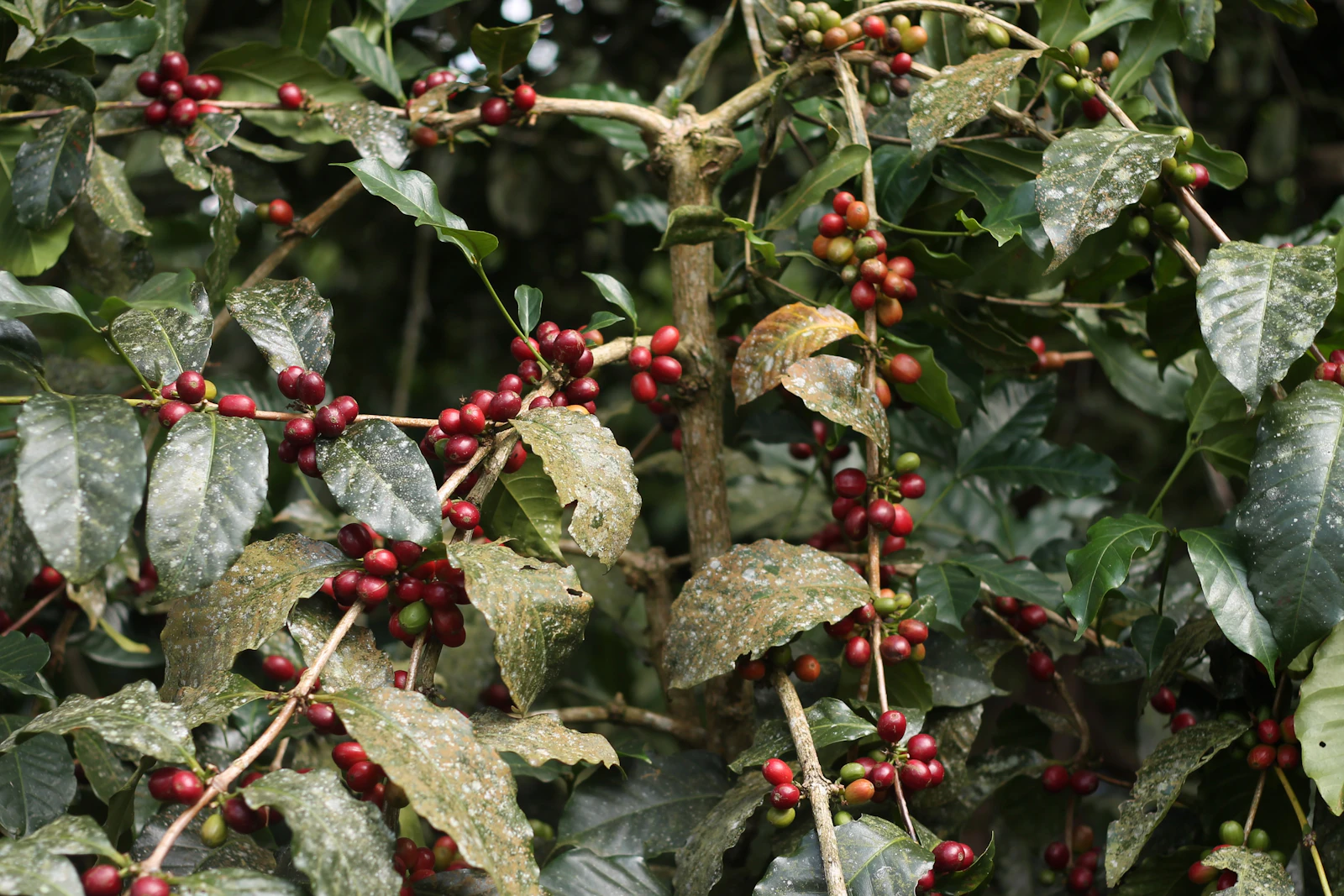
Coffee plants need water at key moments: to grow, to flower, and to fill the fruit. When water runs short and temperatures rise, the plant gets stressed, grows less, and can lose flowers and fruit, according to Cenicafé.
Cenicafé’s El Niño 2026 bulletin describes these effects on the plant:
- Less growth, both in new plantings and in producing coffee plots.
- Less photosynthesis: above 26 °C (79 °F), the plant closes its stomata to avoid losing water.
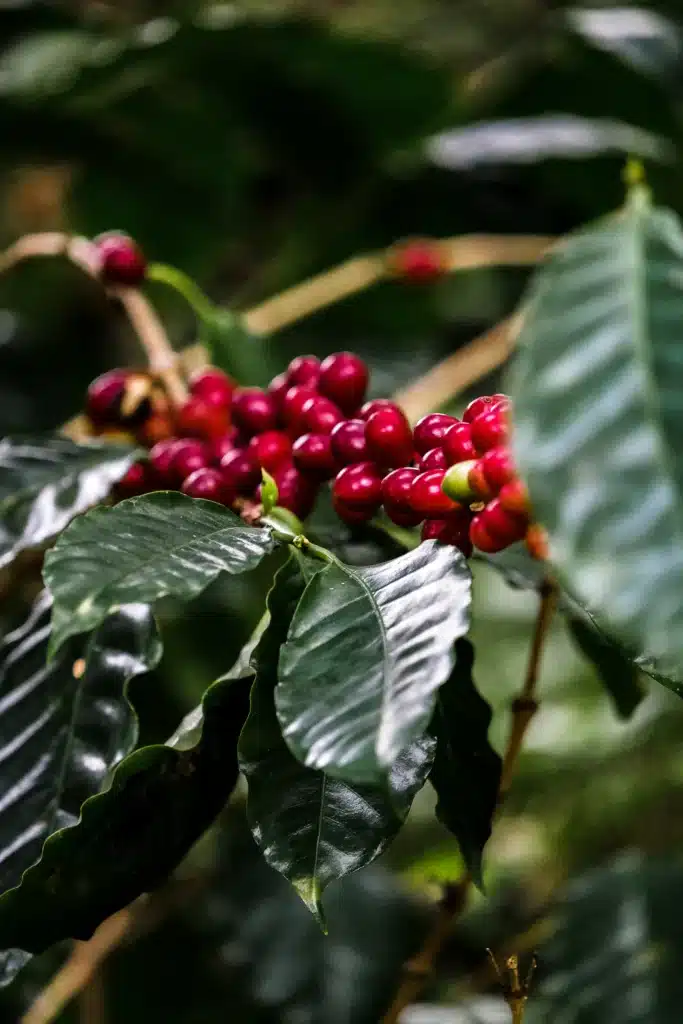
- Flowering problems: stunted flowers, sunscald, and flowers drying out.
- Poorly filled fruit: empty beans, partial filling, and black beans.
- Scorched leaves: too much radiation can cause yellowing, leaf drop, and dieback at the branch tips.
The risk isn’t the same on every farm. Cenicafé notes that coffee grown in full sun is at greater risk than coffee in agroforestry systems, with shade trees. Light-textured soils, which hold less water, are also more vulnerable.
Pests matter too. Cenicafé calculates that, under extreme scenarios like El Niño, Colombia has 76,777 hectares highly vulnerable to the coffee berry borer and 342,008 with moderate vulnerability.
It’s not all bad news. In areas where water is normally plentiful and the soil holds moisture well, El Niño can concentrate flowering and increase production potential. Drier air also reduces disease pressure on the crop.
How does bean quality change?
Dry weather also shows up after the harvest. Cenicafé warns of more dried-out cherries at picking, less mucilage, more defective beans, and a higher risk of uncontrolled fermentation and over-drying.
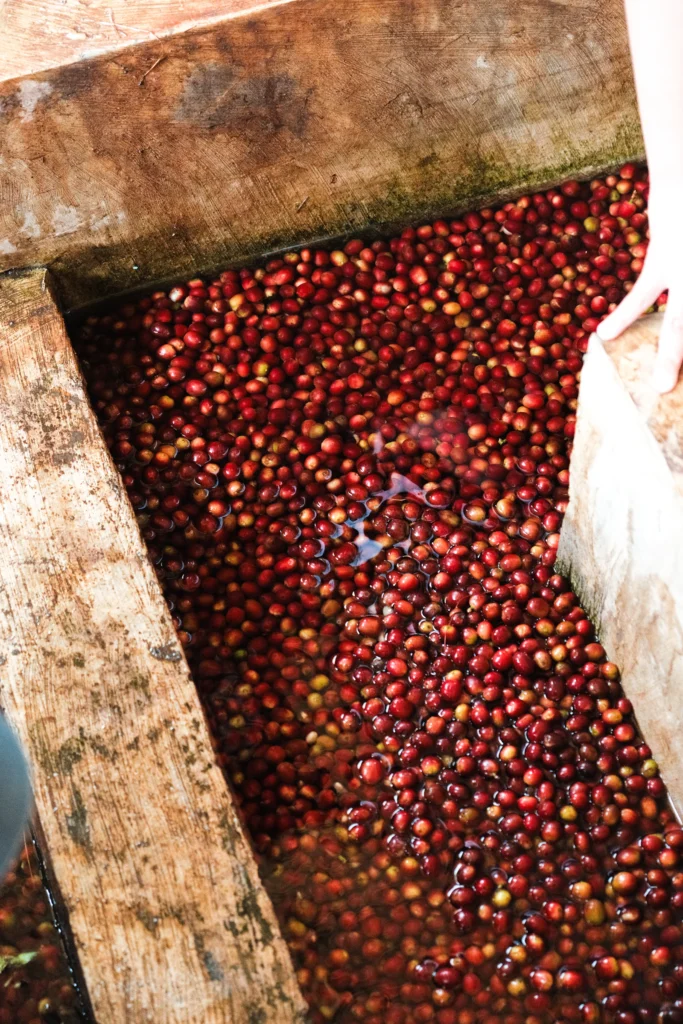
These are some of the harvest and post-harvest effects the bulletin describes:
- At picking: more dried-out cherries and more black, borer-damaged, or drought-shriveled beans.
- At pulping: cherries with less mucilage and more nipped or cut beans.
- During fermentation and washing: less water available for washing and a higher risk of sour (vinegar) beans.
- During drying: higher temperatures in the sun and more over-dried or glassy beans.
In the cup, that translates into a quality challenge. An over-fermented or poorly dried bean gives harsh or moldy flavors. That’s why, in years like this one, careful work on the farm and at the wet mill matters even more.
The process also influences the result. A washed, a natural, and a honey coffee are handled differently after harvest and react differently to the weather. We explain this in coffee processing methods: washed, natural, and honey.
Every harvest tastes a little different. In specialty coffee, that isn’t a flaw: it’s part of the story of each lot and its year.
What happened to the 2026 coffee harvest?
Colombia closed the 2025/26 coffee year with 12.65 million 60-kilo bags, 15% less than the previous year, according to the Colombian Coffee Growers Federation (FNC). The drop is mainly explained by excess rain in the first half of the year.
In February, the FNC had already warned that excessive rain in coffee-growing areas would cut production in the first half of the year. And it did. Exports for the coffee year totaled 11.78 million bags, 12% less.
September brought a sign of recovery: 1.215 million bags, 6% more than in September 2025. Germán Bahamón, the FNC’s general manager, summed up the country’s challenges on three fronts: climate challenges, the productivity of coffee farms, and the profitability of coffee-growing families.
The challenge now is keeping El Niño from hitting the next harvest. Bancolombia flagged this too in its July sector outlook: a very strong El Niño could reduce rainfall in the main producing areas.
What does all this have to do with what you pay for a bag? We explain it in coffee prices in 2026.
Which coffee regions are most exposed?
For October 2026, Cenicafé forecast near-normal rainfall across much of the coffee region, but with the largest reductions in parts of Antioquia, Tolima, Huila, Valle del Cauca, and Cauca.
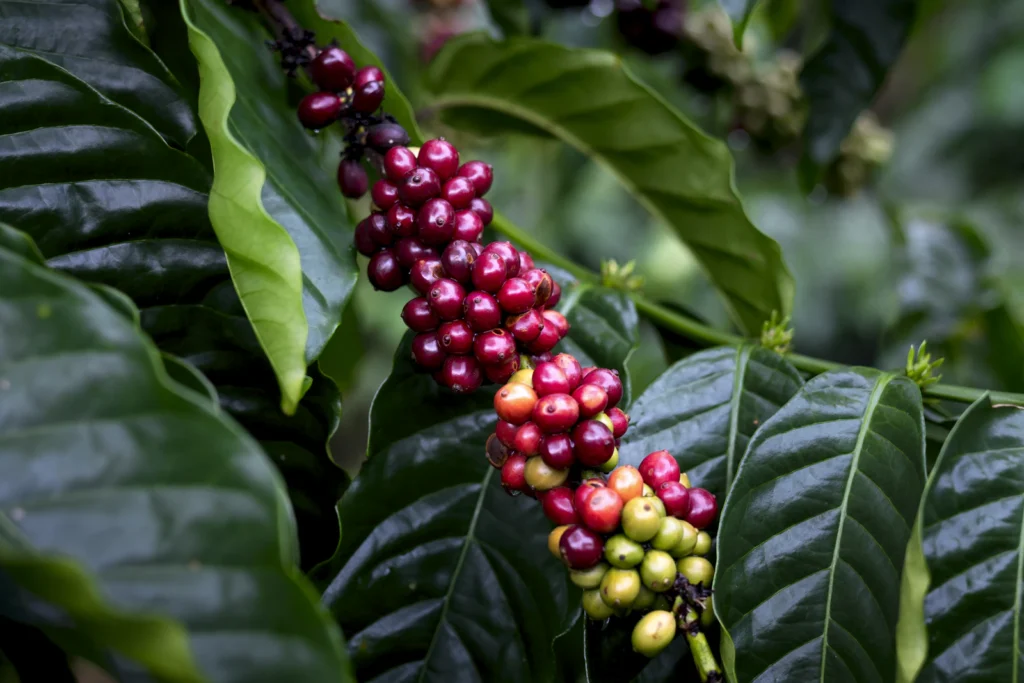
September had already brought below-normal rainfall to most of the coffee region, with a few exceptions. October usually marks the start of the year’s second rainy season. That’s why a drop in rainfall that month carries weight.
Antioquia is our home. That’s where our Sonsón washed coffee, Caicedo natural coffee, and Andes washed coffee come from. Each one is named after the municipality where it’s grown.
If you want to learn more about Colombia’s coffee regions and what makes each one special, read what is the best Colombian coffee.
Keep in mind that the forecast changes month to month. Cenicafé publishes its Agrometeorological Coffee Bulletin every month with the rainfall forecast for the coffee region.
What does Cenicafé recommend to coffee growers?
Cenicafé recommends protecting the soil and the plant from the sun, fertilizing only when there’s moisture, harvesting carefully, and monitoring the coffee berry borer. The idea is to prevent damage before the water shortage shows up in the harvest.
The agronomic practices in its El Niño 2026 edition include:
- Temporary shade with species such as tephrosia and pigeon pea.
- Mulch: leaving coffee prunings and harvest residues on the soil.
- Fertilizing in wet periods: checking for about 40 mm of accumulated rainfall over the previous 10 days before applying.
- Selective picking of ripe cherries and separate processing by lot.
- Controlling fermentation and drying, to avoid defects in the cup.
For the coffee berry borer, Cenicafé stresses monitoring and the “repase” (a clean-up pass): collecting the ripe, overripe, and dry cherries left on the tree and those that fall to the ground. Chemical or biological controls are applied only when the infestation warrants it.
The bulletin also mentions other dry-season pests. It recommends inspecting the farm to catch red spider mites early, which turn leaves bronze, and keeping the beneficial ground-cover plants that feed the natural enemies of the coffee leaf miner. And it warns that when the rains return after El Niño, emerging pests can appear in some regions.
As a coffee drinker, you can help too. Buying coffee with a clear origin and paying well for quality gives coffee-growing families the margin to invest in these practices.

Broo Café Team
The coffee team at Broo Café, specialty coffee roasters in Medellín.
Content reviewed by the Broo Café Team.
Frequently asked questions
How long does El Niño last?
Every episode is different. According to Cenicafé’s September 2026 bulletin, current conditions have an 82% probability of lasting at least through the March–May 2027 period. The forecast is updated every month with new ocean data.
Does El Niño make coffee more expensive?
It can put pressure on prices if it reduces harvests, because there would be less coffee available. But prices depend mostly on the global market, where Brazil’s harvest carries a lot of weight. That’s why a bad year in Colombia doesn’t always raise the international price.
What is La Niña, and how is it different?
La Niña is the opposite phase of El Niño: the tropical Pacific cools and Colombia usually gets more rain. According to IDEAM, Colombia’s weather agency, the first quarter of 2026 was under La Niña, and the FNC reported excessive rain that reduced that half-year’s harvest.
Does El Niño change the taste of coffee?
It can. Cenicafé warns of more defective beans, less mucilage, and a higher risk of uncontrolled fermentation in dry years. Good management on the farm and at the wet mill reduces those risks, but every harvest ends up with its own profile in the cup.
How can I support Colombian coffee growers?
By buying coffee with a clear origin, labeled with region, municipality, and process, and paying a fair price for quality. Brands that buy directly from farms tend to leave more value in the countryside, and that helps families adapt to the climate.
Summary
- El Niño is already active, and Cenicafé gives it an 82% probability of lasting through March–May 2027, with rainfall 25% to 50% below normal.
- It affects flowering, fruit filling, and bean quality, especially on full-sun coffee farms and soils that hold little water.
- Colombia already produced 15% less coffee in 2025/26 due to excess rain; Antioquia, Tolima, Huila, Valle del Cauca, and Cauca are the areas with the largest rainfall reductions forecast for October.
Want to understand how the weather ends up in your bag of coffee? Keep reading with our guide to coffee prices in 2026. And tell us in the comments whether the dry season is already being felt where you live.
References
- Cenicafé. Agrometeorological Coffee Bulletin (Boletín Agrometeorológico Cafetero), El Niño 2026 edition (in Spanish)
- Cenicafé. Agrometeorological Coffee Bulletin No. 134, September 2026 (in Spanish)
- Infobae (October 10, 2026). Colombia closed the coffee year with a 15% drop in production (in Spanish)
- Infobae (February 19, 2026). Coffee production in Colombia will fall in the first half of 2026 (in Spanish)
- Portafolio (July 15, 2026). The Colombian coffee premium sustains the domestic price (Bancolombia data) (in Spanish)