Coffee processing methods are the ways the seed is separated from the coffee cherry and dried after harvest; the three main ones are washed, natural and honey.
For example, in the natural process the whole cherry is sun-dried until its moisture drops to 11%, which can take several weeks depending on the weather (National Coffee Association).
You’re holding two bags of Colombian coffee. One says “washed” and the other says “natural.” Same country, sometimes even the same town, and yet they taste completely different. One is clean and bright; the other smells like ripe fruit the moment you open the bag. What happened along the way?
The answer lies in coffee processing methods: what happens to the fruit between the tree and the sack of green coffee. In this guide we explain what washed, natural and honey coffees are, what happens to the cherry in each case and how each process changes the flavor in your cup. By the end you’ll know which process to choose for your brewing method and your taste, with no guesswork in front of the label.
What are coffee processing methods?
Coffee processing methods are the techniques used after harvest to remove the fruit surrounding the seed and dry it, so it’s ready for roasting. The National Coffee Association (NCA) describes three main methods: natural, or the “dry process”; washed, or the “wet process”; and honey, a hybrid of the two. All three can change the flavor of your cup a lot.
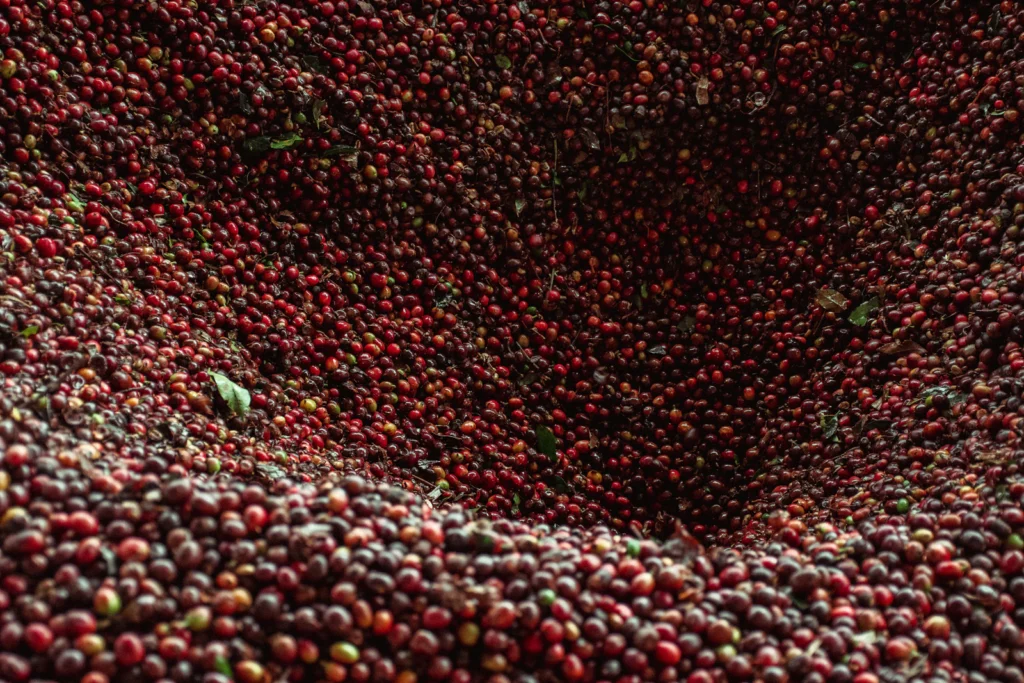
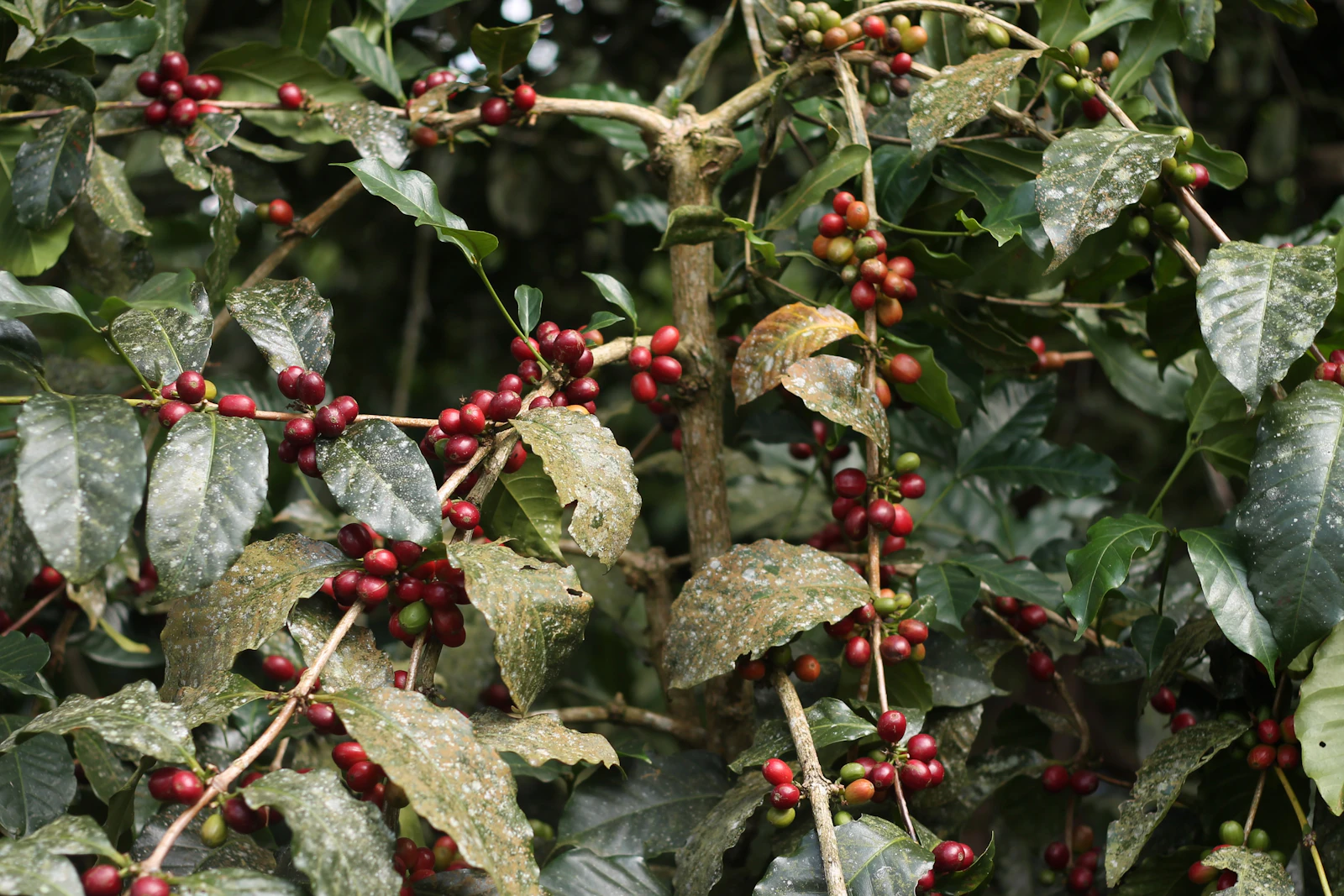
To understand them, you first need to know what a coffee bean is. What you roast and grind is the seed of a fruit: the cherry of the coffee plant. From the outside in, the cherry has these layers:
- Skin: the outer peel, red or yellow when the fruit is ripe.
- Pulp: the fleshy part of the fruit.
- Mucilage: a sticky, sweet layer that coats the seed.
- Parchment: a thin, papery husk that protects the bean.
- Seed: the green coffee bean, which is later roasted.
Each process determines which layers are removed before drying and which stay on the bean while it dries. That decision is what changes the flavor. The more fruit stays with the seed during drying, the more fruity and sweet notes the coffee usually has.
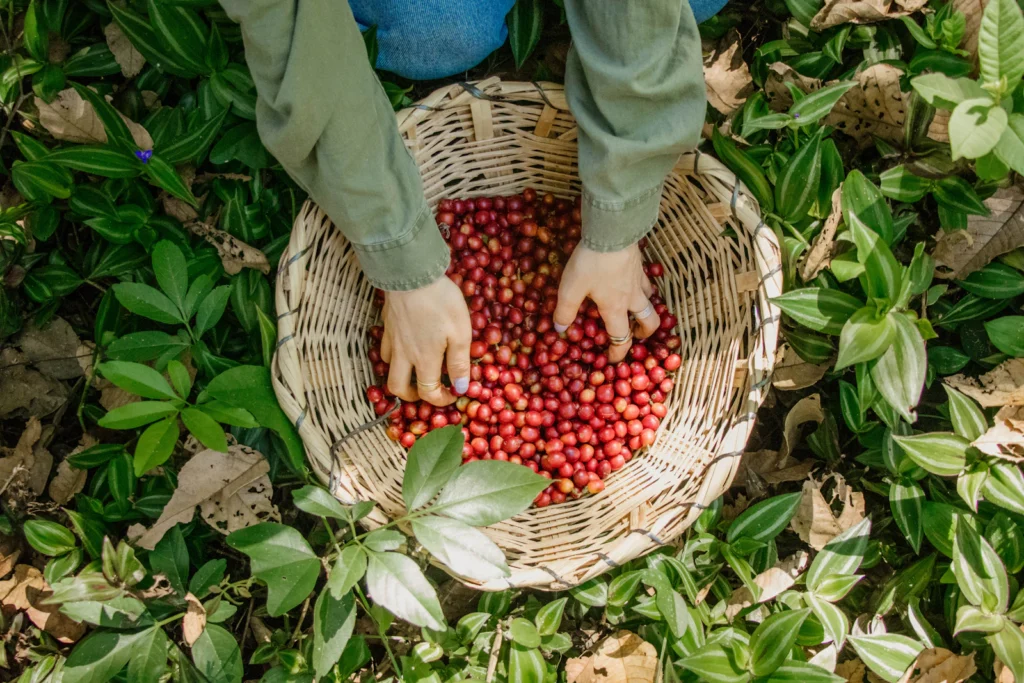
It all starts with a good harvest. The NCA explains that ripe cherries are picked and processed quickly so they don’t spoil. In Colombia, the National Federation of Coffee Growers describes mild Arabica coffee as 100% selectively harvested, meaning only ripe fruit is picked.
If you’re still not sure what makes a coffee “specialty,” we recommend starting with our guide to what specialty coffee is. Now, let’s look at the most common process in Colombia.
What is washed coffee?
Washed coffee goes through the wet process: the pulp is removed from the cherry, the mucilage is taken off with water and fermentation, and only then is the bean dried in its parchment. Because the fruit comes off before drying, the flavor depends more on what the seed absorbed on the plant. That’s why washed coffees show their origin so clearly.
According to the NCA, the washed process follows these steps:
- Pulping. The pulp is separated from the seed.
- Sorting. The beans run through water channels. Unripe beans, which are lighter, float; ripe beans, which are heavier, sink. They’re then sorted by size.
- Fermentation. The beans rest in water tanks, where natural enzymes dissolve the mucilage. This can take 12 to 48 hours. When it’s done, the bean feels rough to the touch.
- Washing and drying. The beans are rinsed and dried to around 11% moisture, in the sun on patios or raised beds, or in mechanical dryers.
- Hulling. Finally, the parchment is removed, leaving green coffee.
The result is a clean cup. The NCA explains that washed coffees can have floral, acidic or citrus notes, and that’s why many single-origin and specialty coffees are washed: the process showcases their own characteristics.
If you like a balanced coffee you can drink every day without getting tired of it, washed is your starting point. Our Sonsón washed coffee is a good example of that clean, balanced profile.
Washed is the most “modern” process. Natural, on the other hand, is the oldest of all.
What is natural coffee?
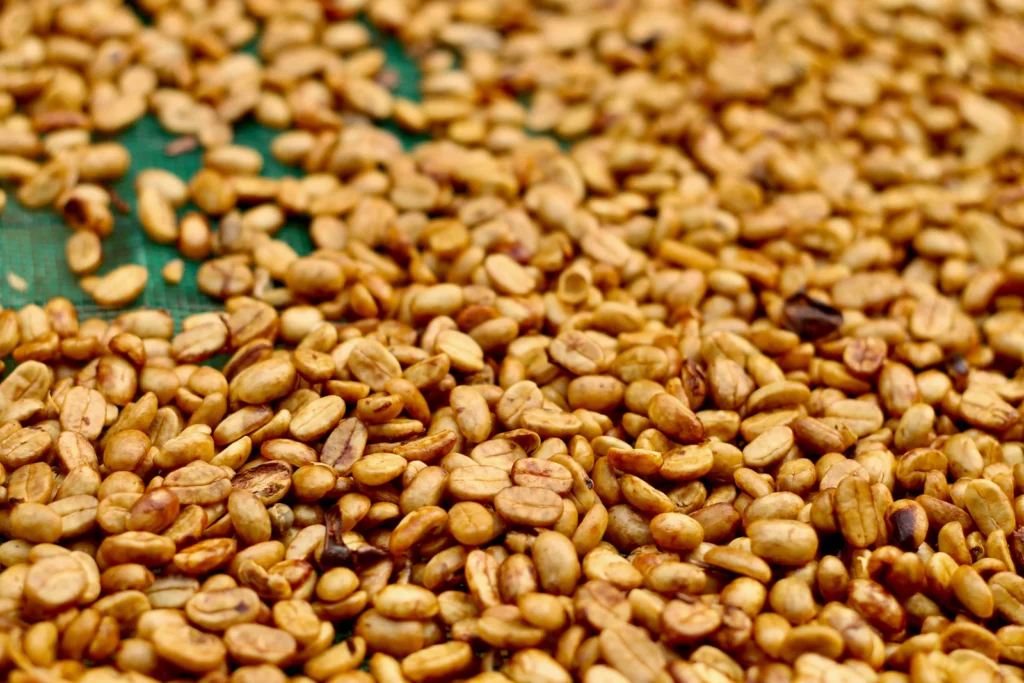
Natural coffee is dried as a whole cherry, with the fruit left on: the seed spends weeks inside the fruit while it dehydrates in the sun. It’s the traditional “dry process” method, used for centuries. That long contact with the fruit is what gives it its fruity, intense flavor.
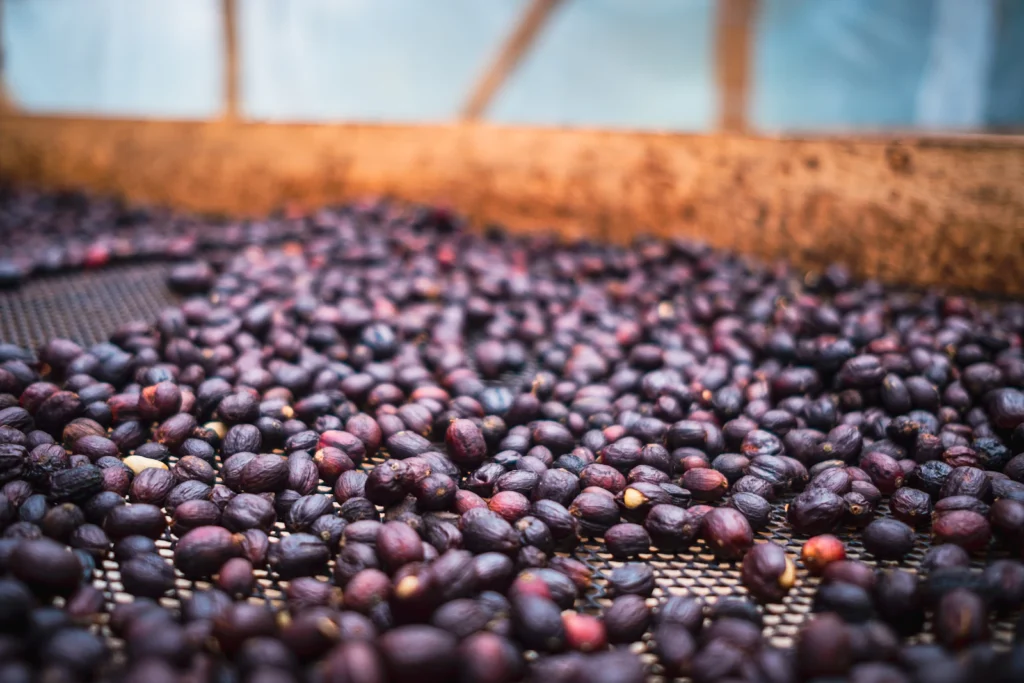
Here’s how it works, according to the NCA:
- Sun drying. Freshly harvested cherries are spread out over large surfaces to dry in the sun.
- Constant care. To keep them from spoiling, they’re raked and turned during the day and covered at night or when it rains.
- Patience. Drying continues until the cherries’ moisture drops to 11%, which can take several weeks depending on the weather.
- Hulling. Finally, all the dried husk is removed in one go: skin, pulp and parchment.
When the harvest is good, the natural process produces coffees with more body and a very distinctive sweet, fruity profile. Think ripe fruit, red berries or panela (unrefined cane sugar). It’s a coffee you notice from the first sip.
But it comes with a challenge. The NCA warns that if ripe and unripe cherries are mixed in a lot, the quality and flavor can turn out uneven. That’s why a good natural requires very careful picking and drying that’s monitored day by day.
If you want to try this profile, our Caicedo natural coffee is fruity and intense, exactly what you’d expect from a good natural.
Between washed and natural there’s a middle ground with a sweet name.
What is honey coffee?
Honey coffee is pulped like a washed coffee, but dried with some of the mucilage still clinging to the bean, as if it were half natural. The NCA also calls it semi-washed. That sugary mucilage caramelizes during drying, preserving some of the sweetness and highlighting the bean’s natural flavors.
So why “honey”? There’s no honey in it. The name comes from the texture of the mucilage, which is sticky like honey. So if someone tells you it’s coffee “with honey,” now you know it isn’t.
What’s interesting about honey coffee is that it isn’t one single flavor but a spectrum:
- With less mucilage, the coffee is closer to a washed coffee: clean, with good acidity.
- With more mucilage, it gets closer to a natural: more fruit and more body.
The NCA sums it up: in general, the more mucilage left on the bean, the sweeter the result. That’s why honey coffees are often described as sweet and creamy, a balance between the cleanness of washed and the intensity of natural.
At Broo we have a sweet, creamy honey from Caicedo, but it’s sold out for now. Until it’s back, you can explore its two “neighbors”: washed and natural. Tasting them side by side is the best way to understand what each process brings.
With all three processes clear, put them side by side.
How does processing change the flavor?
In short: washed gives clean, balanced cups, natural gives fruity, intense cups, and honey sits in the middle, with more pronounced sweetness. The difference comes from how much fruit stays with the bean while it dries. This table sums up what happens in each process and how to make the most of it at home.
| Process | What happens to the fruit | Cup profile | Suggested method | Broo product |
|---|---|---|---|---|
| Washed | Pulp and mucilage are removed before the bean is dried | Clean, balanced, with floral or citrus notes | V60, Chemex, drip coffee maker | Sonsón Washed |
| Natural | The whole cherry is dried with the seed inside | Fruity, intense, with more body | French press, AeroPress | Caicedo Natural |
| Honey | The pulp is removed, but some of the mucilage dries with the bean | Sweet and creamy | AeroPress, V60 or with milk | Caicedo Honey (sold out for now) |
Keep in mind: processing isn’t the only thing that defines flavor. Origin, altitude, plant variety and roast matter too. A washed coffee roasted very dark can lose all its delicacy, and a poorly dried natural can taste fermented. If you want to learn about those other variables, check out our guide to types of coffee: species, varieties and roasts.
A trick to train your palate: brew a washed and a natural with the same method, the same dose and the same water. Taste them without sugar, one after the other. The difference will surprise you, and it’s the fastest way to find your favorite process.
Now you know how each one tastes. All that’s left is pairing it with your coffee maker.
Which process should you choose for your brewing method?
As a general rule, filter methods shine with washed coffees, while immersion and pressure methods make the most of the intensity of naturals. It’s not a law: it’s a starting point. Your palate has the final say, and sometimes the best cups come from breaking the rule.
Here’s how you can pair them:
- V60 and Chemex: they make clean, light cups where the details come through. With a washed coffee you’ll pick up the floral or citrus notes clearly. With a natural, the fruit becomes very aromatic.
- French press: as an immersion method, it gives more body. A natural becomes round and juicy. A washed coffee turns out smoother and easier to drink.
- AeroPress: it’s versatile and forgiving. It works with all three processes, and with a honey it brings out the sweetness.
- Moka pot or espresso: they make concentrated drinks. If you drink them with milk, a natural or a honey adds sweetness and body that come through the milk.
- Cold brew: the NCA explains that cold brewing gives a smoother, less bitter cup. A natural adds very pleasant fruit notes.
If you’re still choosing a coffee maker, our comparison of V60, Chemex and AeroPress explains how to use each one and which is best for getting started.
One last tip: the best process is the one that makes you smile on the first sip. Taste, compare and stick with the one you like. After all, well-made coffee doesn’t need sugar to win you over.

Broo Café Team
The coffee team at Broo Café, specialty coffee roasters in Medellín.
Content reviewed by the Broo Café Team.
Frequently asked questions
Which coffee process is the sweetest?
Generally, honey and natural, because the bean dries in contact with the fruit’s sugars. But sweetness also depends on how ripe the cherry is and on the roast. A washed coffee made from very ripe cherries can be very sweet too.
Does processing change the amount of caffeine?
Processing mainly changes the flavor, not how much it wakes you up. Caffeine depends more on the species: according to the National Coffee Association, Robusta has considerably more caffeine than Arabica. Between a washed and a natural Arabica, you won’t notice that difference.
What is fermented or experimental-process coffee?
These are variations on the classic processes in which the producer controls fermentation differently, for example by changing the time, the temperature or the contact with air. They aim for new and sometimes very intense flavors. They’re worth trying once you know the classics.
Why is Colombian coffee usually washed?
Tradition. The National Federation of Coffee Growers notes that the most characteristic feature of Café de Colombia is wet processing, which produces the famous Colombian washed coffee. Even so, Colombia also produces natural and honey coffees, like those from Caicedo, in Antioquia.
Does natural coffee taste like wine?
Sometimes. The National Coffee Association explains that naturals can have a winey or fermented flavor. It doesn’t always happen, and when it’s subtle it’s usually pleasant. If the fermented note dominates the whole cup, it may be a sign of poorly controlled drying.
Summary
- Coffee processing methods define how the fruit is separated from the seed and how it’s dried: washed removes the fruit before drying, natural dries the whole cherry and honey leaves part of the mucilage on.
- In the cup, washed is clean and balanced, natural is fruity and intense, and honey is sweet and creamy.
- Filter methods shine with washed coffees; the French press and AeroPress make the most of the intensity of naturals.
Already know which process you like? The next step is getting all the flavor out of it with the right coffee maker: see our guide to V60, Chemex and AeroPress: which to choose and how to use each one. And tell us in the comments whether you’re more of a washed or a natural fan.