Coffee prices depend on three things: the New York exchange (the so-called C contract), the dollar exchange rate, and the premium the market pays for the quality of Colombian coffee.
Arabica hit US$4.13 per pound in November 2025, fell 42% to around US$2.40 by late May 2026, and on October 20 climbed back above 315 cents (Portafolio, with data from Bancolombia; XTB).
You go to the grocery store, grab your usual bag, and it costs more than it did a year ago. It’s not your imagination. According to Emporia Consultores’ household basket price panel in Colombia, cited by Valora Analitik, a 125-gram bag of coffee went from COP 5,059 in January 2025 to COP 7,589 in January 2026.
In this guide, we explain who sets coffee prices, why they climbed so high, why they now rise and fall almost every week, and what happened to Colombia’s harvest. At the end, you’ll find simple habits to make every bag go further without sacrificing flavor. No market jargon, promise.
Who sets coffee prices?
No one sets them alone. The benchmark price for arabica coffee is traded every day on the ICE exchange in New York, in the C contract. It’s quoted in U.S. cents per pound and serves as the basis for almost all the coffee sold worldwide.
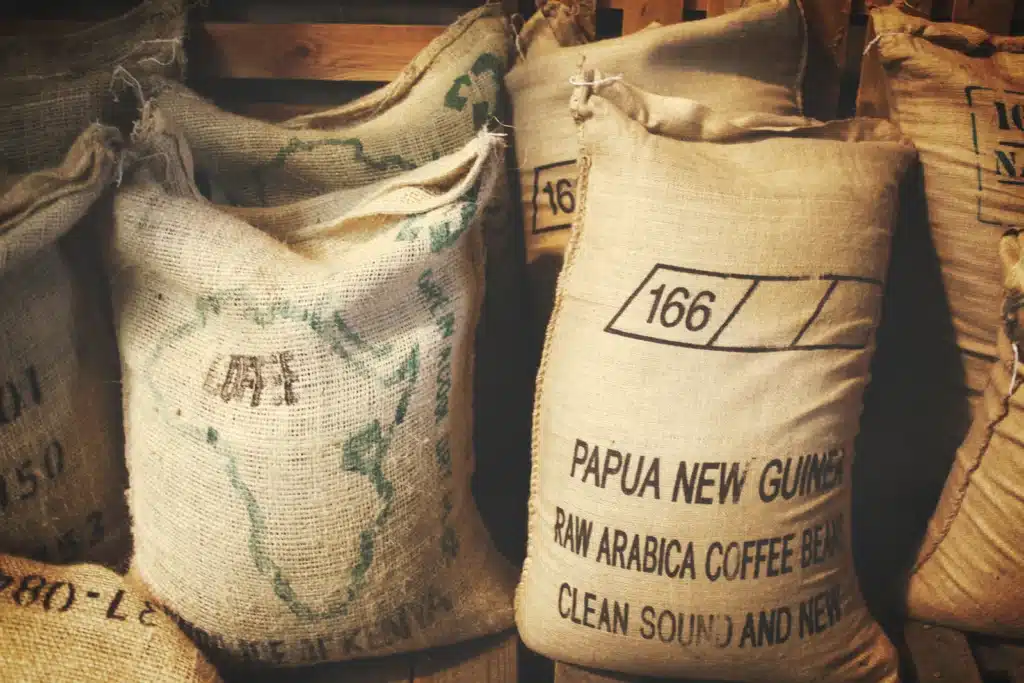
In Colombia, the National Federation of Coffee Growers (FNC) publishes a daily domestic reference price for a 125-kilo load (carga) of dry parchment coffee. That price is built from three pieces:
- The C contract: the international price of arabica in New York.
- The exchange rate: if the dollar rises against the peso, the grower gets more pesos for the same pound.
- The differential: a premium the market pays for Colombian coffee because of its quality.
That’s why coffee can go up in pesos even as it drops in dollars, or the other way around. A real example: according to the FNC, in February 2026 the load averaged COP 2,174,143, 17.3% less than in January, because the C contract fell below 300 cents per pound.
The differential moves too. Bancolombia reports that the Colombian coffee premium went from 15 cents per pound in January to 62 cents in June 2026. In the first week of July, it swung between 51 and 96 cents. That premium is what has kept many growers’ income afloat this year.
Why did coffee get so expensive?
Because for several harvests, there was little coffee available worldwide. With low supply and steady demand, the exchange price climbed to record levels in late 2025, and that cost ended up on store shelves.
One figure shows this clearly: inventories. Certified arabica stocks on the ICE exchange, the coffee that’s ready for delivery, fell below 220,000 bags in September 2026. Before 2022, they almost always sat between 1 and 5 million bags, according to XTB. The world’s warehouse is nearly empty.
Add to that the cost of production. Fertilizer, labor, and transportation weigh on every pound. And the coffee you buy at the grocery store isn’t just beans: it includes roasting, packaging, distribution, and taxes. When the beans go up, nothing else goes down.
Finally, Colombia had less coffee to sell. Further down, we explain why the country’s harvest fell in the last coffee year.
Why do prices fall and then rise again?
Because Brazil, the world’s largest producer, had a strong harvest again, but inventories still haven’t recovered. More coffee on the way pushes the price down; little coffee available today pushes it up.
Conab, Brazil’s agricultural agency, estimated in September a 2026 harvest of 67.6 million bags, 19.6% more than in 2025. That expectation is what drove the C contract down 42% between November 2025 and May 2026, according to Bancolombia.
Then came the rebounds. On October 20, arabica topped 315 cents per pound, its highest level since August 31. XTB explains it like this:
- Record-low inventories: Brazilian coffee going through certification isn’t available for delivery yet.
- Farmers holding back: with a stronger Brazilian real, some farmers earn less in local currency and prefer to wait before selling.
- Weather risk: El Niño looms as a threat to upcoming harvests.
In its July sector outlook, Bancolombia noted that the international price was then 27% below its level at the start of the year. It also warned that the market had more reasons to fall than to rise. October showed that those reasons coexist with upside surprises.
In short: more coffee is on the way, but it hasn’t reached the warehouse yet. In the meantime, prices will keep moving. To understand the weather risk, read how El Niño affects Colombian coffee.
What happened to Colombia’s coffee harvest?
Colombia produced 12.65 million 60-kilo bags in the 2025/26 coffee year, which runs from October to September. That was 15% less than the previous year’s 14.87 million, according to the FNC report.
Exports fell too: 11.78 million bags, down 12%. Early in the year, the FNC had warned that excessive rain in coffee-growing regions would cut production in the first half.
Germán Bahamón, CEO of the FNC, spoke of a “lower-volume cycle.” He pointed to three factors that will shape the country’s ability to meet demand: climate challenges, coffee farm productivity, and the profitability of growing families.
There’s one positive sign. In September 2026, production grew 6% over the same month in 2025, reaching 1.215 million bags. And the FNC expects to close the calendar year at around 12 million bags.
Less Colombian coffee on the market helps explain why the premium went up. Colombian coffee is prized for its quality, and when it’s scarce, buyers pay more for it.
Does specialty coffee follow market prices?
Not entirely. Specialty coffee is often traded directly with the producer or at high quality premiums. That’s why it moves less with the exchange than conventional coffee, although the costs of growing and shipping go up for everyone.
If you’re not sure what makes specialty coffee different, we explain it in what specialty coffee is and how to recognize it. In short, it’s coffee evaluated by cuppers that scores over 80 points on the SCA scale.
This has a practical consequence for you. Specialty coffee usually costs more per bag. In return, you know where it comes from, how it was processed, and when it was roasted, and you can taste that in the cup.
Comparing only the price per bag is misleading. What matters is how much you pay per well-made cup. Fresh coffee that’s stored and dosed properly goes to waste less often and doesn’t need sugar to mask bitterness.
How can you make your coffee go further?
When coffee costs more, the worst thing you can do is waste it. Weighing your dose, buying whole bean, storing it well, and choosing the right bag size make every cup better and help each bag last as long as it should.
These five habits help:
- Weigh your dose. The SCA recommends 55 to 60 grams of coffee per liter of water (about 2 oz per quart). Eyeballing it almost always means too much or too little. We explain it in coffee brewing methods.
- Buy whole bean and grind right before brewing. Ground coffee loses its aroma in days; whole beans hold up for weeks. Read whole bean vs. ground coffee to choose well.
- Store it well. Use an opaque, airtight jar, away from heat and out of the fridge.
- Choose the right size. If you don’t drink much, a 250-gram bag like our Andes washed coffee stays fresh to the last cup. If there are several coffee drinkers at home, our Sonsón washed coffee, 340 g makes more cups.
- Don’t throw out leftover coffee. Drink it cold over ice or turn it into a coffee granita instead of letting it reheat in the carafe.
One last idea: if your coffee comes out bitter and you add a lot of sugar to hide it, the problem may be the grind or the ratio, not the beans. Fixing it saves you coffee and sugar at the same time. You can see all our whole bean and ground coffees in the shop.

Broo Café Team
The coffee team at Broo Café, specialty coffee roasters in Medellín.
Content reviewed by the Broo Café Team.
Frequently asked questions
Will coffee prices go down in 2027?
No one knows for sure. Brazil’s big harvest is pushing prices down, but record-low inventories and El Niño are pushing them up. The most likely scenario is that sharp ups and downs will continue for several months.
What is the coffee C contract?
It’s the arabica coffee futures contract traded on the ICE exchange in New York. It’s quoted in U.S. cents per pound and serves as the global price benchmark for arabica, including the coffee grown in Colombia.
Do Colombian coffee growers earn more when prices rise?
Generally yes, because the domestic price follows the C contract, the dollar, and the Colombian premium. But if fertilizer, labor, and transportation costs rise at the same time, the real profit for a coffee-growing family can be much lower.
Why is Colombian coffee worth more than others?
Because of the differential, or quality premium. The market pays extra for Colombian arabica, especially washed coffee. In 2026, that premium went up because there was less Colombian coffee available and buyers kept seeking it out for its cup profile.
Is it worth stocking up on coffee when it’s cheap?
Only if it’s whole bean and you store it well. Coffee loses freshness over the weeks, so buying too much can cost you in flavor. Ideally, buy what you’ll drink in three or four weeks and repeat.
Summary
- Coffee prices are shaped by the New York C contract, the exchange rate, and the Colombian coffee premium.
- Arabica fell 42% between November 2025 and May 2026 on Brazil’s big harvest, but record-low inventories keep it bouncing back.
- Colombia produced 15% less coffee in the 2025/26 coffee year; weighing your dose and buying whole bean help your bag go further.
Want to get the most out of every gram? Start by choosing the right method with our guide to coffee brewing methods. And tell us in the comments how much coffee your household goes through each month.
References
- Portafolio (July 15, 2026). Although coffee is losing value on the New York exchange, the Colombian premium supports the domestic price (Bancolombia data; in Spanish)
- XTB (October 20, 2026). Coffee price today: arabica hits highs not seen since August despite Brazil’s bigger harvest (in Spanish)
- National Federation of Coffee Growers of Colombia. FEPCafé monthly report, February 2026 (in Spanish)
- Infobae (October 10, 2026). Colombia closed the coffee year with a 15% drop in production (in Spanish)
- Valora Analitik (February 12, 2026). The household basket products with the biggest price increases and decreases in 2026 (in Spanish)
- Specialty Coffee Association. Standard 102: Sample Preparation