For most healthy adults, up to 400 mg of caffeine a day is considered safe: roughly five cups of black coffee.
That’s the conclusion of the American Heart Association scientific statement published in Circulation on July 20, 2026, which also warns that more than four cups a day could raise the risk of heart failure (AHA, 2026).
Disclaimer: this article is for informational purposes only and is not a substitute for medical advice. If you’re pregnant or breastfeeding, have high blood pressure, arrhythmias, or anxiety, or take medication, ask your doctor how much caffeine is right for you.
“Coffee is bad for your heart.” “Coffee is good for everything.” Both lines make the rounds in family group chats. In 2026, several large studies were published that help set the record straight, with data from hundreds of thousands of people.
In this guide, we explain how much coffee per day is considered safe, what benefits of coffee the studies found, and what they can’t prove. You’ll also see how much caffeine is in a cup and who should be more careful. By the end, you’ll know how to translate the science into your routine, without fear and without exaggeration.
How much coffee per day is safe?
The reference figure is 400 mg of caffeine a day for healthy adults. The U.S. FDA says that amount is generally not associated with negative effects. In 2026, the American Heart Association arrived at the same figure and translated it into roughly five cups of black coffee.
Why does one source say five cups and another say fewer? Because a “cup” isn’t an exact measurement. The FDA puts 400 mg at two or three large 12-ounce cups, about 355 ml each. The AHA is talking about smaller cups. The result is similar: what counts is total caffeine, not the number of cups.
On top of that, everyone processes caffeine at their own pace. The FDA notes that sensitivity to caffeine, and how fast the body clears it, vary a lot from person to person. That’s why your body is the best gauge:
- Signs you’ve overdone it: a racing heart, jitters, shaky hands, an upset stomach, or trouble sleeping.
- If you have trouble sleeping: move your last coffee to the morning or midday.
- If you get caffeine from other sources: tea, colas, and energy drinks add up too.
Cup size matters. A small cup of tinto (Colombia’s everyday black coffee) is not the same as a large coffee shop cup. If you want to measure more precisely, our guide to coffee brewing methods explains how many grams to use per cup.
What did the American Heart Association say about coffee in 2026?
In July 2026, a panel of American Heart Association experts published a scientific statement on caffeine and cardiovascular disease. It isn’t a new experiment or an official treatment guideline. It’s a review of existing evidence, led by cardiologist Gregory M. Marcus.
Its main conclusions, according to the statement and the summary from the National Coffee Association:
- Up to 400 mg of caffeine a day, or up to five cups of caffeinated black coffee, is considered safe for most adults.
- Low to moderate coffee intake was associated with a lower risk of heart failure.
- More than four drinks a day could raise the risk of heart failure.
- Energy drinks, though data are limited, are generally associated with cardiovascular harm.
There’s an important caveat. The authors point out that most caffeine studies are observational. In other words, they show associations, but other factors may play a role. That’s why they call for more randomized clinical trials.
On blood pressure, the picture is less clear. According to the Earth.com summary, in people with optimal blood pressure, drinking one to three cups a day was associated with a slightly higher likelihood of developing hypertension. More than three cups was associated with a lower likelihood. No one has fully explained that pattern yet, and no clinical trial has settled it.
They also stress that the evidence is about coffee and natural sources of caffeine. The possible benefits can’t be extrapolated to synthetic products or to high doses of caffeine, such as shots or pills. A real cup of coffee and a can of energy drink are not the same thing, even though both contain caffeine.
What are the benefits of coffee for the liver?
A study of 354,957 adults in the UK Biobank, followed for a median of 13 years, associated coffee consumption with less liver disease. It was published in July 2026 in Clinical Gastroenterology and Hepatology, with Hyun-Seok Kim as first author.
Compared with people who didn’t drink coffee, those who drank five or more cups a day had, according to the study’s UK Biobank listing:
- A 32% lower risk of cirrhosis.
- A 47% lower risk of liver cancer (hepatocellular carcinoma).
- A 42% lower risk of dying from liver disease.
Two details stand out. First, the benefits also showed up with moderate intake. Second, they were seen with both caffeinated and decaf coffee, sweetened or not. That suggests caffeine isn’t the whole story. In a subgroup of 28,961 people, MRI scans showed less fat, less iron, and less inflammation in the livers of those who drank more coffee.
Keep in mind: this is an observational study. It shows an association; it doesn’t prove that coffee causes the benefit. One of the authors advised against starting to drink coffee just to protect your liver.
Does coffee lower the risk of dementia?
A study published in JAMA in February 2026 found an 18% lower risk of dementia among those who drank the most caffeinated coffee. It analyzed 131,821 people from two large cohorts of U.S. health professionals, followed for almost 37 years.

According to the abstract of the study by Zhang and colleagues (JAMA, 2026), these were the findings:
- The biggest benefit appeared with moderate intake: about 2 to 3 cups of caffeinated coffee a day.
- Tea showed similar associations.
- Decaf coffee showed no link to dementia risk, which suggests caffeine plays a role.
As with the liver study, this is observational and doesn’t prove cause. Also, all the participants were health professionals, who don’t represent the whole population.
What about the headline claiming that “coffee doubles your risk of Alzheimer’s”? It circulates on blogs, but we couldn’t find any verifiable study to back it up. Before you forward it, look for the original source.
How much caffeine is in a cup of coffee?
A large 12-ounce cup of brewed coffee, about 355 ml, contains between 113 and 247 mg of caffeine, according to the FDA. The figure varies so much because it depends on the coffee, how much you use, and the brewing method. That’s why it makes sense to think in ranges, not exact numbers.
These are the values published by the FDA:
| Drink | Size | Approximate caffeine |
|---|---|---|
| Brewed coffee | 12 ounces (355 ml) | 113–247 mg |
| Decaf coffee | 8 ounces (240 ml) | 2–15 mg |
| Reference limit for healthy adults | Per day | 400 mg |
What about cold brew? Being cold doesn’t mean it has less caffeine. It all depends on how much coffee you use and how much you dilute it. We explain it in what is cold brew. If you use a cold brew concentrate, the dilution is up to you: more water or milk means less caffeine per glass.
If you like the taste of coffee but want less caffeine, decaf is a good option. In decaf coffee, we explain how it’s made and how much caffeine it has left.
Who should be more careful with coffee?
The 400 mg figure is for healthy adults; if you’re in a special group, the right amount may be lower and should be decided by your doctor. The FDA recommends talking to a health professional in these cases:
- If you’re pregnant, trying to get pregnant, or breastfeeding.
- If you have medical conditions such as high blood pressure, arrhythmias, anxiety, or insomnia.
- If you take medications that may interact with caffeine.
With children, the rules are stricter. The Dietary Guidelines for Americans, cited by the FDA, recommend avoiding caffeinated drinks for children under two. The American Academy of Pediatrics advises children and teens to avoid energy drinks.
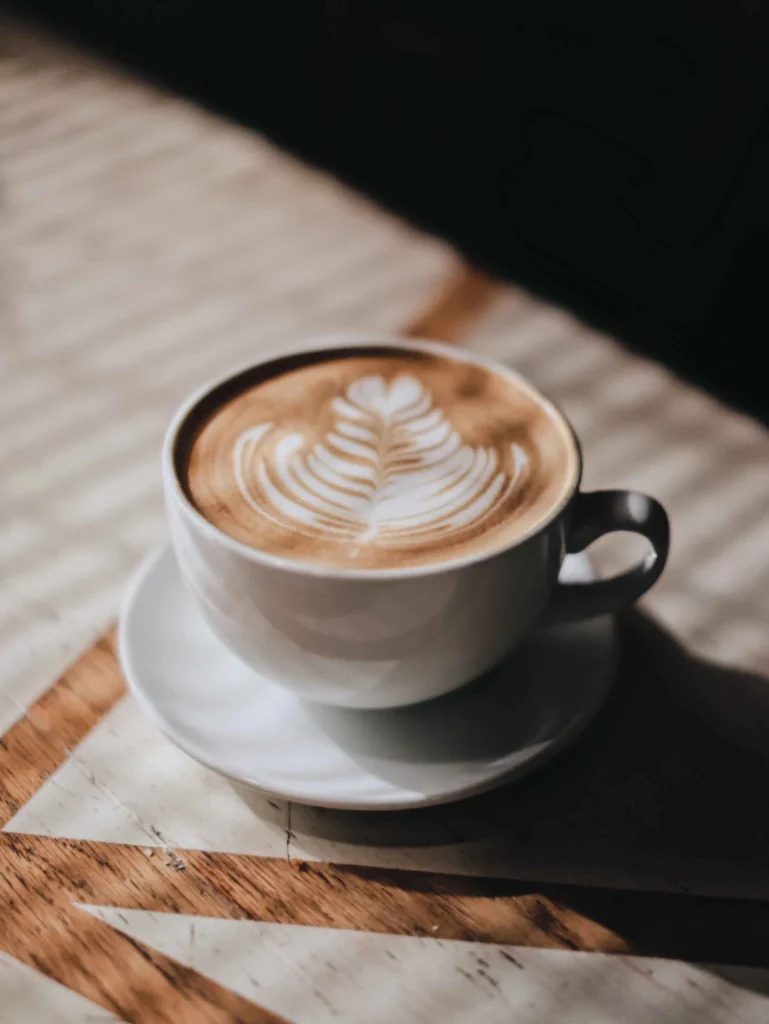
For everyone else, the key is how you drink it. The studies are almost always about coffee, not drinks with three packets of sugar, whipped cream, and syrup. A good specialty coffee, like a washed coffee from Sonsón, is best enjoyed black or with a little sugar, because it’s naturally sweeter. If you want to learn how different kinds of beans compare, check out our guide to types of coffee.
One or two well-made cups, enjoyed slowly, beat five gulped down in a rush. Good coffee. Well made. Well lived.
Coffees from this guide


Broo Café Team
The coffee team at Broo Café, specialty coffee roasters in Medellín.
Content reviewed by the Broo Café Team.
Frequently asked questions
Does decaf coffee have benefits too?
It depends on the benefit. In the UK Biobank liver study, decaf showed results similar to caffeinated coffee. In the JAMA dementia study, on the other hand, decaf showed no link to a lower risk.
Are energy drinks the same as coffee?
No. The American Heart Association treats coffee separately from high-dose sources of caffeine. Data are limited, but they generally associate energy drinks with cardiovascular harm. The benefits of coffee can’t be carried over to those products.
How much caffeine is in decaf coffee?
Very little, but not zero. According to the FDA, an 8-ounce cup (about 240 ml) of decaf coffee has between 2 and 15 mg of caffeine. A regular 12-ounce cup of brewed coffee can have more than 100 mg.
Does coffee raise blood pressure?
Caffeine can raise it temporarily in some people. In its 2026 review, the American Heart Association found mixed results with no complete explanation. If you have high blood pressure, ask your doctor how much coffee you can drink.
Can children drink coffee?
The Dietary Guidelines for Americans recommend avoiding caffeinated drinks for children under two, and the American Academy of Pediatrics advises against energy drinks for children and teens. For older children, check with your pediatrician.
Summary
- Up to 400 mg of caffeine a day, roughly five cups of black coffee, is considered safe for most healthy adults.
- Large 2026 studies associated coffee with less heart failure, less liver disease, and less dementia, but they are observational.
- Pregnancy, breastfeeding, high blood pressure, arrhythmias, anxiety, and some medications call for a conversation with your doctor before deciding how much coffee to drink.
Would you rather enjoy the flavor with less caffeine? Read our guide to decaf coffee and tell us in the comments how many cups you drink a day.
References
- Marcus, G. M. et al. (2026). Caffeine and Cardiovascular Disease: A Scientific Statement From the American Heart Association. Circulation
- National Coffee Association. Summary of the AHA statement on caffeine and cardiovascular disease
- Kim, H.-S. et al. (2026). Coffee Consumption and Improved Liver Outcomes: Clinical, Imaging, and Proteomic Evidence From the UK Biobank. Clinical Gastroenterology and Hepatology
- Zhang, Y. et al. (2026). Coffee and tea intake and long-term risk of dementia. JAMA
- U.S. Food and Drug Administration. Spilling the Beans: How Much Caffeine Is Too Much?
- Earth.com (2026). Coffee got two clean bills of health this month, but both studies tell a more complicated story