“Gourmet coffee” is a marketing label used to present a coffee as higher quality, but unlike specialty coffee, it has no shared technical definition.
The Specialty Coffee Association defines specialty coffee by its distinctive attributes, such as flavor, aroma, origin, and processing, and the words “gourmet” and “premium” don’t appear in that definition (SCA, What is specialty coffee).
Gourmet, premium, select, high-altitude, superior. In the supermarket coffee aisle, almost every bag promises to be special. And sometimes it is. But many of those words tell you nothing concrete about what’s actually inside the bag.
In this guide, we explain what gourmet coffee is, whether it’s the same as premium coffee, and how it differs from specialty coffee. Above all, we show you how to look past the pretty word on the package and choose a coffee that’s truly worth what it costs.
What is gourmet coffee?
Gourmet coffee is a marketing name for coffees presented as better than average. It might be an excellent coffee or an ordinary one in nice packaging. On its own, the word guarantees no particular origin, process, or cupping score.
“Gourmet” comes from the culinary world and is associated with fine foods. That’s why it’s used so much for coffee: it conveys exclusivity. The problem is that anyone can put it on a bag.
Other terms, on the other hand, do have a definition or an institution behind them:
- Specialty coffee: the SCA defines it by distinctive attributes, both in the cup and beyond it.
- Café especial (Colombia): the Colombian Coffee Growers Federation (FNC) defines it as coffee valued for consistent, verifiable, and sustainable attributes (FNC).
- Café de Colombia: a protected designation of origin, registered with Colombia’s Superintendence of Industry and Commerce (SIC).
Notice the difference. The FNC’s definition of café especial and the SCA’s definition of specialty coffee talk about attributes you can verify: flavor, origin, farming practices, processing. “Gourmet,” by contrast, describes a feeling the brand wants to give you.
This doesn’t mean every coffee labeled “gourmet” is bad. It means you have to look for other clues to know whether it’s good.
Are gourmet coffee and premium coffee the same thing?
In practice, yes: both are commercial terms that suggest quality, without a technical definition to back them up. A thesis on specialty coffee from the University of Chile sums it up: “premium” is more of a marketing concept that neither defines nor describes the properties of a specialty coffee.
The same goes for other words on the package:
- “Select” or “superior”: they sound good, but there’s no shared standard behind them.
- “High-altitude”: altitude does affect coffee, but the word alone doesn’t tell you how many meters.
- “100% Arabica”: it’s a real fact, but almost all Colombian coffee is Arabica. It doesn’t make it special.
- “Mild”: it usually describes the style of washed Colombian coffee, not extra quality.
There’s a simple test for any word on the package. Ask yourself: does this tell me something I can verify? “Sonsón, Antioquia, washed process, roasted on such-and-such date” can be verified. “Gourmet premium select” can’t.
That thesis analyzes the Panamanian market, but the idea applies just as well in Colombia: the value lies in the attributes, not in the adjective (University of Chile, 2016).
How is gourmet coffee different from specialty coffee?
Specialty coffee is recognized through an evaluation of its attributes, while “gourmet” is a promise on the package. A gourmet coffee may or may not be specialty. A specialty coffee doesn’t need to call itself gourmet to prove its quality.
In Colombia, the FNC notes that, on the traditional SCA scale, a coffee is considered specialty from 80 cupping points (FNC, Caldas Committee). That score is given by a panel of cuppers following a protocol. It isn’t decided by whoever designed the bag.
| Aspect | “Gourmet” or “premium” | Specialty coffee |
|---|---|---|
| Who defines it | The brand selling it | SCA and FNC standards |
| How it’s verified | No shared method | Cupping and attribute evaluation |
| What the label tells you | Sometimes just the adjective | Usually origin, process, and roast |
| Traceability | Varies | Part of its value |
If you want to understand in depth what the SCA score means and how quality is measured, read what specialty coffee is. And if you’re curious about how a coffee is evaluated at the cupping table, check out coffee cupping at home.
How do you spot a good coffee on the label?
You spot a good coffee by the concrete facts on its label: region or town, process, roast date and, ideally, farm, variety, and altitude. The more verifiable facts it has, the more you can trust it. Adjectives are decoration; facts are information.
Run through this quick check before you buy:
- Does it say where it comes from? Department and town, not just “Colombia.”
- Does it state the process? Washed, natural, or honey.
- Does it have a roast date? If it only has an expiration date, you don’t know when it was roasted.
- Is it whole bean or ground? Whole bean holds its flavor better.
- Does the bag have a valve? It’s a good sign that it was packed freshly roasted.
Freshness matters more than it seems. According to the National Coffee Association, coffee starts losing freshness almost immediately after roasting. Once opened, whole beans last 1 to 3 weeks at room temperature (NCA). A “gourmet” coffee that’s been on the shelf for months has already lost much of its charm.
And be wary of promises you can’t check. “The best coffee in the world” or “hand-picked by experts” may be true, but without facts to back them up, they’re just phrases. A serious roaster would rather show you the town, the process, and the date than fill the bag with superlatives.
If you want to learn more about the bean’s journey from the farm, read coffee traceability.
Is gourmet coffee worth paying more for?
It’s worth paying more when that price buys information, freshness, and verifiable quality, not just a word on the package. If the gourmet coffee doesn’t say where it comes from or when it was roasted, you’re probably paying for the bag design, not the beans.
Think price per cup, not per bag. With a dose of about 10 to 12 grams per cup, a 340 g (12 oz) bag makes roughly 30 cups. A price difference that looks big on the bag becomes small in each cup.
It’s also worth thinking about who receives that money. In short supply chains, where the roaster knows the origin, a larger share of the price can reach the person who grew the coffee. The FNC points out that buyers of specialty coffees pay higher prices that improve producers’ well-being.
Signs the price is justified:
- Specific origin and a stated process.
- A recent roast date that’s visible on the bag.
- A roaster who answers when you ask about the coffee.
- A cup that proves it: clear flavors, natural sweetness, little bitterness.
Signs it isn’t: only adjectives, no roast date, finely ground months ago, or a cup that needs lots of sugar to go down. If you want to compare with a critical eye, our guide to the best Colombian coffee will also help.
Which Colombian coffee should you choose if you want quality?
If you want quality, choose a specialty coffee with a clear origin and process, roasted recently, and in a size you can finish while it’s still fresh. It doesn’t need to say gourmet. It needs to tell you where it comes from and how it was made.
A practical way to choose is by your brewing method and your taste:
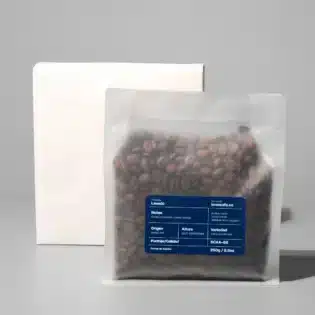
- If you like a clean, balanced cup: a washed coffee. The Sonsón washed coffee works in a pour-over, stovetop percolator (greca), or French press.
- If you like it sweeter and fuller-bodied: a natural coffee. The Caicedo natural coffee is dried with the whole fruit intact.
- If you don’t drink much coffee: a small bag, like the 250 g Andes washed coffee, so it stays fresh to the last cup.
All three come from towns in Antioquia and carry the town and process in their names. You can see the full selection in our specialty coffee shop.
One more tip: buy a small bag of a new coffee first. If you like it, go for the larger size next time. If not, you’ve learned something about your taste without overspending. That’s the cheapest way to find your ideal coffee.
In the end, the best judge is your cup. Brew the coffee carefully, with no sugar at first, and notice whether the flavors come through clearly. That’s how you’ll know whether you paid for a good coffee or for a good word.
Coffees from this guide



Broo Café Team
The coffee team at Broo Café, specialty coffee roasters in Medellín.
Content reviewed by the Broo Café Team.
Frequently asked questions
Is gourmet coffee better quality?
Not necessarily. “Gourmet” is a commercial word with no shared standard. Some gourmet coffees are excellent, and others are average coffees in nice packaging. To know, look for origin, process, and roast date on the label, not the adjective.
What does “premium Colombian coffee” mean?
It’s a way of presenting a coffee from Colombia as superior, but it doesn’t correspond to any official category. What is protected is the Café de Colombia designation of origin. To judge quality, look at the concrete facts on the label.
Is gourmet coffee the same as specialty coffee?
No. Specialty coffee is recognized by its attributes, evaluated against standards like the SCA’s. Gourmet coffee is a marketing promise. A coffee can be both, but the word gourmet alone doesn’t guarantee it.
Why does supermarket gourmet coffee taste bitter?
Often because of a very dark roast, coffee that was ground long ago, or beans of uneven quality. Brewing it with boiling water or with too much coffee also plays a part. Try a freshly roasted coffee with a clear origin and a measured recipe.
How do I know if a coffee is worth the price?
Work out the price per cup, check that the label lists origin, process, and roast date, and taste it without sugar. If the flavors come through clear and sweet on their own, the price is probably justified. If it needs a lot of sugar, maybe not.
Summary
- “Gourmet” and “premium” are commercial terms; the SCA’s definition of specialty coffee doesn’t use them.
- Specialty coffee is recognized by its attributes and, according to the FNC, is considered specialty from 80 SCA points.
- Choose by verifiable facts: origin, process, roast date, and freshness, not by adjectives on the bag.
Want to learn to tell a good coffee with your own palate? Put it to the test with our guide to coffee cupping at home, and tell us in the comments which word on a package has fooled you before.
References
- Specialty Coffee Association. What is specialty coffee?
- Federación Nacional de Cafeteros. Cafés especiales (in Spanish)
- Federación Nacional de Cafeteros, Comité de Caldas. Marquetalia celebró sus 100 años con el 1.er concurso de cafés tostados (in Spanish)
- Madera, P., and García, H. J. (2016). Café specialty panameño. Universidad de Chile (in Spanish)
- National Coffee Association. Coffee storage and shelf life
- Superintendencia de Industria y Comercio. Denominación de origen Café de Colombia (in Spanish)