The best Colombian coffee isn’t a single brand or region: it’s a coffee with a clear origin, good processing, a fresh roast, and a flavor you love.
And there’s plenty to choose from: coffee is grown in 23 of the country’s 32 departments (World Coffee Research, Colombia).
Ask at any gathering in Colombia which coffee is the best, and you’ll hear ten different answers. Huila’s, Nariño’s, the one from your uncle’s farm. They’re all a little bit right, because coffee is grown here from north to south and every mountain leaves its mark on the cup.
In this guide, we’re not going to sell you a winner. We’ll give you the criteria to choose for yourself. You’ll see which coffee regions exist and which have a designation of origin, what makes Antioquia coffee special, and how to read a label without getting lost. We also cover the difference between supermarket coffee and specialty coffee, and which Colombian coffee to give as a gift to really impress.
What is the best Colombian coffee?
The best Colombian coffee meets four conditions: you know where it comes from, you know how it was processed, it’s freshly roasted, and you love its profile. Rather than looking for a winner, it pays to have clear criteria to separate an excellent coffee from an ordinary one, whatever the label says.
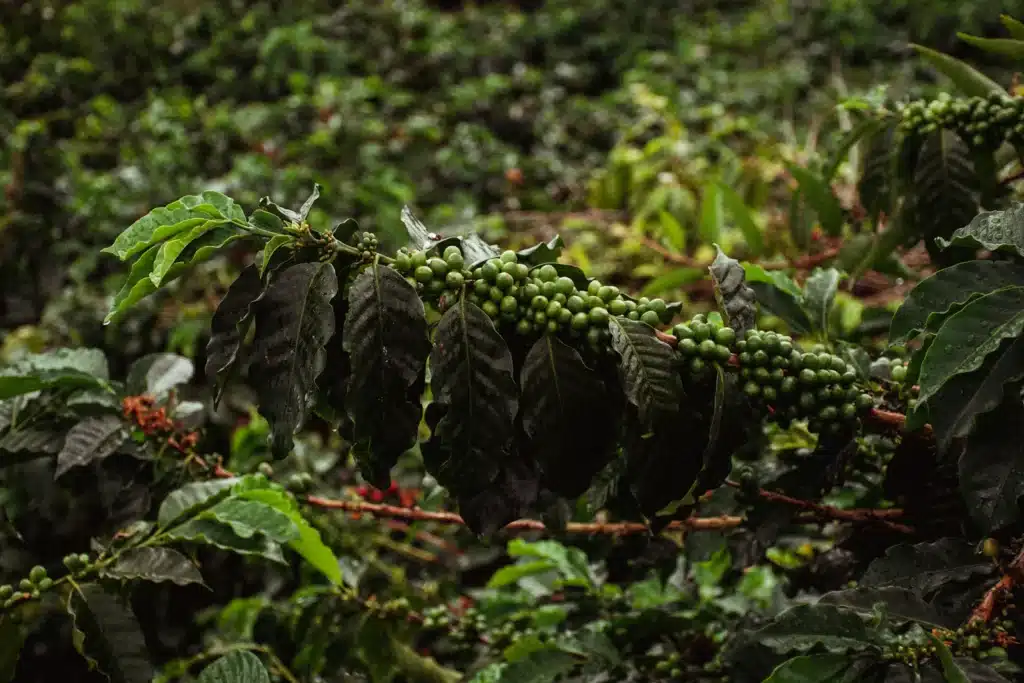
Start with what all coffee from the coffee-growing zone has in common. Colombia’s Superintendence of Industry and Commerce (SIC) has protected the Café de Colombia designation of origin since Resolution 4819 of 2005. It describes it as coffee that is “mild, with a clean cup, medium/high acidity and body, and a pronounced, full aroma,” of the arabica species.
That’s the baseline. On top of it, these are the criteria that really change your cup:
- Traceable origin. The more specific, the better: department, municipality, and, if possible, farm. A coffee that only says “Colombia” tells you very little.
- Process. Washed, natural, or honey. Each one gives the same bean a different flavor.
- Assessed quality. Specialty coffees go through a cupping with a score. It’s a useful clue, not an absolute truth.
- Freshness. An excellent coffee roasted months ago tastes flat. Look for the roast date.
- Your taste. If you like fruity cups, a natural will win you over. If you prefer something clean and balanced, go for a washed coffee.
If you want to understand what’s behind that score and why it matters, read our guide on what specialty coffee is.
With the criteria clear, let’s look at the map: where coffee comes from in Colombia.
What are Colombia’s coffee regions?
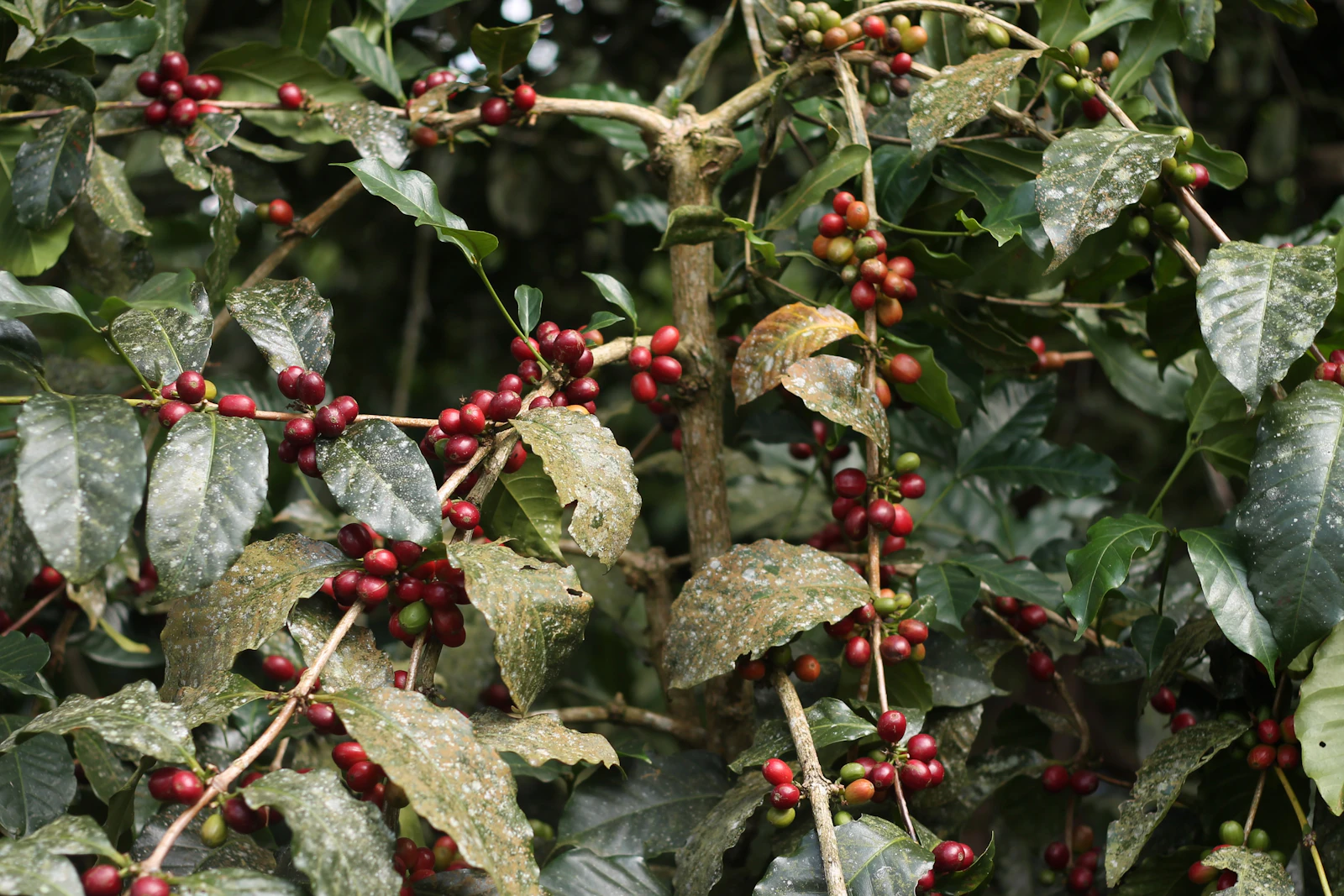
Colombian coffee grows on the slopes of the Andes mountain range, the Sierra Nevada de Santa Marta, and the Sierra de la Macarena, according to the SIC. Six regions also have their own designation of origin: Nariño, Cauca, Huila, Santander, Tolima, and Sierra Nevada. Each has a cup profile described by the Colombian Coffee Growers Federation (FNC).
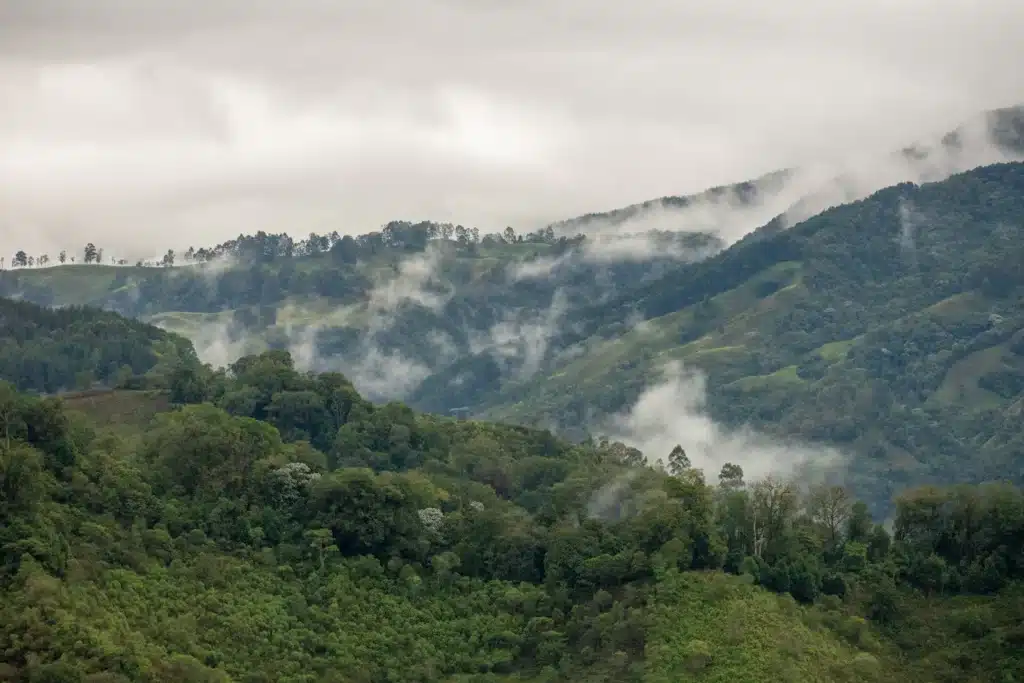
This table summarizes the six regional designations with the profile published by the FNC:
| Regional designation | Protected by the SIC in | Cup profile according to the FNC |
|---|---|---|
| Café de Nariño | 2011 | High acidity, medium body, sweet notes, clean and mild cup, very pronounced aroma |
| Café del Cauca | 2011 | High acidity, medium body, sweet and floral notes, caramelized aromas |
| Café del Huila | 2013 | Balanced, sweet notes, medium/high acidity and body, intense aroma with fruity and caramel notes |
| Café de Santander | 2014 | Clean and balanced, medium-high body, medium acidity, sweet, herbal, and fruity flavors with citrus hints |
| Café del Tolima | 2017 | Medium-high acidity and body, clean and mild cup, sweet flavors with citrus and fruity sensations |
| Café de la Sierra Nevada | 2017 | Clean and balanced, medium-high body, medium acidity, chocolate flavors, sweet and nutty notes |
Two clarifications to read this map correctly:
- A region without its own designation isn’t worse. Some major coffee-growing departments, like Antioquia, aren’t on this list. Their coffee is part of the zone protected by the national Café de Colombia designation.
- Region is only one part of flavor. Variety, farm altitude, processing, and roasting matter as much as the map. If you want to know which varieties are grown in the country, see our guide to types of coffee.
Speaking of departments without their own designation, there’s one very close to home for us.
What makes Antioquia coffee special?
Antioquia is one of the giants of Colombian coffee: according to the Antioquia Coffee Growers Committee, it’s home to 80,000 coffee-growing families in 94 municipalities, which contribute 15% of national production. That scale, spread across mountains that are very different from one another, produces coffees with widely varied profiles within a single department.
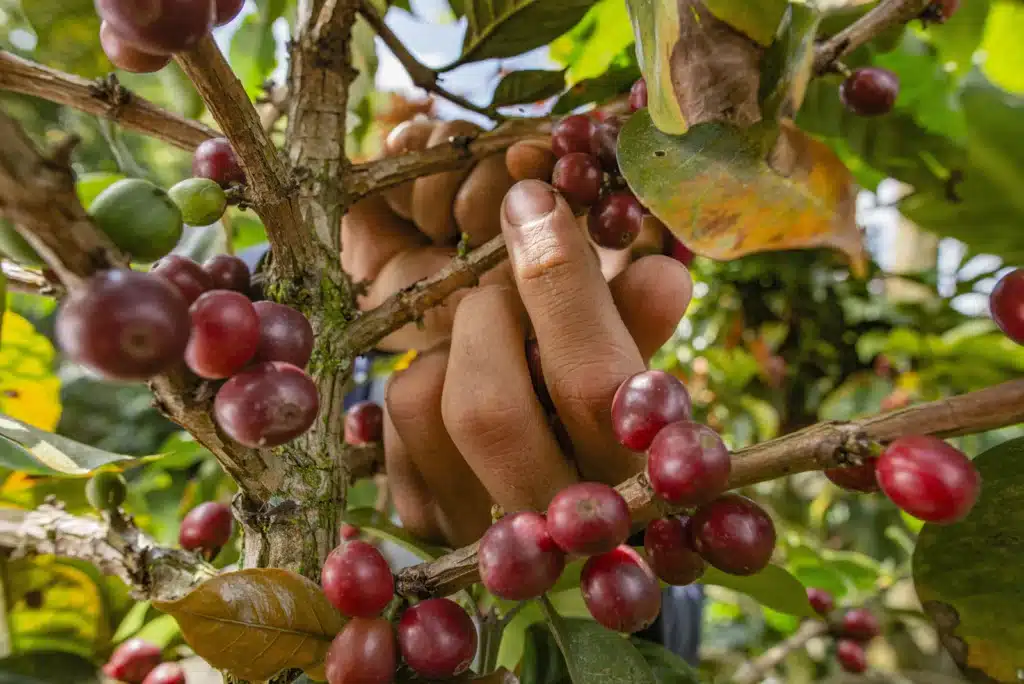
Let’s be clear: there’s currently no “Café de Antioquia” regional designation of origin. What makes this coffee special isn’t a seal, but other things:
- Tradition. The Colombian Coffee Growers Federation was founded in Medellín in 1927, according to the Antioquia Coffee Growers Committee. Coffee has been part of paisa (Antioquian) history for generations.
- A diversity of micro-origins. With so many coffee-growing municipalities, a coffee from the southwest can taste very different from one from the east. That’s why it helps when the bag names the municipality.
- Family work. Behind every bag are coffee-growing families who tend the harvest and process the beans by hand.
At Broo, we work with coffees from three municipalities in Antioquia, and each one has its own personality:
- Sonsón, washed: clean and balanced. Our Sonsón washed coffee is the most versatile for any brewing method.
- Caicedo, natural: fruity and intense. Our Caicedo natural coffee is for anyone looking for a cup with lots of character.
- Andes, washed: another clean washed coffee, ideal if you want to compare two origins with the same process.
There’s also a honey, sweet and creamy. Now, how do you know all this about a coffee before opening the bag? By reading the label.
How do you read the label to choose a good Colombian coffee?
A good label tells you where the coffee comes from, how it was processed, when it was roasted, and what it tastes like; if most of that is missing, be wary. A quality Colombian coffee has nothing to hide. The more useful information the bag carries, the easier it is to know whether that coffee is right for you.
Check these details, in this order:
- Species. Look for “100% arabica.” It’s the species covered by the Café de Colombia designation.
- Origin. Department and municipality at a minimum. If it includes the name of the farm or the producer, even better.
- Process. Washed, natural, or honey. If you’re not sure what changes from one to another, we explain it in our guide to coffee processing methods: washed, natural, and honey.
- Roast. The level (light, medium, or dark) and, above all, the date. A very dark roast can cover up the flavors of the origin.
- Tasting notes. Phrases like “chocolate,” “red berries,” or “panela” (unrefined cane sugar) point you toward the profile. They aren’t added flavors: they’re aromas the coffee itself carries.
- Score. If it’s a specialty coffee, it may include its cupping score.
- Whole bean or ground. If it’s ground, make sure the grind suits your brewing method.
A red flag: nice-sounding words like “premium,” “gourmet,” or “select” without a single concrete detail next to them. They sound good, but they tell you nothing about the coffee.
With the label in hand, the big question in the coffee aisle comes up: is it worth paying more?
Supermarket coffee or specialty coffee?
It depends on what you’re looking for, but the difference in the cup is real: specialty coffee has a clear origin, assessed quality, and a roast designed to show off its flavor. For the Colombian Coffee Growers Federation, a coffee is considered specialty from 80 points up. Supermarket coffee usually prioritizes price and volume.
Not all supermarket coffee is bad, and not everything labeled “special” really is. This comparison helps you tell them apart:
| What to look at | Typical supermarket coffee | Specialty coffee |
|---|---|---|
| Origin | Usually just says “Colombia” or a blend | Department, municipality, and sometimes farm |
| Process | Rarely listed | Washed, natural, honey, or other, stated on the bag |
| Roast | Often dark and undated | Roast level and roast date visible |
| Flavor | Often bitter and flat | Defined notes: fruit, sweetness, chocolate |
| Quality | No visible assessment | Evaluated by cupping, often with a score |
| Price | Lower | Higher |
A simple trick to check: brew both coffees with the same method and taste them side by side without sugar. Well-made coffee doesn’t need sugar, and in that test the difference speaks for itself.
If you want to explore, in our specialty coffee shop every bag lists its origin, process, and profile. That way you compare with data, not promises.
And if you’re already convinced, chances are you’ll want to share it, too.
Which Colombian coffee should you give as a gift?
For a gift, choose a specialty coffee with a clear origin and process, whole bean or ground depending on the method the person uses. A good Colombian coffee is a gift that gets enjoyed every day and tells a story in every cup. The key is getting the profile and the grind right.
Some ideas depending on who you’re shopping for:
- For someone who drinks tinto (Colombian black coffee) or filter coffee every day: a washed coffee, clean and balanced. It’s a safe choice that almost everyone likes.
- For someone who loves intense flavors: a natural, fruity and full of character. Perfect for a surprise.
- For the curious one: a washed and natural duo, to compare the same origin with different processes. It’s a cupping at home.
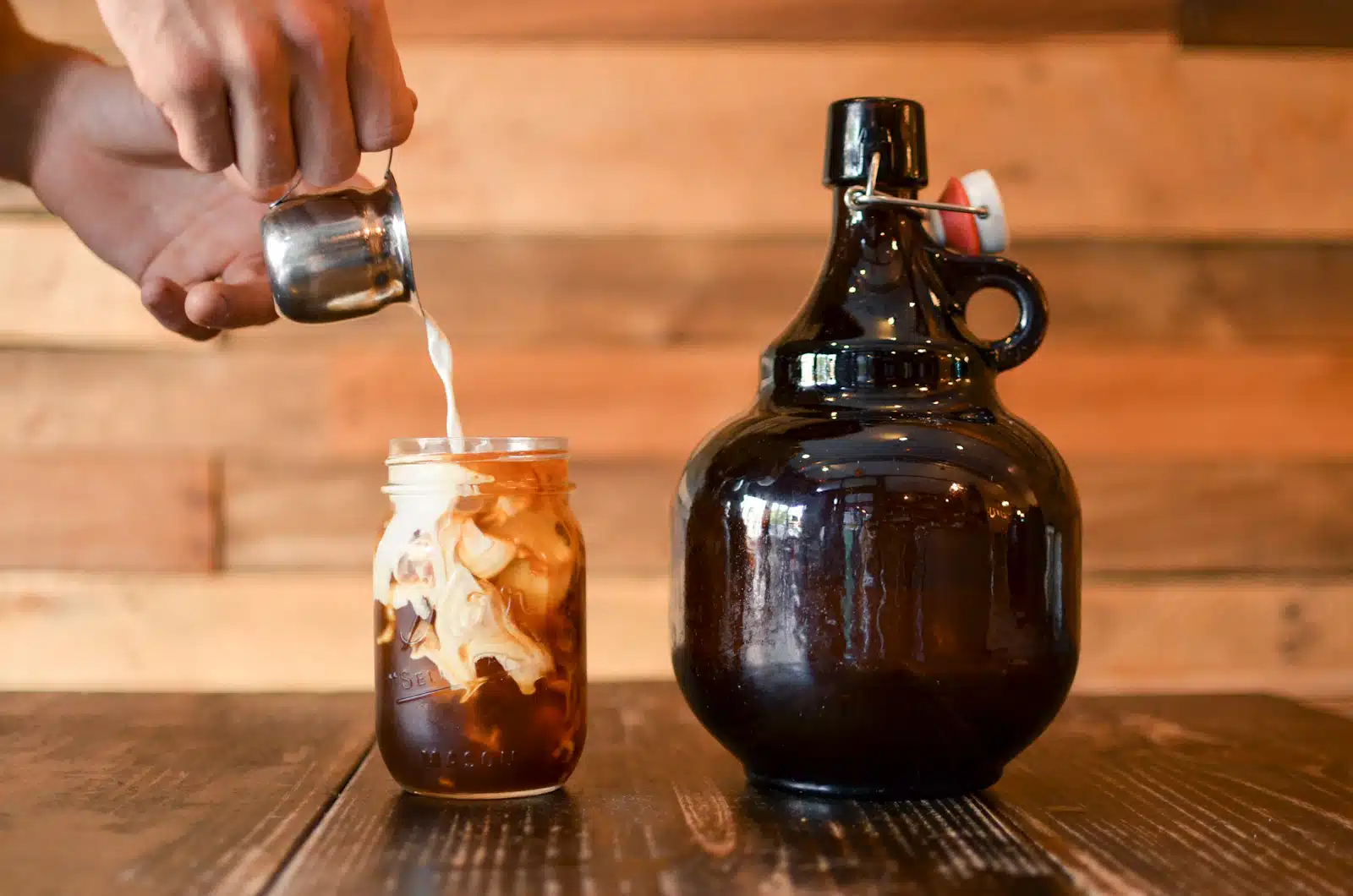
- For someone who loves cold coffee: our 700 ml cold brew concentrate, ultra-concentrated and low in acidity.
Before you buy, discreetly find out what coffee maker they have. If they don’t have a grinder, give it ground for their method. If they have a grinder, whole bean: it keeps better.
Broo coffees come in 250 g and 340 g bags, whole bean or ground. They’re 100% Colombian arabica from Antioquia, medium roast. You can put your gift together in our shop and pay by card, in installments, or through PSE.
In the end, the best Colombian coffee is the one you can’t wait to share.
Coffees from this guide


Broo Café Team
The coffee team at Broo Café, specialty coffee roasters in Medellín.
Content reviewed by the Broo Café Team.
Frequently asked questions
Who authorizes use of the Café de Colombia designation of origin?
The Colombian Coffee Growers Federation. The SIC, which protects the designation, delegated the power to authorize its use to the Federation through a 2010 resolution. That’s why brands that want to use the Café de Colombia seal must apply through the Federation.
How many families make a living from coffee in Colombia?
A lot. According to World Coffee Research, more than 550,000 families depend on coffee for their livelihood, and most are smallholder producers. That’s why choosing your coffee well is also a way to support the work of Colombian farms.
Why is Colombian coffee so mild?
Because of the species and the process. Colombia grows arabica and, as World Coffee Research highlights, is known for its high-quality washed arabicas. The washed process gives clean, balanced, easy-to-enjoy cups, which is exactly what we associate with mildness.
Where can you buy Colombian specialty coffee?
From roasters that show the origin, process, and roast date on every bag. Many sell online and deliver to your door. Avoid buying large amounts at once: it’s better to order what you’ll drink in a few weeks.
Is the best Colombian coffee exported?
Much of it is. World Coffee Research ranks Colombia among the world’s three largest arabica exporters. But there are also local roasters who buy excellent lots for the domestic market, so you can enjoy it right here in Colombia.
Summary
- There’s no single best Colombian coffee: choose by traceable origin, process, freshness, and a profile you like.
- Six regions have their own designation of origin. Antioquia doesn’t, but it contributes 15% of national production, according to its Coffee Growers Committee.
- A good label states species, origin, process, roast date, and tasting notes; without that information, be wary.
Want to go a step further? Read our guide on what specialty coffee is and learn to recognize a great coffee before you taste it. And tell us in the comments: what’s your favorite Colombian coffee region?
References
- Superintendence of Industry and Commerce (SIC). Café de Colombia designation of origin (in Spanish)
- Colombian Coffee Growers Federation. Regional Designations of Origin
- Antioquia Departmental Coffee Growers Committee. Institutional infographic (in Spanish)
- World Coffee Research. Colombia
- Colombian Coffee Growers Federation, Caldas Committee. Marquetalia celebrated its 100th anniversary with its first roasted coffee competition (in Spanish)